What's next in Iran? Revolt suppressed, the regime endures. Insecurity, used as a geopolitical weapon

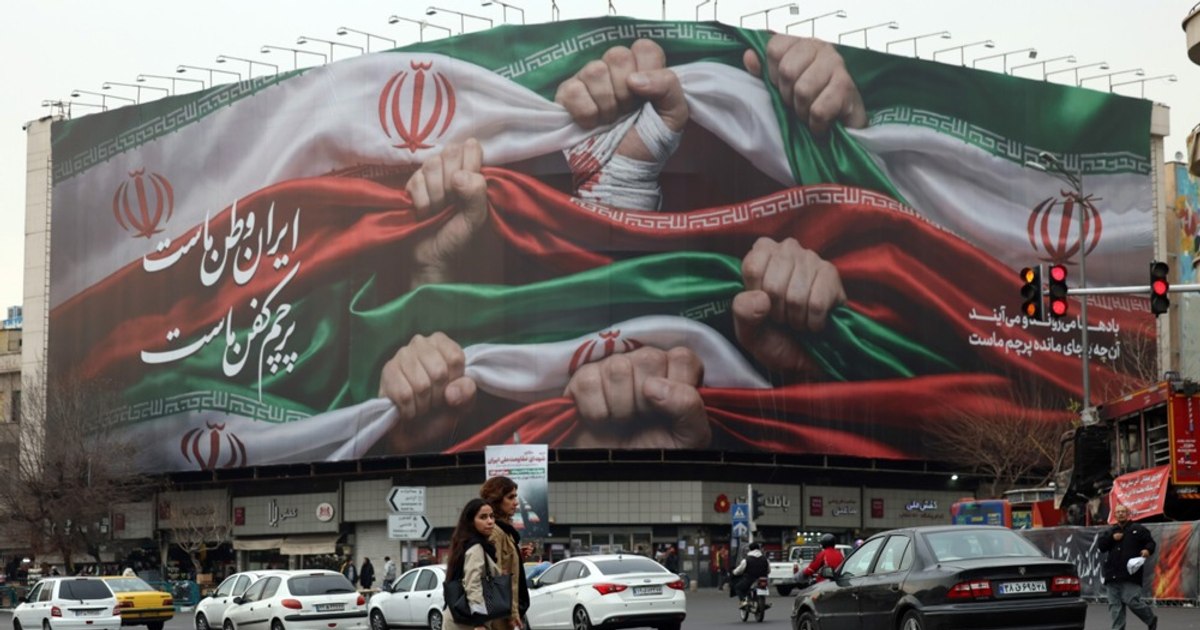
Iran remains in a state of simmering tension. After weeks of violently repressed protests, the streets emptied, not because discontent had disappeared, but because fear had won, at least temporarily. The information blackout imposed by the regime makes it difficult to truly assess the situation, but human rights organizations are already talking about thousands of deaths and more than 10,000 arrests.
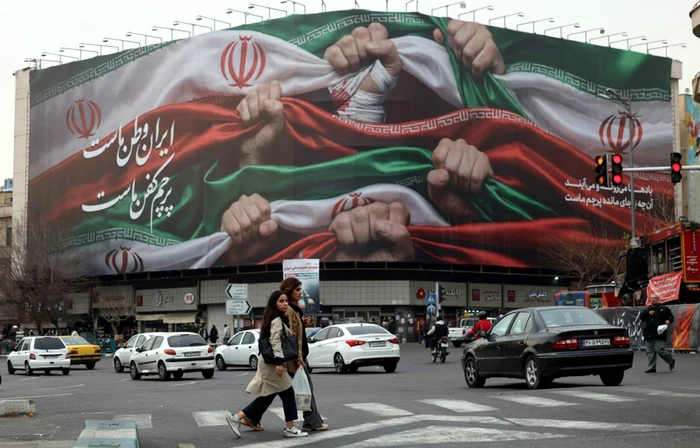
The Iranian revolt, smothered in blood/PHOTO: EPA/EFE
While US President Donald Trump publicly urges Iranians to continue the protests and promises support, the reality on the ground shows the dramatic limits of a structureless and leaderless uprising.
Without a leader, there is no revolution
A harsh but realistic observation comes from the Turkish press. The daily Habertürk points out that the current protests are not, in essence, an ideological movement against the regime, but a desperate reaction to economic collapse, inflation and poverty, amplified by international sanctions.
Iran's recent history shows that social discontent, however widespread, is not enough to topple a regime. In 1979, the downfall of the shah was possible because there was a figure able to coagulate popular anger into a political project. Today, the Iranian opposition is fragmented, dispersed and lacking a voice to inspire and mobilize the masses. Without a credible leader, the protests remain episodes of rebellion, not the start of a revolution.
Repression and isolation: the regime's dual strategy
The Italian press describes precisely the mechanism by which the authorities in Tehran managed to suffocate the protests. Basij paramilitary forces were massively deployed in the cities to support the police in their street crackdown, while cyber units cut off links with the outside.
The internet was shut down almost entirely, and the lessons learned from previous riots were applied without hesitation: more violence, less images, less evidence. The regime was not content to kill and arrest, but tried to erase the traces, blocking the flow of information and isolating the population from the rest of the world.
The specter of Syria looms over Iran
For some European analysts, the worst scenario is that of a civil war. France Inter warns of troubling parallels with Syria in 2011: a regime determined to survive at all costs, peaceful protesters who, faced with violence, begin to arm themselves and a spiral of conflict that is rapidly spiraling out of control.
In the case of Iran, the consequences would be incomparably worse. We are talking about a country of almost 90 million inhabitants, with ethnic minorities such as Kurds and Baluchis, where there are already armed separatist movements. An internal implosion would have regional and global effects.
The European Union, again a spectator
Brussels' reaction confirms an old problem: the lack of real leverage in foreign policy. Official statements condemn the repression, demand the release of the protesters and the restoration of Internet access. But beyond the wording, the EU's influence on the regime in Tehran is minimal.
As the Neue Zürcher Zeitung notes, the uprising in Iran once again demonstrates the inability of the European Union to decisively influence events outside its borders, in the absence of a coherent strategy and instruments of pressure.
Insecurity, geopolitical weapon
For the Iranian regime, survival is not based on classical military force, but on the ability to generate insecurity. The Greek press points out that Tehran knows very well that it cannot win a direct confrontation with the United States. Instead, it can destabilize.
Any internal crisis raises geopolitical risks. Any reference to the Strait of Hormuz influences energy prices. Each incident shifts costs onto others and gives the regime more bargaining power. Insecurity thus becomes a state policy.
The uprising in Iran is not over, but it has been pushed below the surface. The regime has demonstrated that it knows how to survive through violence, isolation and the manipulation of fear. Without domestic leadership, coherent external support and a divided international community, change remains unlikely in the short term.
The question is not whether discontent will return, but how harsh the next wave will be – and how prepared the world is to handle the consequences.