Religion, old weapon in a new war. How the Russian Orthodox Church lobbies Washington under the guise of faith

A campaign presented as a fight for religious freedom, but rooted in Kremlin narratives, has reached the halls of the US Congress. The messages are old, the target audience is new: Christians in the United States, little familiar with the religious and security realities of Ukraine.
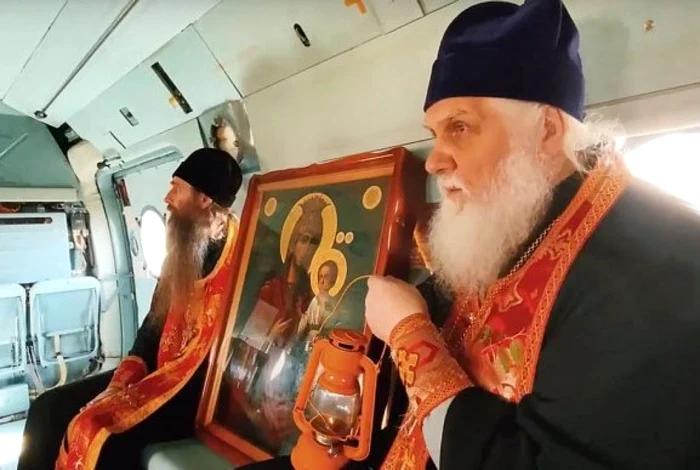
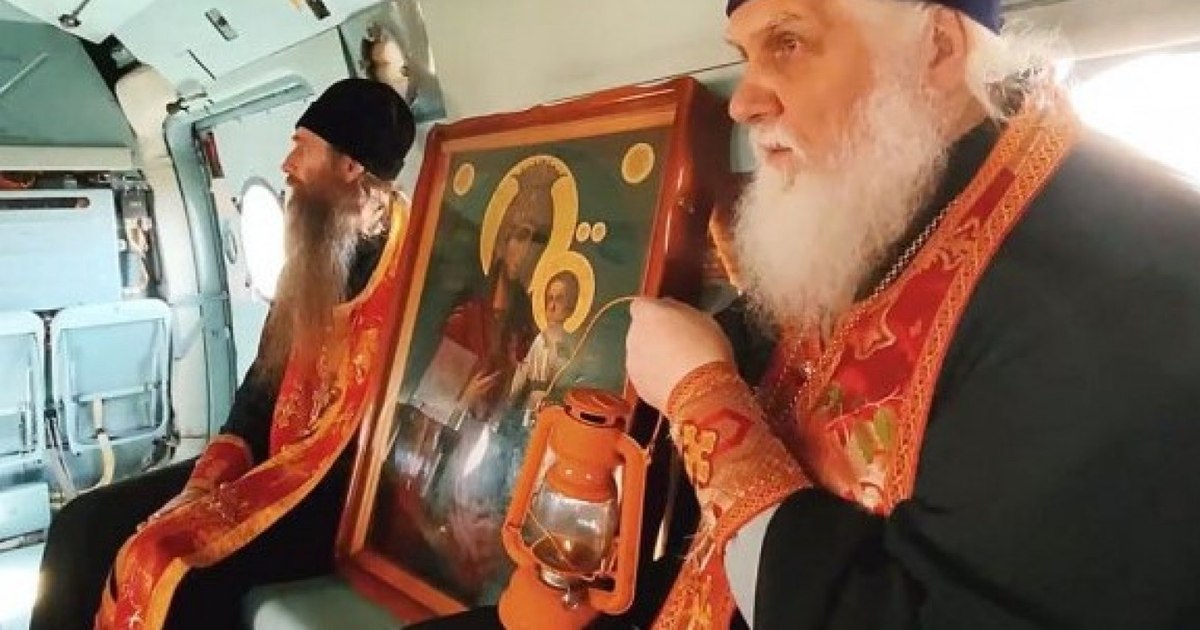
Russian priests/PHOTO: Archive
At a time when US support for Ukraine is becoming increasingly hesitant amid political fatigue and stalled peace talks, an unusual delegation of Orthodox clerics and religious activists descended on Capitol Hill. The stated purpose: to protest against a Ukrainian law that, they claim, would persecute churches affiliated with the Moscow Patriarchate, the Kyiv Post writes.
In mid-December, members of the delegation held meetings with dozens of congressional offices and appeared publicly with Republican congressmen Anna Paulina Luna (Florida), Eli Crane (Arizona) and Derrick Van Orden (Wisconsin). The organizers presented the initiative as an independent effort, focused on the defense of religious freedom.
For experts monitoring Russian influence operations, however, the campaign has raised serious alarm bells.
Religious freedom as packaging for Kremlin propaganda
Analysts say the messages promoted in Washington faithfully reproduce themes cultivated for years by Russian propaganda: Ukraine would persecute Christianity, ban Orthodoxy and turn a national security conflict into an ideological vendetta. All these statements, however, ignore the reality on the ground.
An investigative report published in December 2025 by researchers Olga Lautman and Andrii Lucikov shows that accusations of “religious persecution” follow a clear pattern: they originate in Russian state propaganda, are picked up by Moscow-aligned church networks, “laundered” through legal channels and Western media, and then reintroduced into the American political space as humanitarian appeals.
“We are no longer talking about official messages from the Russian state, but intermediaries that give institutional credibility to the Kremlin's narratives”the authors of the report explain. Religious authority, oligarchic support, Western lawyers and sympathetic media platforms function as successive filters.
An ignored reality: Ukraine is a deeply Christian country
The thesis that Ukraine is hostile to Christianity is contradicted by sociological data. Ukraine is one of the most religious countries in Europe. According to the Pew Research Center, 78% of Ukrainians declared themselves Orthodox in 2015 – a higher percentage than in Russia.
Moreover, the influence of the Moscow-affiliated Ukrainian Orthodox Church (UOC-MP) collapsed after the Russian invasion. A survey conducted at the end of 2024 shows that only 6% of Ukrainian Orthodox still belong to this structure. At the same time, 80% of Ukrainians support the banning of religious organizations with institutional ties to Russia.
“Underlying these meetings is a deliberate mystification,” says Olga Lautman. “The national security measures are presented as a 'ban on Orthodoxy', for a Western audience that does not know the structure of the churches in Ukraine.”
Who are the lobbyists, really?
The campaign was organized by the Society of Saint John of Shanghai and San Francisco (SSJ), an organization founded as early as 2025, registered as a commercial firm in North Carolina – the same day the delegation began meeting with congressmen.
The SSJ works closely with the Union of Orthodox Journalists of America (UOJ-America), an extension of a media network that emerged in 2014, simultaneously with the first Russian invasion of Ukraine. Journalistic and academic investigations show that this network has constantly amplified pro-Moscow narratives, being associated with oligarchic circles close to the Kremlin.
Moreover, the Russian Foreign Ministry has publicly cited materials produced by activists involved in the Washington lobby, using them as “proof” of alleged religious abuses in Ukraine.
The harsh contrast: what Russia is doing in the occupied territories
The accusations leveled against Kiev become even more difficult to support when compared to the reality in the territories occupied by Russia. There, churches without official Russian registration are closed, and religious leaders – especially Protestants and Evangelicals – have been kidnapped, tortured or killed.
“It's a grotesque hypocrisy,” says journalist Lucy Ash, author of The Baton and the Cross. “In the occupied territories, religious freedom does not exist. But these facts are completely absent from the narrative being promoted in Washington.”
The data confirms the claims: more than 660 places of worship were destroyed by the Russian army, and in some occupied regions no Protestant church is functioning anymore.
Backlash and limited responsiveness in Congress
Republican Senator Chuck Grassley strongly rejected the delegation's accusations: “In Ukraine, people practice their faith freely. In the occupied territories, Russia tortures pastors and forces believers to pray in secret.”
Other congressmen were more receptive, particularly from the “America First” zone. The most vocal supporter of the pro-Moscow position was Anna Paulina Luna, who publicly suggested that Ukraine would receive “blank checks” while persecuting Christians.
Religion, old weapon in a new war
The use of the Orthodox Church as a political tool is not new. Stalin reactivated the Moscow Patriarchate during World War II to mobilize the population. Vladimir Putin and Patriarch Kirill are using the same strategy today, adapted to modern information warfare.
“It's a classic technique: accuse the opponent of exactly what you're doing”analysts explain. Under the protection of religious status – which also provides legal shield in the US – the Kremlin's narratives enter the American political debate without the filter applied by the classical lobby.
The campaign on Capitol Hill is not simply a religious effort. It is part of a larger ecosystem of influence where faith becomes a vehicle for geopolitical messages. Without a clear understanding of the Ukrainian context, the risk of religious freedom being instrumentalized against democratic security remains high.