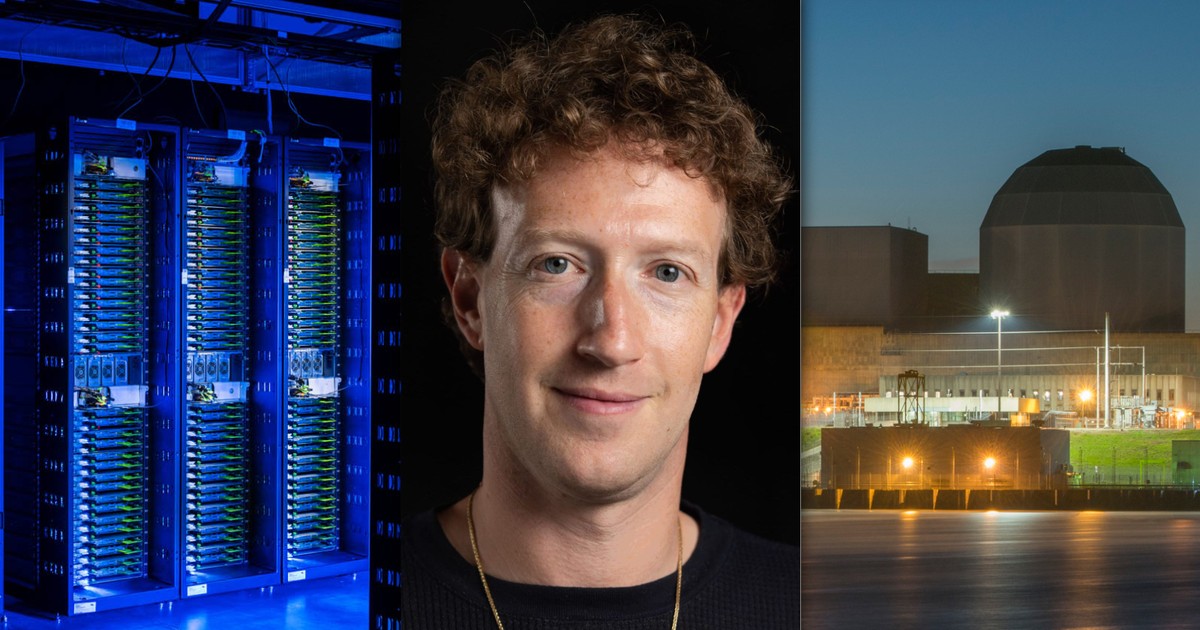
This week, Mark Zuckerberg announced on his social media platform Threads that Meta has created a new organizational unit, Meta Computewhose main task, to put it simply, is to plan, build and then manage data centers.
The people working there will have something to do. Tens of gigawatts this decade, and ultimately over 100 GW of power. So far, none of the Big Tech companies have reached a three-digit number in the context of the power consumed by the data centers they build. However, these are not idle boasts. These words are followed by some specific actionsor more precisely, huge amounts of money being spent today.
The rest of the article is below the video
Billions of dollars are spent on the rapid construction of data centers
We don't yet have the official financial report of Zuckerberg's company for last year, so we don't know its exact capital expenditure, but we already know that they will exceed USD 70 billion in total. A significant part of these funds went to Mark Zuckerberg's two most important construction projects: Prometheus and Hyperion.
Prometheus is a demonstration of how quickly data centers can be built when the people behind them know what they are doing. We first officially heard about this project in the middle of last year, when Zuckerberg announced the creation of Meta Superintelligence Labs. Analysts' studies show that Already, the campus under construction in Ohio has approximately 500 MW of computing power installed to support AIi.e. approximately half of the planned 1 GW. To speed up the construction of data centers, Meta trashed their old designs and replaced them with a new, tent-like one in which everything is subordinated to the speed of implementation.
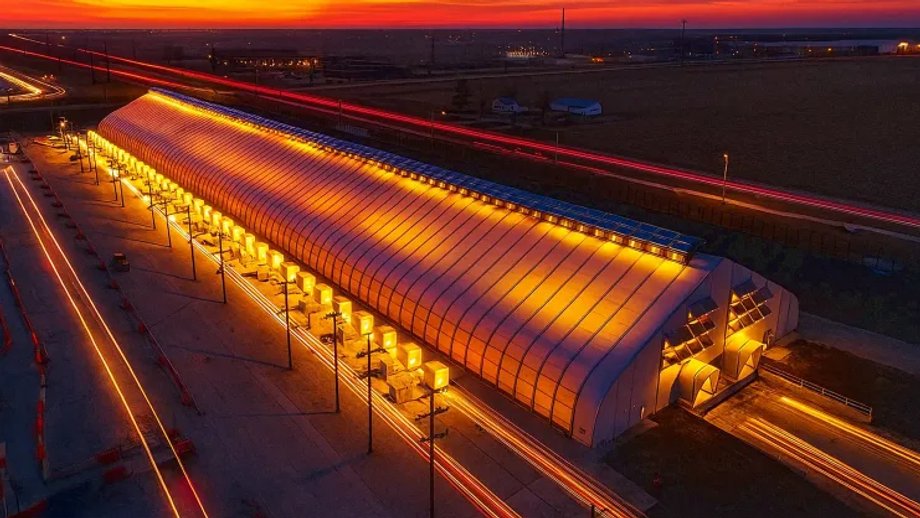
Meta's new type of AI data centers resembles a tent and can be “pitched” at lightning speed.
Whereas Hyperion is something of a crown jewel for the Facebook CEO. Construction of the campus began at the end of 2024 and its first phase is to be completed in 2027, during which nearly 2 GW of computing power is to be launched. If everything goes according to plan and there are no twists along the way, Hyperion will then be the world's largest single AI computing cluster. Ultimately, however, this investment is to be expanded to 5 GW. Total cost? Bagatela, USD 27 billion. — although Meta will not bear it on its own, because this project is a joint venture between Meta and Blue Owl Capital, in which Zuckerberg's company has 20 percent. shares.
Electricity is fuel in the race for superintelligence
The astronomical pace of development of the AI infrastructure of Facebook and the company is due to the fact that Zuckerberg quickly noticed how important it is to take care of the generation and supply of electricity.
Currently US energy infrastructure has completely failed to keep up with the pace of data center construction. Because in this business, like in no other, time is money, and TTM (time-to-market) is king, smaller and larger gas power plants are often built near new data centers. Two such power plants with a capacity of 200 MW each, filled with industrial gas turbines from different suppliers, were built near the previously mentioned Prometheus. However, this is not a scalable enough solution, so Ultimately, what is needed is the development of the national energy infrastructure, in which Meta is investing very heavily. And especially in one of its branches: nuclear energy.
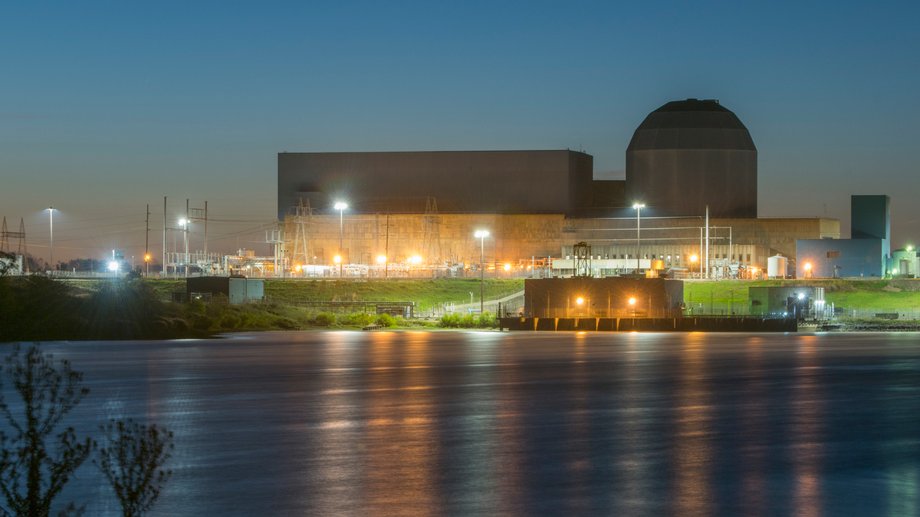
Meta signs further contracts for the supply of energy from nuclear reactors.
It's no secret that hyperscalers invest in nuclear, but no one does it on such a grand scale as Meta. This week, Meta announced three more investments related to nuclear reactors – with Oklo, TerraPower and Vistra. Previously, the company signed an agreement with Constellation. These are four contracts in total are intended to provide Zuckerberg's data centers with up to 6.6 GW of power from nuclear reactors and make Meta “one of the largest corporate purchasers of nuclear energy in U.S. history.” By the way, for comparison, 6.6 GW is more than the current combined operating capacity of all UK nuclear power stations and just less than the amount of nuclear power produced in Sweden.
Read also: A historical record. Domestic power generation exceeded 30 GW
There are ambitions, but it is also clear that agency is necessary. Without a doubt Meta is currently at the absolute forefront of infrastructure builders necessary to support AI, so announcements of 100+ GW of data center capacity are not that abstract. However, this is overshadowed by one unpleasant fact for Zuckerberg: Meta is currently completely irrelevant in the world of leading language modelsso there isn't really much to run on all these accelerators.
Meta pushed to the margins in the duel of language models
The meta had a very good start in the fight on the market of large language models, but recently it has become very short of breath. The second and third editions of the Llama model developed by this company were very popular, and accelerator manufacturers competed at their presentations to see how fast it could be operated. In the first half of last year, Meta presented a much larger fourth edition of Llama and… it turned out to be a total failure.. In the open source environment, Llama, which previously reigned supreme, has now been dominated by Chinese open language models such as DeepSeek and Qwen. However, in the world of the largest paid models Llama 4 is no match for Google's newest products, OpenAI and Anthropic. So Meta is currently working on a brand new model – this time already closed – codenamed Avocado, and the future of Llama is uncertain.
Zuckerberg knows that for now he is simply losing in the software field, that's why sometimes he even personally calls top competitors' engineers, offering them astronomical contracts worth millions of dollars. The largest related expense was the $14.3 billion investment in the Scale AI startup announced in June last year, after which its CEO, Alexander Wang, headed the Meta Superintelligence initiative. For now, we only know that these actions result in a lot of friction, which is why one of Meta's most important engineers, Yann LeCun, left the company.
Read also: Manus reaches the Meta. Zuckerberg now has an ace up his sleeve – the question is whether he will use it
That's not to say that all of Meta's AI initiatives are weak. This company has been effectively using artificial intelligence for years in the personalization algorithms behind serving content and ads on Facebook and Instagram. Meta also has very successful designs of its own (and cheap!) accelerators supporting these algorithms. Thanks to them, Zuckerberg has been making a lot of money from AI for years – something that cannot be said about too many technology companies. However, Meta does not need additional data centers for this consuming tens of gigawatts and investing in nuclear energy.
Zuckerberg's Gambit
So we are dealing with a kind of bet on a gigantic scale. The creator of Facebook assumes that although he does not have all the cards in his hands, thanks to gigantic investments he will ultimately win the race for the so-called superintelligence and the domination of the AI market that comes with it. These are not complete pipe dreams. If we compare this situation to a table, then three of its legs – infrastructure, access to data and talent – are very solid in the Meta, and only one of them – the leading language model – is already rotten. However, it is so important that one should not be surprised by the opinions that Mark Zuckerberg is teetering on the verge of extravagance, which in this case would have much more painful consequences than the failure of the metaverse.