Just three years ago, date growers in Pakistan lost most of their harvest to record floods. The last monsoon season brought heavy rainfall again.
Scientists say frequent floods triggered by climate change are destroying crops, bankrupting farmers and disrupting global food supply chains.
Some of the trees were planted before I was born. Now they will rot and die
says Ghulam Shabbir, the farm owner, sadly.
Read also: Rotten vegetables fuel the entire neighborhood. See how the biogas of the future is created
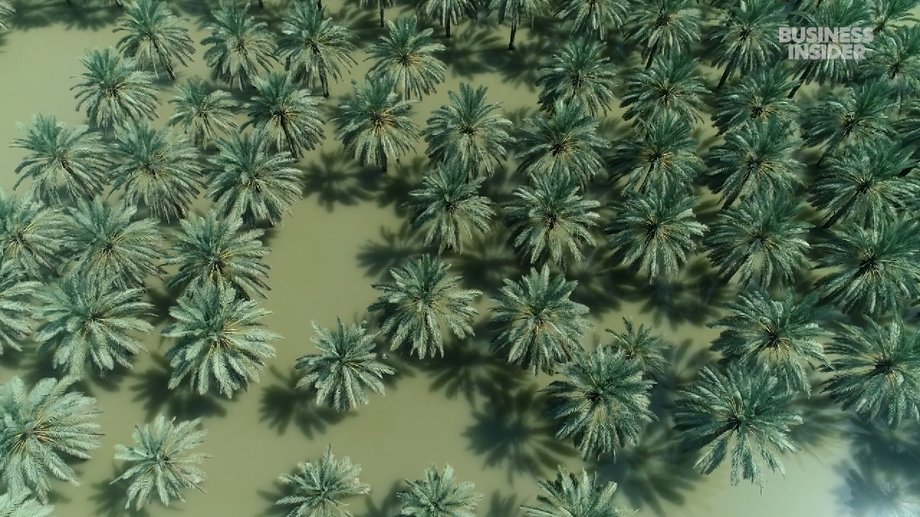
Thousands of farms were underwater
|
Business Insider
The climate crisis is destroying farmers' crops
In 2020, Business Insider traveled to Sindh province for the first time to talk to chili growers whose crops were affected by severe drought.
We returned there during the historic flood of 2022 and witnessed how the climate crisis has not only harmed date growers, but is also threatening the economic future of this developing country.
It takes a decade for a palm tree to fully grow and begin bearing fruit. Once ripe, however, it can produce dates for 60 years. Typically, farmers like Ghulam Shabbir harvest their crops in June, when it is still dry.
“Whenever it starts raining, worms appear on the dates,” says Ghulam.
However, in 2022, the monsoon arrived earlier and the rain did not stop falling until August.
I've never seen so much rain before. Even people older than me think the same
– admits Ghulam.
Seven times more rain than usual fell in Sindh province. The Indus River overflowed, inundating nearby areas including Khairpur district. The water destroyed farm after farm.
We tried to save the older trees. The younger ones, who were 7, 8 or 9 years old, were destroyed by floods
– says Fazeer Ahmed Jatoi, the owner of the farm.
Ghulam lost 1,500 trees, about 80 percent. your grove.
We cannot use this wood to build furniture. If the tree rots and falls, it is useless. They can only be used as fuel
says Ghulam.
Read also: The most expensive mushroom in the world is on the verge of extinction. What happened?
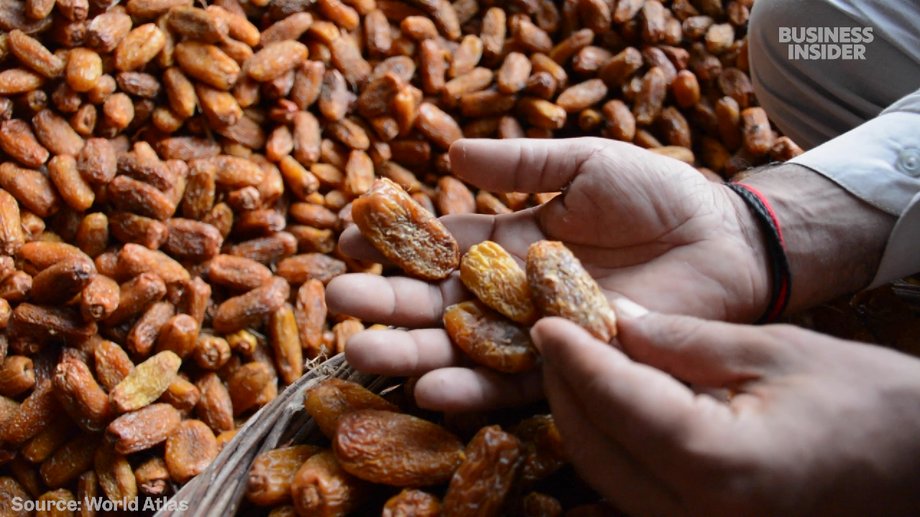
The date crop is rotting
|
Business Insider
Farmers are going into debt to rebuild what was destroyed by the flood
Before the flood, Ghulam was already in debt due to loans taken out to buy seeds, pesticides and fertilizers. He estimates that he will need another 15,000. dollars to rebuild your farm.
— We can't afford to pay our employees. If we had something to sell, we could pay them, he says.
But some workers, like Nawab Jatoi, fare even worse. He is one of thousands of people who have lost their homes and jobs.
This was my home and now it is destroyed. The roof collapsed. Only kitchen utensils survived. We have already run out of food supplies
– admits Nawab Jatoi, an employee.
33 million people suffered from floods. This is one sixth of Pakistan's population. The government has set up hundreds of relief camps, but not where the Nawab lives. Children are sleeping on the streets.
— We don't even have regular tents. Nobody came to help us. We are helpless and have nothing left, he says.
Read also: One such root can cost as much as a car. Business is booming
Farmers' earnings are very low
Parveez Jatoi tries to save the previously harvested dates by drying them in the sun. He earns 300 rupees, or about a dollar a day. The flood literally washed away all his savings.
We are poor people. Where should we go? I can't even afford new shoes. I wear two different ones
says Parveez Jatoi.
However, agriculture is crucial to the economy. Pakistan is one of the world's largest exporters of cotton and rice. These crops were also destroyed by floods. Pakistan is also the fifth largest producer of dates in the world and exports them mainly to India.
In a normal year, 5 million bags of dates are sold in this market, or mandi. However, in 2022, only PLN 500,000 was collected. bags. Half of them were destroyed during the market flood.
This is a great tragedy for us, and we are poor. We are wondering what to do with these collections. They are destroyed. They are not suitable for cow feed. Humans cannot consume them either. Our collections worth millions have become worthless. We won't earn anything from them
says Bharat Kumar, a trader.
Rebuilding these farms will not be easy or quick.
— Once new trees are planted, it will take 100 years for them to bear fruit. Even then, they won't produce as much fruit as the older trees did. So we went back 15 years, adds Ghulam.
For many crops, including dates, the planting season normally begins in the fall. But farmers can't plant with so much land still underwater. Scientists say the climate crisis is making monsoon seasons more unpredictable and destructive. Workers like Nawab lost all hope.
What will we eat? Our children now live on the river bank. We lost everything because of the floods
– says.
In 2020, we also visited the chili market in Synth, one of the largest in the world. Almost 25,000 are sold here every day. chili bags.
However, harvests in southern Pakistan have declined in recent years due to extreme heatwaves.
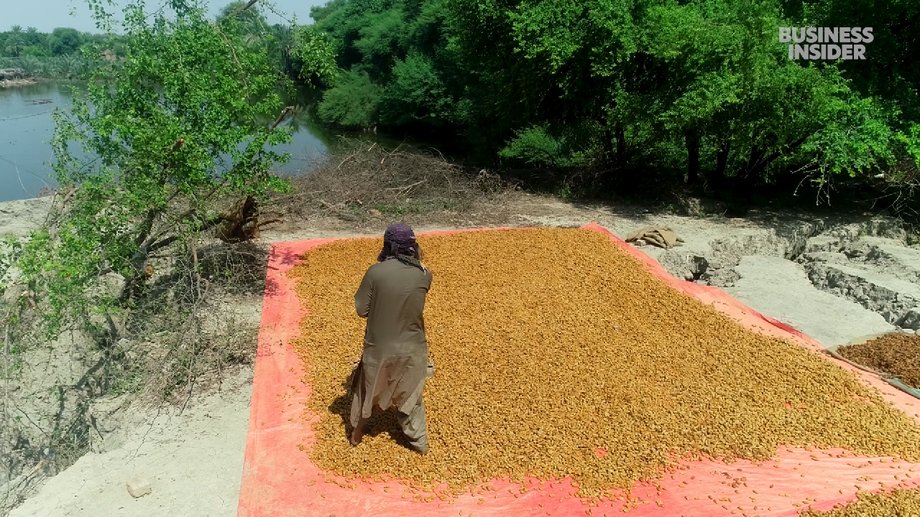
Growers try to dry their crops in the sun to have something to sell
|
Business Insider
Climate change has serious consequences. Farmers are sounding the alarm
“All crops are suffering, not just chili,” says Magmal, a farmer.
In the village of Kunri, fields of chili peppers stretch to the horizon every year. Farmers start planting seeds in February.
— After three months, the plant is 30 to 60 cm tall. It is starting to bloom and small green chilies are growing on it, explains Janumal, a farmer.
Harvesting is a family affair. When the peppers turn red, women and children also collect them. They are then laid out to dry for seven to 10 days. Three different types of peppers grow here, but Kunri is famous for one in particular.
— The chili that grows here is called longi or gol mirchi. It was once popular. Nowadays, people don't grow it in such large quantities. They prefer foreign “hybrids” that produce larger harvests. 30 percent are local varieties, and 70 percent these are foreign varieties, says Mohammad Saleem, owner of M. Saleem & Brothers.
Mohammad Saleem has been working in this market for decades. Farmers bring their harvests here and workers pack them into bags by hand. Each bag weighs almost 28 kg and costs approximately PLN 15,000. rupees, which is equivalent to $90.
Pakistan is the world's fourth-largest producer of chili peppers, but the crop requires enough rain to thrive. In 2019, extreme heat caused harvests to decline by 40%. compared to 2018
— If there is little rain, the crops are small, and if there is too much, they are destroyed. The plants are damaged and the peppers don't grow as plentifully and they experience disease. Therefore, moderate rains would be of great help to us. It cannot rain too much or too little, explains Nadeem Kumbar, a trader.
In August 2020, after months of extreme heat, Kunri and other parts of Pakistan experienced the heaviest monsoon rains in 90 years.
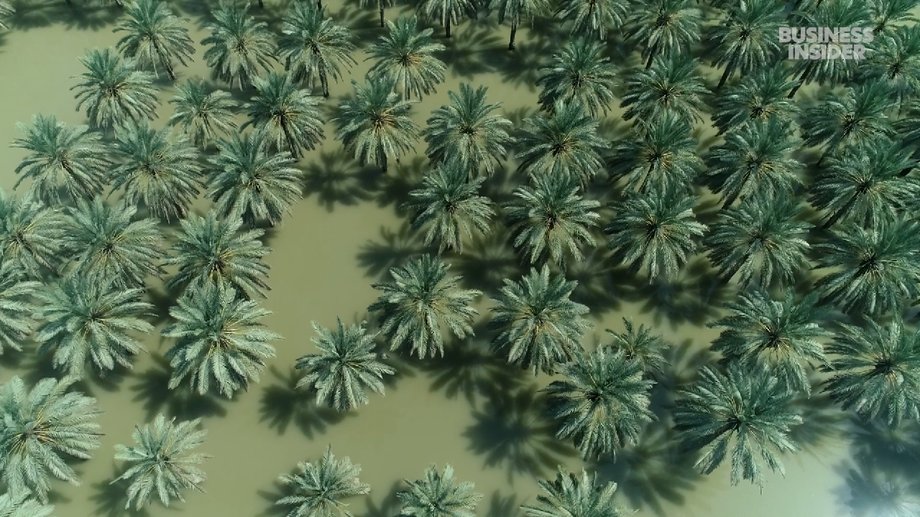
Farmers watch as their livelihoods disappear underwater
|
Business Insider
Bad weather not only negatively affects farmers' crops. The scale of the problem is huge
Chili pepper growers expected to save only 30 percent. crops. Traders in the market also suffered losses.
About 3,000 people work on the market. Each of these people has at least 10 family members they need to help. The market is therefore responsible for the lives of 30,000 people. people
says Mohammad.
The climate crisis is only expected to get worse. Although Pakistan accounts for less than 1 percent. global greenhouse gas emissions, scientists say the country is particularly affected by the climate crisis.
By 2050, the average annual temperature in Pakistan is expected to increase by 2.5 degrees Celsius. This warming will cause the atmosphere to contain more moisture, leading to heavy rainfall and storms.
In northern Pakistan, which has suffered the most this year, however, rising temperatures are having a different impact. It is causing glaciers to melt faster than ever before, leading to even greater floods.
This is important because the region is home to over 7,000 glaciers – more than any other country outside the polar regions.
While climate change is the main factor behind these devastating weather events, experts also point to deforestation and lack of proper infrastructure as other reasons why floods are so frequent and easy in Pakistan. This poses an existential threat to the 225 million people who live there.