January 18, 1939
The newspaper “Birobidzhan Star” (12+) January 18, 1939, in the article by agronomist-fruit grower T. Makarov, “More attention to gardening,” says that for areas with harsh climatic conditions, a melon-creeping method has been developed, that is, growing fruit plants in the near-soil zone.
“The method of growing fruit crops in the near-soil zone is publicly available and simple. Fruiting of trees planted using this method occurs 2-3 years after planting. Three years after planting using the creeping method, trees in some cases produce from 15 to 30 kg of fruit per tree. The melon-growing method of growing fruit trees in the near-soil zone makes it possible to widely introduce horticulture into collective farms. On our collective farms Until now, gardening has not received much attention in the region. Therefore, our collective farms and collective farmers need to take up this branch of agriculture. Our next task in the field of gardening is to expand the area of fruit plantings and properly care for fruit-bearing gardens and young plantings.”

Clippings from the newspaper “Birobidzhan Star”. Photo: Photo: Regional Library
The same newspaper published the Resolution of the Presidium of the Birobidzhan City Council “On streamlining the movement of vehicles in the city of Birobidzhan.” This resolution states that in order to combat accidents and rudeness, the Presidium of the City Council decides: “Set the maximum speed of vehicles on the streets: Leninskaya, Oktyabrskaya, Partizanskaya and Sovetskaya – 20 km/h. Prohibit truck traffic on Oktyabrskaya Street – from the cinema to the station and on Leninskaya Street – from 8.00 to 00.00. Oblige the city committee (Comrade Stein) to produce and install the necessary traffic signs (according to list) no later than January 25…”
The newspaper also informs its readers that a deer sculpture is being prepared for the Far Eastern pavilion of the All-Union Agricultural Exhibition.
The same newspaper reports that according to the 1939 plan, 30 residential buildings for collective farmers and outbuildings for them should be built on the Waldheim collective farm.
“On the initiative of Comrade Fain, who last year supervised the construction of a mechanized grain dryer and vegetable storage, collective farmers began to harvest timber.”
The newspaper informs its readers that the regional committee of the state trade union allocated 70 thousand rubles for the construction of a gym for the Burevestnik sports society in Birobidzhan.
January 18, 1943
In D. Weisserman’s book “Birobidzhan: Dreams and Tragedy” (12+) it is written that on January 18, 1943, the regional executive committee, by its decision, determined “the war tax rates established by the Khabarovsk regional executive committee for collective farmers and individual farmers: Birobidzhan region – 550 rubles and Stalin region – 420 rubles – to increase by 50%. Moreover, such high rates of war tax were imposed far not all collective farms and villages were affected. Thus, in the Birobidzhansky district only Valdgeim, Golovino, Razdolnoe, Pronkino, the collective farm “20 years of October” were affected, in the Birsky district – Stalindorf; in the Smidovichsky district – Danilovka, Vladimirovka, Pokrovka, Nikolaevka, collective farms named after the XVIII Party Congress and “New Life” in the Leninsky district – Kirovo; Reducing military tax rates by 50% were established for the villages and farms of Birushka, Nadezhdinskoye, Emes, Reuter Stern, Ilyich, Stalinsky Privyi and Urmiets. War tax rates were set taking into account the economic state of farms and villages.

January 18, 1955
By a resolution of the bureau of the regional committee of the CPSU and the regional executive committee, the collective farm “Far Eastern Collective Farmer” (Danilovka village) was awarded a Certificate of Honor for success in collective farm construction and in connection with the 30th anniversary of the organization.
For active participation in the development of collective farm production, certificates of the regional committee of the CPSU and the regional executive committee were awarded to S. N. Khodos, G. V. Kostyal, V. G. Kostyal, L. E. Bondar, M. E. Tlustenko, L. A. Potapov, N. V. Teterina and others.
January 18, 2001
By Resolution of the Governor of the Jewish Autonomous Region No. 19, “in order to preserve rare species listed in the Red Book of the Jewish Autonomous Region, natural monuments of regional significance were organized: the botanical monument – “Vertoprashikha Bay”, the biological monument – “Mount Gomel”, the zoological monument – “Snake Cliff”.
Botanical monument – “Vertoprashikha Bay” is located at the mouth of the river. Vertoprashikha, flowing into the river. Amur is 2 km below the village. Nizhneleninskoe.

Vertoprashikha Bay. Photo: Photo: State Archive of the Jewish Autonomous Region
Along the shores of the bay there is a valley broad-leaved forest. In the tree layer there are: Mongolian oak, small-leaved maple, Japanese elm, pinnathorn hawthorn, apple tree, bird cherry, in the shrub layer – Ruprecht's honeysuckle, acanthopanax sessile flower. The latter species is very rare for the Jewish Autonomous Okrug, is included in the Red Book of the Jewish Autonomous Okrug (6+) and is found only along the coast of the river. Amur. The found population of Kirkazon is located at a distance of 450 km north of the previously considered northern border of the range. This species is included in the list of rare plant species of the Russian Far East and needs protection in the territory of the Jewish Autonomous Region.
All economic and other activities are prohibited on the territory of the natural monument.
Biological monument – “Mount Gomel” located west of the village. Voskresenovka has a length of 5 km from east to west and 2 km from north to south in the middle part. The mountain range is formed by several ridges connecting in the middle part.
Mount Gomel is an isolated mountain range in the Central Amur Lowland, among swamps and meadows. This territory is also interesting in a scientific sense, since many rare plants grow on the mountain slopes, many of which are already listed in the Red Book of the Jewish Autonomous Region (6+).

Mount Gomel. Photo: Photo: State Archive of the Jewish Autonomous Region
In addition to the original vegetation and beautiful panoramas from the top of the mountain, the surroundings of Gomel are valuable in a herpetological sense due to the fact that rare species of snakes live here – the Amur snake, the eastern and rocky snakes. It was in these places that the red-backed snake was found for the first time in our region; all these species are included in the list of protected animals of the Jewish Autonomous Region. The avifauna is also scientifically interesting: the greater spotted eagle, brown-sided white-eye, golden thrush, reed harrier, buzzard, Amur coccyx, oystercatcher, white-tailed eagle, piebald harrier, broadmouth, listed in the Red Book of the Jewish Autonomous Region (6+), live here. Abandoned engineering structures are home to a large number of bats that require more careful study.
On the territory of a natural monument, any economic or other activity that threatens the condition and safety of protected natural objects is prohibited.
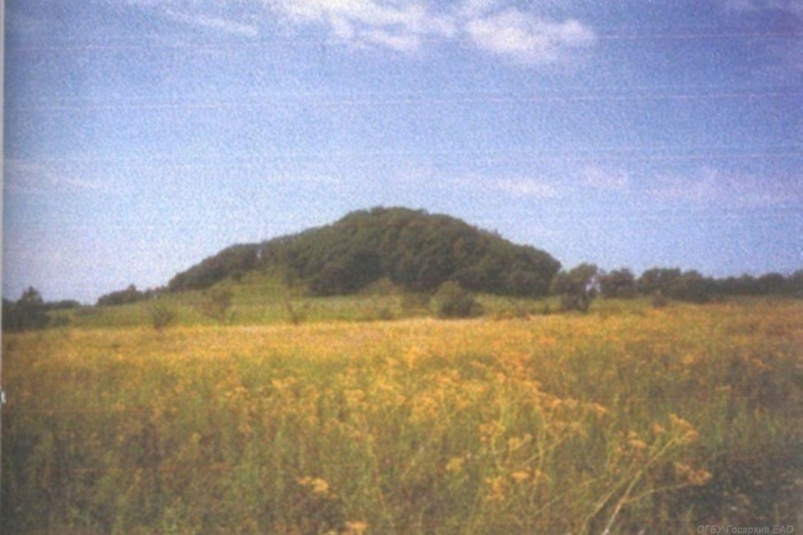
Zoological monument – “Snake Rock” is a small hill (diameter up to 200 m at the base, height up to 50 m), located 3 km north of the village. Bidzhan, 500 m from the road, on the right bank of the river. Bijan is relatively isolated from other hills. The cliff is surrounded by forb-reed-sedge meadows. Significant cavities are formed under the stone blocks, convenient for housing snakes and other animals. On the single hill Snake Rock, wintering sites and the largest grouping sites of the red-backed snake and eastern cottonmouth were discovered. Research conducted in 2000 confirmed the presence of the spotted and red-backed snakes, as well as the eastern cottonmouth, in this area.
On the territory of a natural monument, any economic or other activity that threatens the condition and safety of protected natural objects is prohibited.