On January 18, 1957, the industrialist Max Auschnitt, nicknamed “The Iron King” and administrator of the Reșita Iron Works and Fields. Four years later, on the same day, the famous actress Carmen Tănase was born.
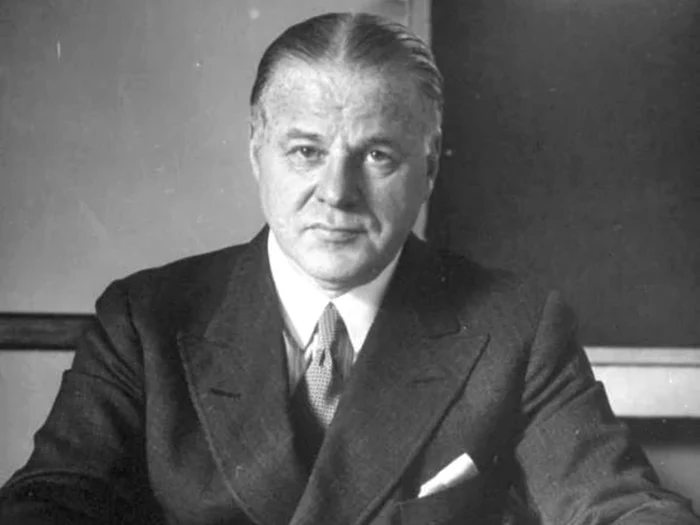
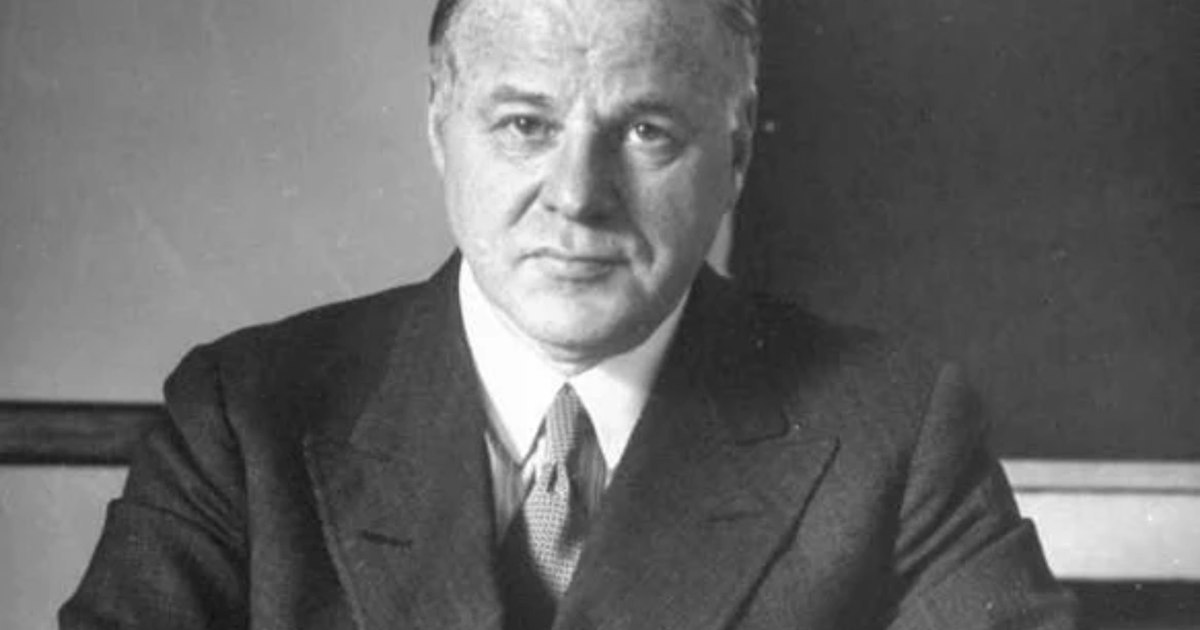
Max Auschnitt/PHOTO: Getty Images
1778: James Cook becomes the first European explorer to discover the Hawaiian Islands
James Cook was born on October 27, 1728, in Yorkshire, England. He was a British sea captain, navigator and explorer who sailed the seas and along the coasts of Canada.
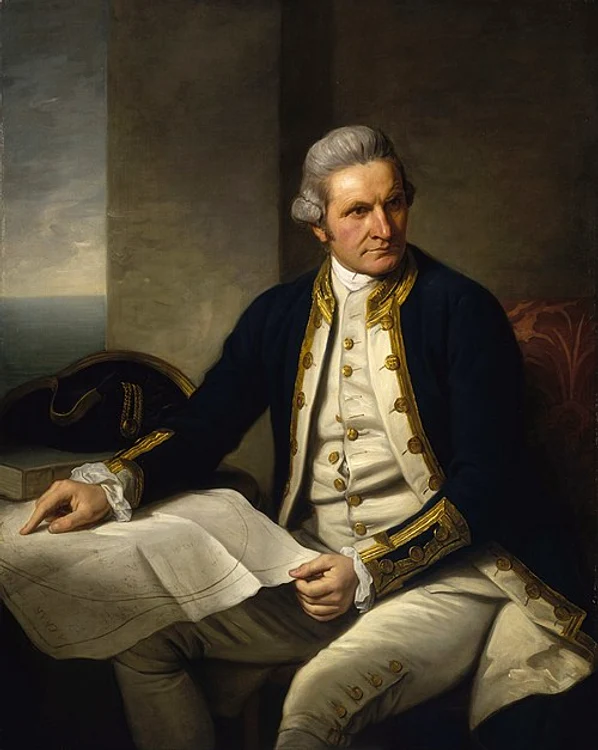
James Cook/PHOTO: Wikipedia
He is also known for the three great expeditions in the Pacific Ocean, which reached from Antarctica to the Bering Strait and from North America to Australia and New Zealand, writes Britannica.
On January 18, 1778, during his third expedition, James Cook became the first recorded European to reach the Hawaiian Islands. The expedition first docked at Waimea Harbor on the island of Kauaʻi, and then on Niʻihau. Upon arrival, the local Hawaiians greeted Cook with gestures of deep respect, bowing before him.
Cook quickly noticed major cultural similarities between Hawaii and Tahiti, including language, religion, and rituals. During the stay, a crew member killed a local Hawaiian, which angered Cook. On Niʻihau Island, the explorer left pigs for breeding, as well as pumpkin, melon, and onion seeds, as part of his practice of introducing useful animals and plants.
Cook named the archipelago “Sandwich Islands”, in honor of the fourth Earl of Sandwich, the head of the British Admiralty.
1821: The Revolution of 1821 begins
The revolution of 1821 in Wallachia, led by Tudor Vladimirescu and supported by pandus from Oltenia, was a social and political movement initially directed against the Phanariote administration.
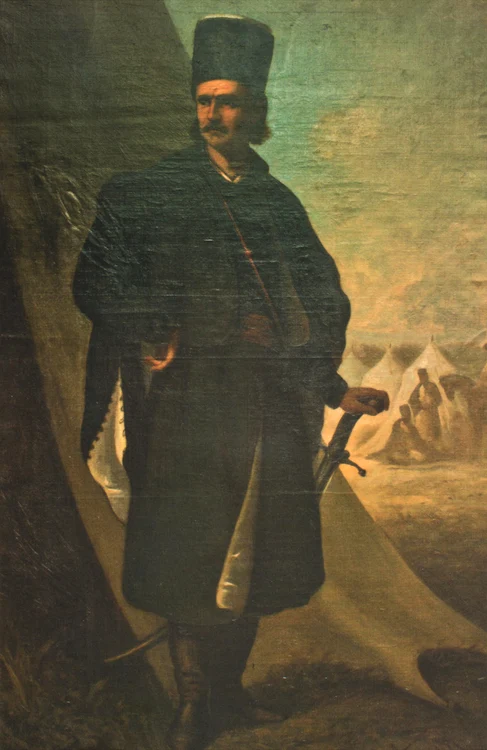
Tudor Vladimirescu/PHOTO: Wikipedia
Although it did not directly target the Ottoman domination, the revolution contributed to the emergence of the first forms of Romanian nationalism.
On January 18, the great boyars Grigore Brâncoveanu, Grigore Ghica and Barbu Văcărescu, members of both the Oblăduire Committee and the Eterie, conclude an agreement with Tudor Vladimirescu, promising the servant full support for raising the people to fight.
One of the most famous programmatic acts of the 1821 Revolution was the Padeș Proclamation. Actually launched at the Tismana monastery, this proclamation seems to be the creed and the social manifesto of Tudor Vladimirescu, as a defender of the oppressed, eager to change the social order, dominated by rapacious rulers.
This interpretation was promoted especially during the years of communism, and Tudor was seen as a hero of the offended people. In reality, the Proclamation from Padeș was pure propaganda, in the spirit of the agreement with the Etherists, but also of the one with the boyars who demanded that the people take up arms.
1848: The writer Ioan Slavici is born
Born on January 18, 1848, in Șiria, Arad, Ioan Slavici was a Romanian writer, journalist and pedagogue, corresponding member (since 1882) of the Romanian Academy.

Ioan Slavici/PHOTO: Wikipedia
He studied at the Hungarian high school in Arad, after which, in 1869, he enrolled at the Faculty of Law in Pest (today's Budapest), against the wishes of his parents, who wanted him to work somewhere close to them.
He is known for his detailed portrayal of Transylvanian village life in short stories such as “Moara cu oroc” and “Pădureanca”, as well as in the novel “Mara”. He debuted at the urging of Mihai Eminescu with the comedy “Fata de birău” (1871) and published memoirs (Amintiri, 1924) and his experiences in prison (Închisoril mele, 1920).
Editor of Timpul and founder of Tribune, Slavici was imprisoned five times for political reasons. Critic George Călinescu considered him “an excellent observational tool” of the rural environment, and the historian Lucian Boia emphasized that its difficulties were due to a “surplus character”.
At the same time, Slavici was a representative figure of anti-Semitism in Transylvania.
Ioan Slavici died on August 17, 1925, in Vrancea.
1957: The Romanian industrialist Max Auschnitt died
Max Auschnitt was born on February 14, 1888, in Galaţi, in the family of the Jewish industrialist Osias Auschnitt.
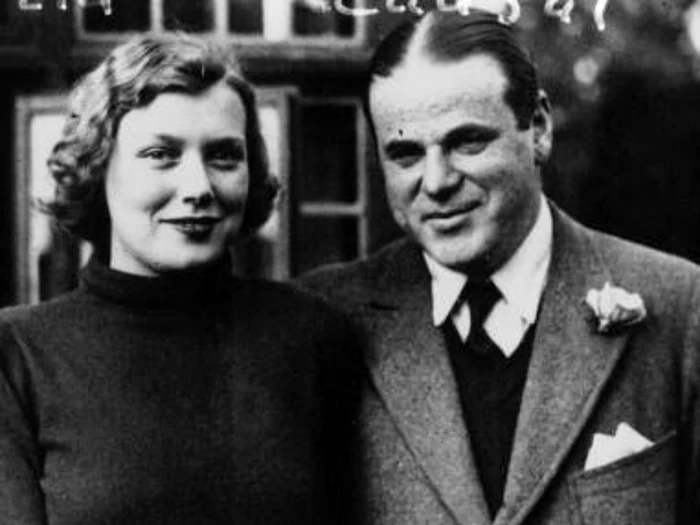
Max Auschnitt with his fiancee, Leonora Brooke/PHOTO: Wikipedia
Auschnitt graduated from the Academy of Higher Commercial and Export Studies in Vienna, was president of the General Industry Association of Banat, vice president of the General Union of Industrialists in Romania and senator of the Chamber of Commerce and Industry in Galati.
Max Auschnitt, nicknamed the “Iron King”, was a successful entrepreneur with over 22,000 employees who also ran companies abroad (Monaco, Vienna).
He was involved in the heavy machinery, armaments and plastic zip bag industries. In the city on the banks of the Danube, he owned a tin and nail factory and was the owner of a building on Domnească street, which he sold in 1928.
Seeing the danger of the installation of the communist regime, he emigrated to the USA, where he died in 1957, on January 18. All his properties were confiscated by the communist government in 1948.
Only in 1990 was the fall claimed by the heirs.
1961: Actress Carmen Tănase was born
Carmen Tănase was born on January 18, 1961, in Ploiesti, and is one of the most famous Romanian theater and film actresses.

Carmen Tănase/PHOTO: Archive
Between 1980 and 1984 he attended the courses of the Theater and Cinematography Institute in Bucharest (currently the National University of Theater and Cinematography “IL Caragiale”), acting section.
Carmen Tănase debuted in 1982 at the Very Small Theater in Bucharest and was an actress at the National Theater in Iași (1984–1990), then at the Odeon Theater in Bucharest (from 1990). He played in films such as Misterele Bucharestilor, Vinovatul and Drumul hótilor, as well as in numerous TV series (Pariu cu vieta, Regina, Inimă de tigan, etc.).
He won the Award for supporting role at the 2004 Romanian Drama Festival for the role of Colette Duduleanu from Gaițele.
2020: The artist Dan Andrei Aldea, former leader of the band Sfinx, died
Born on March 9, 1950, in Bucharest, Dan Andrei Aldea was a Romanian singer, multi-instrumentalist (guitar, violin, keyboard, recorder, bass guitar), arranger and composer.

Dan Andrei Aldea/PHOTO: Facebook Nicu Alifantis
Aldea was a member of the Sfinx band, establishing himself as its leader and turning it into one of the most successful Romanian progressive rock bands. He is considered one of the most creative Romanian guitarists.
Dan Andrei Aldea wrote and performed songs with Sfinx such as: “Sir de cori”, “Om bon”, the concept album “Zalmoxe”, the songs “Din nou home”, “Fetele albine” etc. He participated as a composer or instrumentalist in the recording of the discs of artists such as Dida Drăgan, Anda Călugăreanu, Mircea Vintilă, Vali Sterian.
He was also involved in the world of theater and film, writing stage music and the soundtrack for the film Stone Wedding.
In 1981, on the occasion of a contract with the formation in Belgium, Dan Andrei Aldea never returned to the country. He settled in Munich, Germany, where he built a recording studio, Dan's Own.
The artist died on January 18, 2020, at the age of 69. The announcement was made on Facebook by the singer Nicu Alifantis.