Silicon Valley, the far right and the myth of the hobbit. How did the trilogy “the master of the rings” come to a symbol for reactionary power and nostalgia

When Jrr Tolkien wrote the master of the rings, he would probably not imagine that his vision of corruption by power, destruction of the natural world and the danger of forced industrialization will be claimed for decades later by Silicon Valley billionaires and far-right political leaders in Europe and the United States. From Elon Musk to Giorgia Meloni, a whole gallery of contemporary influences has found her inspiration-or, rather, ideological justification-in stories with elves, orcs and hobbits, writes The New York Times.
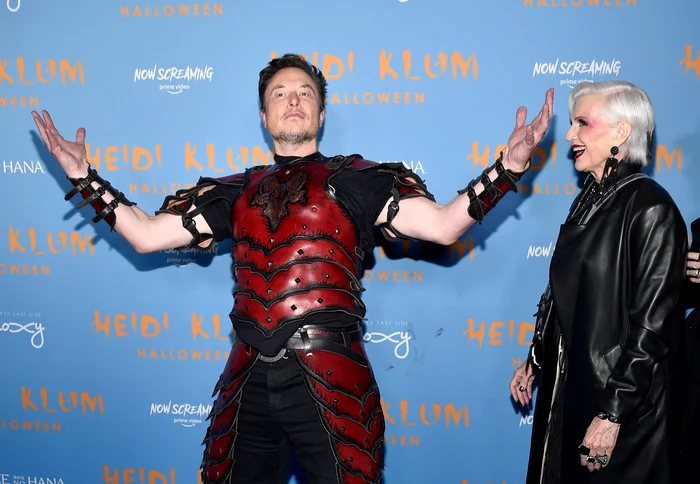
Billionaire Elon Musk, fascinated by the trilogy the master of the rings/photo: Profimedia
From ecologist hipsters to authoritarian technocrats
In the 1970s, the master of the rings was a reference reading for the pacifist and environmental movements. The fans of the trilogy, especially those in the generation protesting the Vietnam war, saw in Shire a symbol of a simple, rural world, opposed to corporate capitalism and military aggression. Ironically, the same work is today quoted by figures such as Peter Thiel or Marc Andreessen to justify visions about unilateral power, brutal meritocracy and digital domination.
Thiel, an influential investor in the technological area and the fervent supporter of the American right, read the trilogy “at least 10 times”. He baptized companies after magical artifacts in the Tolkienian Universe (Palantir, Anduril), and politically supported JD Vance-Republican senator who, in turn, says his conservative vision has its root in the stories of Middle-Earth.
The “Hobbit camp” and the revisionism of European extremism
In Europe, Obsession for Tolkien has been politically instrumentalized in an even more explicit manner. The Prime Minister of Italy, Giorgia Meloni, spent her teenage at the thematic camps called “Hobbit Camp”, organized by the young wing of the Italian post-fascists. There, the central idea was that the marginalized right could be reinventing itself as the “small people” – hobbies – in fighting with the oppressive forces of modernity and progress. In a post-famous post, the Spanish Party Vox published the image of Aragorn in fighting with enemies symbolized by feminist flags and LGBTQ.
For these political actors, the world imagined by Tolkien is attractive not for his message about solidarity and renunciation, but for the hierarchical order, racial clarity and nostalgia for a mythical era in which everyone knew their place. In this reading, Elrond, Aragorn or even Gandalf become symbols of the right authority, and hobbies – when they are not instrumentalized as a “simple people” – are ignored.
Silicon Valley and fascination for absolute order
In parallel, in Silicon Valley, an increasingly vocal current of “techno-authors” and investors has begun to reinterpret Fantasy and Science-Fiction works. In an essay published recently, Kim Scott, former executive director of Apple and Google, warned of the fascination for “absolute leadership” that dominates some circles in the industry. Marc Andreessen, influential investor, described technology entrepreneurs as heroes who “conquer unknown territories, face dragons and return with treasures.”
This epic narrative, which mixes Silicon Valley with Camelot, ignores the essence of the Tolkienian message. If the ring symbolized the bad desire to dominate, and Mordor was the image of a dehumanized industrial future, then the projects to expand digital control and fusion of man with artificial intelligence – promoted today by Musk or Thiel – seem rather the expression of Saron's dream, not Fodo, notes NYT.
Tolkien, the man who believed himself hobbit
In a letter from 1956, Tolkien described himself as “a hobbit except height”: he liked gardens, non-mechanized lands, simple food and pipe smoke. His work is clearly anchored in a deep criticism of the modern world, machinery and industrial war. Mordor is not a metaphor for a particular country, but for the absence of humanity in a society controlled by greed, fear and soulless technology.
Tolkien detests the idea that “if something can be done, it must necessarily be done” – principle that is exactly the basis of the ethos of the founders of Silicon Valley. He said that death is the “gift” that the deity made to people, a counterpoint to the tiring eternity of the elves – and a warning against the false promises of technological immortality, notes NYT.
For Tolkien, saving the world does not come from kings or wizards, but from Sam Gamgee – the humble gardener who accompanies his friend to the end of the world, without special powers, only with an unwavering will. At the end of the book, Sam returns home, marries, has children and becomes mayor in his village.
Sam, Tolkien wrote in a letter from 1956, was inspired by the brave English soldiers with whom he had served during the First World War, and other letters suggest that he saw the heroic facts of Sam and Frodo as a proof of his faith that the little hands “moves the wheels of the world” because “it is so.”
It is difficult to imagine a more blatant distortion of a literary message than the Transumanistic interpretation that transforms the desire for immortality-rejected in the book as misleading and destructive-into a technological ideal. While Tolkien places Sam, the faithful gardener, in the center of his story, and the heroes are the ones who give up power, Silicon Valley prefers demiurgical leaders who embrace the ring for use “for good”.
This is where the fundamental rupture appears: between the message that the power corrupts – even with good intentions – and the new elites that I think can be the exception.