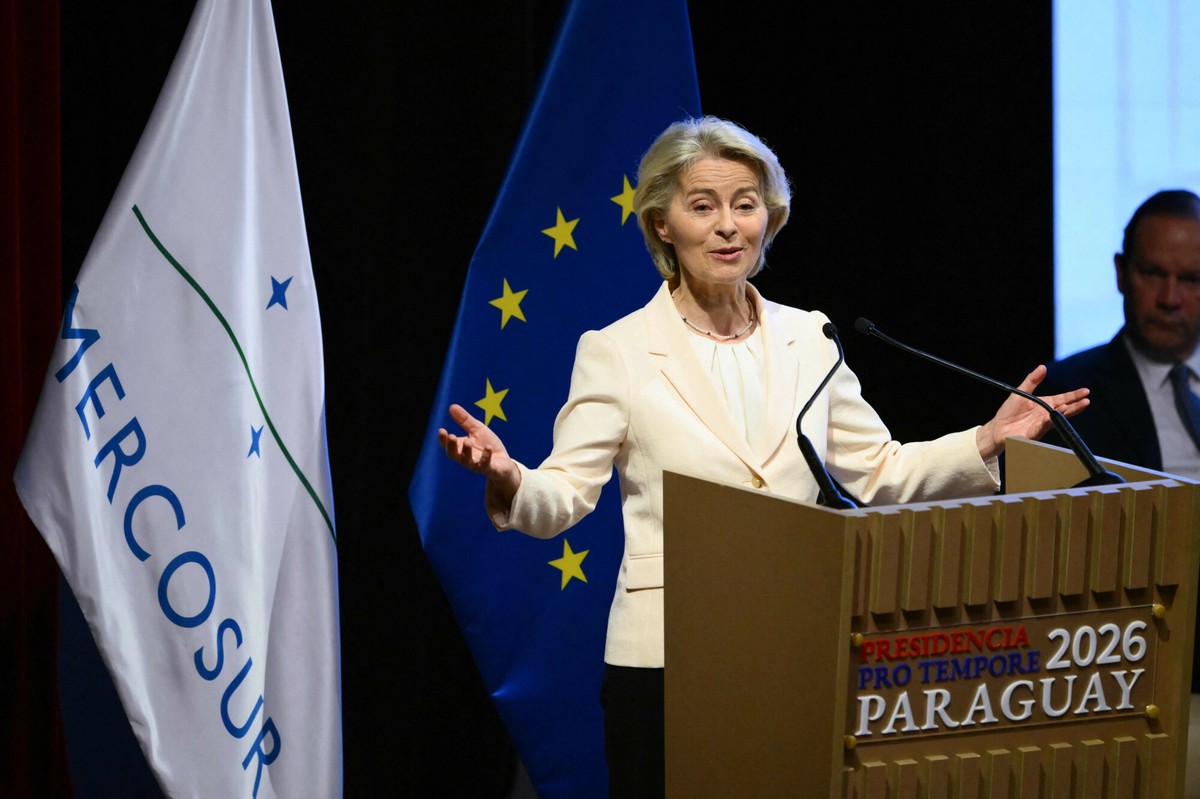
The trade agreement between the European Union and Mercosur countries such as Argentina, Brazil, Paraguay and Uruguay aims to create a gigantic free trade area that, according to the European Commission's estimates, will cover nearly 300 million consumers and will lead to the abolition of customs duties on over 90 percent. goods.
This agreement is seen as a huge opportunity for European producers of cars, machinery and pharmaceutical products, because it opens the way for them to enter markets where customs barriers have previously been very high. At the same time, the project raises huge resistance among European farmers, including from Poland and France, who fear the market will be flooded with cheaper food, such as beef, poultry or sugar, produced to much less stringent environmental and sanitary standards than those in force in the EU.
The rest of the article is below the video
After many years of negotiations, on January 9, 2026, the majority of member states supported the signing of the document. Saturday's culmination of efforts paves the way for the final implementation of the commercial part before the end of the year.
The agreement with Mercosur has been signed. “We provide countless opportunities to our 700 million citizens”
— We are creating the largest free trade zone in the world, a market worth almost 20%. world GDP. We provide countless opportunities to our 700 million citizens – said the head of the European Commission, Ursula von der Leyen, during the ceremony. She added that she wanted to assure the EU's 450 million people that this deal was “good for Europe – for every member state.”
The agreement was signed on behalf of the EU by the European Commissioner for Trade, Marosz Shefczovicz.
— This agreement contains strong safeguards to protect your livelihoods and our sensitive agricultural sectors. It creates significant economic opportunities for many EU agri-food exporters. It protects 350 European geographical indications. This is more than in any other EU trade agreement – argued the head of the European Commission.
President Costa recalled that negotiations with Mercosur lasted 25 years. “It was a long journey, but we managed to reach an agreement at the right time, just when we need it,” he said.
The host of the ceremony, President of Paraguay Santiago Pena, called this day “historic”. — This is a day long awaited by our nations, a milestone that marks the connection of two of the most important regions and markets in the world: Europe and South America – he said.
Who will gain and who will lose from the agreement with Mercosur?
In Business Insider, we previously quoted prof. UW Jan Hagemejer, president of the CASE Center for Socio-Economic Analysis, commissioned by the European Parliament, who prepared a report on the effects of the agreement. Indicates that both at the EU and Polish level, the automotive industry will benefit most from the agreement with Mercosurmachinery and equipment, metals and metal products, i.e. the most important industries.
On Mercosur's side, he adds, the agricultural and food production sectors will benefit the most. Poultry and beef producers will be most exposed to competition from Mercosur.
— In a report commissioned by the European Parliament, we estimate that as a result of the agreement with Mercosur, some parts of the EU agri-food sector may reduce production. Beef production will decline the most – by 0.4%. – and sugar – by 0.7%. – he enumerates.
As the expert emphasizes, this “The EU will benefit more from the agreement with Mercosur”. — Currently, customs duties and barriers in the EU are much lower than in Mercosur, where there is a lot of protectionism, argues Jan Hagemajer.
Agreement with Mercosur. Polish farmers will lose
In the same article, Dr. Jakub Olipra from SGH, senior economist at Credit Agricole Bank Polska, confirms that the concerns of farmers and the agri-food industry related to the EU-Mercosur agreement are “most justified.”
— I believe that the EU-Mercosur agreement is unfavorable for the Polish agri-food sector. If we were to choose the countries that will lose the most, it is Poland in the first place. France – as a strong beef producer – too. Protective clauses do not change the perspective of the problem.