
The state of Minnesota in turmoil over ICE operations. A judge banned the arrests of peaceful protesters

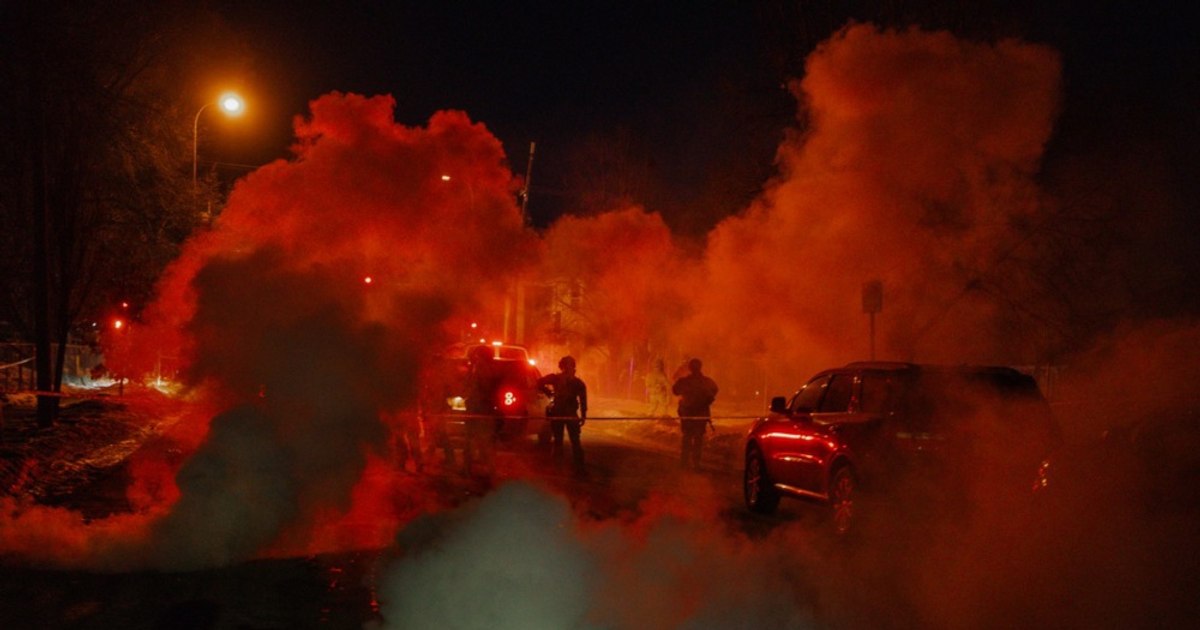
A US federal judge on Friday imposed restrictions on immigration enforcement (ICE) in the state of Minnesota, prohibiting federal agents in Minneapolis from arresting peaceful protesters or using non-lethal ammunition and crowd control tools against them. The order comes after US President Donald Trump said he “sees no reason at this point” to invoke the Sedition Act, which would allow him to use the military in the context of ICE operations that have led to clashes between citizens and agents.
Image 1/5:
Anti-ICE protests in the state of Minnesota PHOTO EPA EFE
Federal Judge Kate Menendez ordered agents not to arrest or detain in their vehicles protesters who “do not obstruct” ICE action, and not to use pepper spray or similar non-lethal munitions and crowd-dispersal tools against people engaging in peaceful protest activities.
The Internal Security Department has 72 hours to comply with this decision, according to AFP.
“The First Amendment protects free speech and peaceful assembly — not riots,” DHS spokeswoman Tricia McLaughlin said, according to Politico. “DHS is taking appropriate and constitutional steps to uphold the rule of law and protect our officers and the public from those who participate in dangerous riots. We remind the public that … obstructing law enforcement is a federal crime and assaulting law enforcement is a felony.”
White House spokeswoman Abigail Jackson said: “This absurd ruling embraces a dishonest, left-wing narrative. Here's the truth: Federal agents acted legally to protect themselves and ensure the integrity of their operations when individuals tried to interfere. The Trump administration will always enforce the law.”
The Justice Department did not immediately respond to Politico's requests for comment, but the Trump administration may seek to appeal the decision immediately. He recently recruited more than 2,000 Homeland Security officials from Minnesota to conduct deportation operations and investigate allegations of fraud by members of the Somali community in Minneapolis.
“There is no sign that this operation is ending – in fact, it appears to be intensifying,” Judge Menendez wrote in her ruling.
The judge found that the protesters observed and criticized ICE officers but “did not obstruct or impede the work of the agents” and were generally non-violent and non-threatening.
Local leaders have called for ICE to leave the state, accusing the agents of sowing fear and threatening public safety.
“Peaceful observers and protesters came out again today, will come out again tomorrow and will continue to come out every day until Operation Metro Surge ends,” the residents wrote in a letter to the judge last week. “These Minnesotans peacefully exercising their fundamental constitutional rights to free speech and assembly continue to be met with terrifying unconstitutional violence… And things seem to be getting worse, not better.”
Governor Tim Walz and Mayor Jacob Frey, investigated for obstruction of ICE action
Tim Walz and Jacob Frey say federal agents are not welcome in the state and dispute the official case that the police officer who shot Renee Good acted in self-defense, citing video footage as evidence. They are demanding responsibility for the 37-year-old woman's death amid fears the FBI investigation could be biased.
“Using the judicial system against opponents is an authoritarian strategy,” Tim Walz denounced on X on Friday, while Jacob Frey criticized “an obvious attempt at intimidation.”
The state's main city, Minneapolis, has been seething since the fatal shooting of Renee Good, in a standoff with an ICE agent perceived differently and polarized by the Trump administration and opponents of the anti-immigration crackdown. Hundreds of police officers joined the approximately 2,000 police officers already mobilized in Minnesota. On Wednesday, a Venezuelan citizen was injured following a confrontation with ICE agents. The operations, which the civilians are still trying to oppose, continued under the snow on Friday, according to AFP photos.
Trump said he would not invoke the Sedition Act
“If I needed (the Insurrection Act, no), I would use it. I think at this point there is no reason to do it,” the American president said to the press at the White House on Friday. The day before, however, he had threatened on Truth Social that he would invoke this exceptional legislation if “corrupt Minnesota politicians do not follow the law and work to prevent professional agitators and insurgents from attacking” ICE agents.
In Minnesota, “the debate is intensifying within the protest movement regarding the firmness that must be shown in the resistance against ICE”, a local newspaper, the Star Tribune, reported on Friday, according to news.ro. The Department of Homeland Security on Friday confirmed the death, two days earlier, of a 34-year-old Mexican man, Heber Sanchez Dominguez, while in ICE custody. At least four people have died during detention at ICE this year, according to the institution.
On Wednesday, attorneys for Renee Good's family announced the opening of a civil investigation, a first step toward possible action against the federal state. Several polls released Thursday show that most Americans consider Renee Good's death “unjustified.” These polls, especially one conducted by CNN, also show that Americans largely disagree with the Trump administration's explanations in this case.


