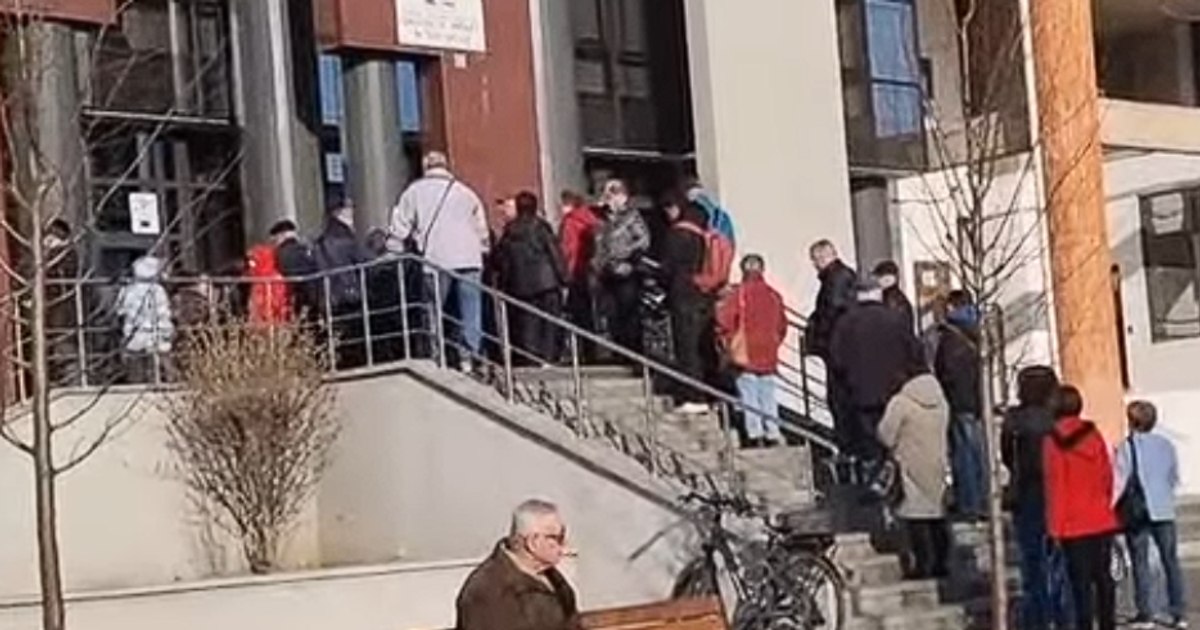
A resident of Focșani is demanding the revocation of the local council decision by which the fees and taxes were doubled. He filed a preliminary complaint


A resident of Focșani filed a preliminary complaint regarding the issuance of Decision 474 of the Local Council of the Municipality of Focșani / by which the decision was voted on establishing the levels for taxable values, local taxes and fees and other similar taxes, as well as fines applicable in fiscal year 2026.
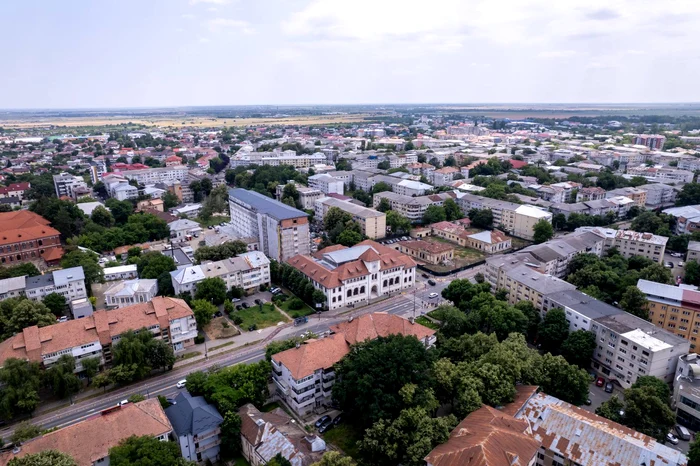
Focșani, seen from a drone PHOTO: CJ Vrancea
The residents of the municipality of Focșani were deeply dissatisfied, at the beginning of the year, with the new fees and taxes they have to pay to the local budget. From the very first day when the municipality's cash registers were opened, January 14, they found that they had to pay double for property and cars, although the mayor stated several times publicly that the new increases would not exceed 70%.
People have complained on social media that their homes have also been assessed three times more than last year. “A studio apartment from 1971, 24 square meters, without gas and balcony, was valued at 44,000 euros. The same studio apartment was valued last year at 16,000 euros. I would like to thank the mayor for making me rich overnight”wrote a woman from Focșani on a Facebook group.
The entrepreneur Daniel Nistoroiu from Focșani decided to take concrete steps to stop these increases, formulating a prior complaint by which he requests the revocation of the local council's decision on establishing the levels for taxable values.
“The establishment of local taxes and fees for an entire fiscal year, with a direct impact on all taxpayers in the municipality of Focsani, required a substantial debate, based on clear data and relevant economic analyses, not an accelerated procedure, carried out in a minimal interval. In the documentation submitted to the public debate, no fiscal predictability analyses, impact studies or comparative evaluations were presented that would allow citizens to understand the concrete effects of the new taxation levels on own budgets. Likewise, no simulations, alternative scenarios or detailed justifications were made available regarding the necessity and proportionality of the tax burden imposed on the population. Subsequently, the decision was adopted in the meeting, having as its object the taxes and local taxes, by taking over the fiscal changes introduced at the central level, without the local deliberative authority carrying out its own analysis of their impact at the level of the municipality of Focsani. says the Focșani resident in the complaint registered on Friday at the Focșani City Hall.
He claims that the lack of a clear economic foundation and impact analysis affects, at the same time, the principles of fiscal predictability and good administration and violates the procedural norms of transparency and impact analysis.
“Considering the above, I consider that the challenged decision is affected by procedural defects that attract its illegality and nullity. I have a legitimate interest as the contested decision directly affects my rights and obligations and that of the taxpayers by establishing levels of local taxes and fees. Consequently, I request the total revocation of the Decision of the Local Council of the Municipality of Focsani 474 / 2025 of 29.12.2025 on the establishment of local taxes and fees for the fiscal year 2026
and returning to the provisions of the previous decision“, says Daniel Nistoroiu.
He claims that if the municipality will not take into account his complaint, which must be submitted to the attention of local councilors, he will later invoke other grounds of illegality, substantive or procedural, which may result during a civil process.
The decision to approve local taxes was taken with a majority of votes, from the elected PSD, PNL, PMP and Forța Dreptei. The AUR representatives voted against, and the USR councilor did not participate in the vote.
What the City Hall says about the doubling of taxes
The City Hall of the Municipality of Focșani came on Thursday, January 15, with a series of clarifications related to the tax increase and blames the Bucharest executive, who changed the law.
“Starting with the year 2026, by Law No. 239/2025 amending the Fiscal Code, the taxable value per square meter for residential buildings was increased from 1,492 lei/square meter (year 2025) to 2,677 lei/square meter, values expressly provided for in Annex No. 1 to Title IX – Taxes and local taxes of the Fiscal Code (art. 457 par. (2)) At the same time, the provisions regarding the application of the reduction coefficients according to the age of the apartment have been removed. According to Annex No. 2001 on the approval of the National Territorial Development Plan, it is used for tax purposes the classification provided by the Fiscal Code (art. 457), which establishes the correction coefficients according to the category of the locality and the fiscal area. Under these conditions, upon determination
to the taxable value, the correction coefficients established by law are applied, depending on the tax zone, respectively: zone A – 2.40; zone B – 2.30; zone C – 2.20; zone D – 2.10 (art. 457 paragraph (6)). These coefficients are provided for by law and cannot be changed by a decision of the local council”according to a press release from Focșani City Hall.
The municipality also announces that the differences regarding the increase of the tax on buildings between localities do not arise because of different decisions of the town halls, but have two main causes established by law.
“First of all, until the year 2025, the taxable values applied were not identical in all localities. Some administrative-territorial units had values already close to the current level of 2,677 lei/sqm, while others applied lower values. Consequently, where the difference to the new value established by law is greater, the tax increase is felt more strongly. Secondly, when calculating the taxable value is applied different correction coefficients, depending on the rank of the locality and the tax zone in which the building is located, coefficients expressly provided for in Article 457 of the Fiscal Code”.
It is also specified that the local elected officials had the legal obligation to approve, by decision of the Local Council, the levels of local taxes and charges, within the limits and conditions established by the Fiscal Code (art. 491 and art. 489 para. (1)–(2) Fiscal Code). “In the absence of the adoption of this decision, taxes and local fees would have been applied automatically at the maximum levels provided by law, and the reduction of tax rates would have been prohibited (art. 489 par. (3) Fiscal Code)”.