Gold reserves and the decision of the Monetary Policy Council in the opinion of the President of the NBP. Comment by prof. Adam Glapiński

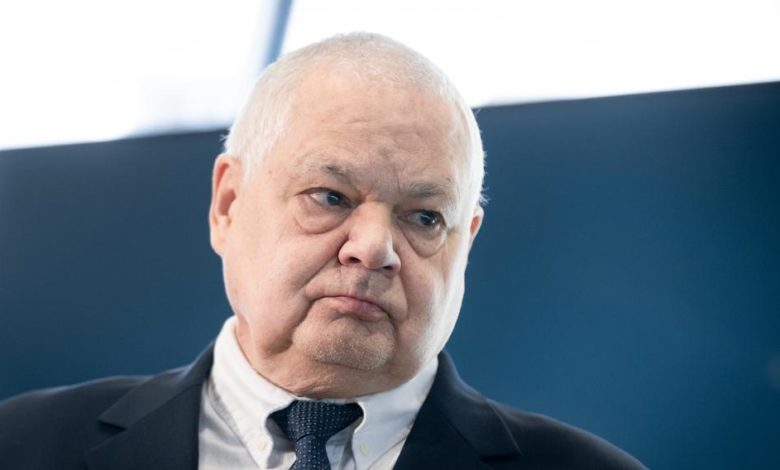
At its first meeting in 2026, the Monetary Policy Council, in line with general expectations, kept interest rates at the current level. Moreover, according to the latest data, the National Bank of Poland increased the share of gold in foreign exchange reserves to over 28%. At the press conference, the President of the National Bank of Poland, prof. Adam Glapiński presents the justification for the Council's decision, refers to the current state of gold reserves and makes an ongoing assessment of the economic situation in Poland.
The article is updated on an ongoing basis.
Report from the conference of the President of NBP:
Ladies and Gentlemen, to begin with, I am pleased to announce that we currently have 550 tons of gold in reserve. At the end of 2025, gold resources amounted to 550 tons and were worth, at current prices, USD 76.5 billion, or nearly PLN 276 billion. Last year, NBP was the largest purchaser of gold among central banks, increasing its resources by over 100 tons. The current resource size provides NBP ranks 12th in the ranking of the largest gold holders among central banks. I have spoken many times about the special importance for Poland of having large resources of gold in our reserves.
I asked the NBP management board to adopt a resolution to increase our resources to 700 tons. This time, not in terms of value, but in quantity, up to 700 tons.
If we wanted to sell the gold purchased during my two terms, we would earn an additional PLN 115 billion. But that's not the purpose of these purchases.
All our reserve assets currently amount to PLN 976.5 billion. This gives us a place among the top twenty central banks. We have a specific geographical location, a specific situation. We have our own currency, the Polish zloty. This supports the zloty perfectly. Its stability, as you can see, is unshakable. The zloty is valuable money, which is negatively reflected in the so-called profit parameter. But that's not the point. Our goal is stability. Stability of the Polish currency, the Polish zloty.
We have achieved disinflation. The benefits of the zloty are not only the target inflation, but also the good economic situation and the growth rate of economic development in Poland. Stability and the value of money, of course, guarantee that it enables growth and development.
In the presentation you have real GDP in the period Q4 2019 and Q3 2025. Please see where Germany is located. Germany remained where it was during the pandemic, and we achieved 17% GDP growth during this time.
Back to inflation. Current forecasts indicate that inflation throughout this year should remain within the NBP's inflation target range. That is, 2.5% plus or minus 1 percentage point. Importantly, today not only the inflation prospects in the coming quarters are relatively favorable, but also the macroeconomic conditions. There are no weak points visible there. Speaking about domestic conditions, we see that the price pressure in the services sector is gradually decreasing, which is something we have been waiting for for a long time. The decline in wage dynamics contributes to this. At the same time, the increase in the minimum wage will be low.
Imports from China lower prices. We've seen this recently with cars. New cars bought in Poland, Europe. Of course, from the point of view of GDP growth in Europe, including Poland, in the long term, there is a risk that our production will decline. But from the point of view of inflation today, for the coming years, this is a positive element that reduces inflation.
This threat is something bigger and deserves a separate discussion. This competition and how to deal with it, what should be done in Europe. There have been various reports on this subject, but not much is happening. Europe has done little in this regard. When it comes to Poland, of course the topics are always the same.
We need cheap energy, we need modern transmission lines, we need to overcome the demographic crisis. Many elements here are necessary to stop this. First of all, what is easiest to do is to invest in modernity, modernization and innovation.
This year we expect some acceleration of economic growthsignificant, whether higher or lower than last year, it remains to be seen. This is mainly to be supported by the inflow of funds from the KPO.
KPO is a booster of the growth rate in Poland. I just remind you that this afterburner will burn out at some point. Somewhere in 2027, towards the end, this stimulant will no longer be available. Will there be any other extraordinary measures then or not? Probably the latter. Currently, we have this stimulant from KPO, it works and we have a high growth rate.
Secondly In terms of these risks, we will monitor whether wage dynamics remain on a downward trajectory. Just how nice it looks right now. From double digits to 7%. Thirdly, our concern is the still high deficit of the public finance sector and the growing debt. It doesn't matter in the short term on an ongoing basis this year. It will become increasingly important in the long term. In particular, the burden of servicing this growing debt. We are significantly reducing this burden by lowering interest rates. But this is also a certain limit. Our interest rates are already relatively low relative to inflation.
Let me remind you that the NBP Act clearly states that our goal is to fight inflation. Another act deals with the stability of the banking system. The Act clearly states that supporting the state budget, supporting the government, is a goal that can be implemented after achieving the first goal, after achieving the first goal.
I will come to the next conference after the next Monetary Policy Council and it will make a decision depending on how it assesses the situation in the weeks that have separated us since then. We said before that We intend to take such a break at the beginning of this year, such a pause, to properly analyze the effects of our previous actions. these six-fold interest rate cuts. We analyze these effects, look further and will be ready to make the next decisions.
When asked about the consensus regarding the target level of rates, the president replies: “NBP is not part of any consensus of commercial banks. He is taking action on his own and in February we will make a decision according to what we feel at that time. I can say yes I once allowed myself to joke that I come as a hawk leading hawks. Well, now I can say that the situation is completely opposite. The second bird, true, seems to be flying over the heads of all members of the Monetary Policy Council, because the situation is good. Inflation is in check, inflation is on target. And at what point will we decide there is still some room to loosen Definitely. It's not a huge space, but there is some space for discussion.
I assume that possible next decisions will concern moves of 25 bp. We will take small steps to adjust the rate levels. Whether it will be in February, I don't know. I don't rule out February, but I don't say it will be February. I don't rule out March, but I don't say it will be March. As for February, I will say it again: I neither confirm nor deny it. I can say the same in March, when the next inflation projection will be released.
At the moment we have a very good situation. It looks like inflation will be stabilized by the end of the year. What target level does the president see for rates? “What the council sees, I don't know. I see rates at 3.5 percent.” – said the president of the National Bank of Poland. I would see the real interest rate at 1-1.5%.
Rates unchanged
Pursuant to the decision of the Monetary Policy Council of January 14, 2026, the interest rates of the National Bank of Poland will be as follows:
- reference rate 4.00% per annum;
- lombard rate 4.50% per annum;
- deposit rate 3.50% per annum;
- rediscount rate of bills of exchange 4.05% per annum;
- bill of exchange discount rate 4.10% per annum.
“Further decisions of the Council will depend on the incoming information on the outlook for inflation and economic activity. The risk factors for the outlook for inflation remain the shape of fiscal policy, the expected recovery in demand in the economy, further developments in wage dynamics and the macroeconomic situation abroad, including changes in commodity prices and global inflation,” the Monetary Policy Council wrote after the meeting.
“The NBP will continue to take all necessary actions to ensure macroeconomic and financial stability, including, above all, maintaining inflation at a level consistent with the NBP inflation target in the medium term. The NBP may intervene on the currency market,” it added.
MKu, ed. COGS