The deputy head of the Polish Ministry of Foreign Affairs visits Kiev. “This is a very important thing today”

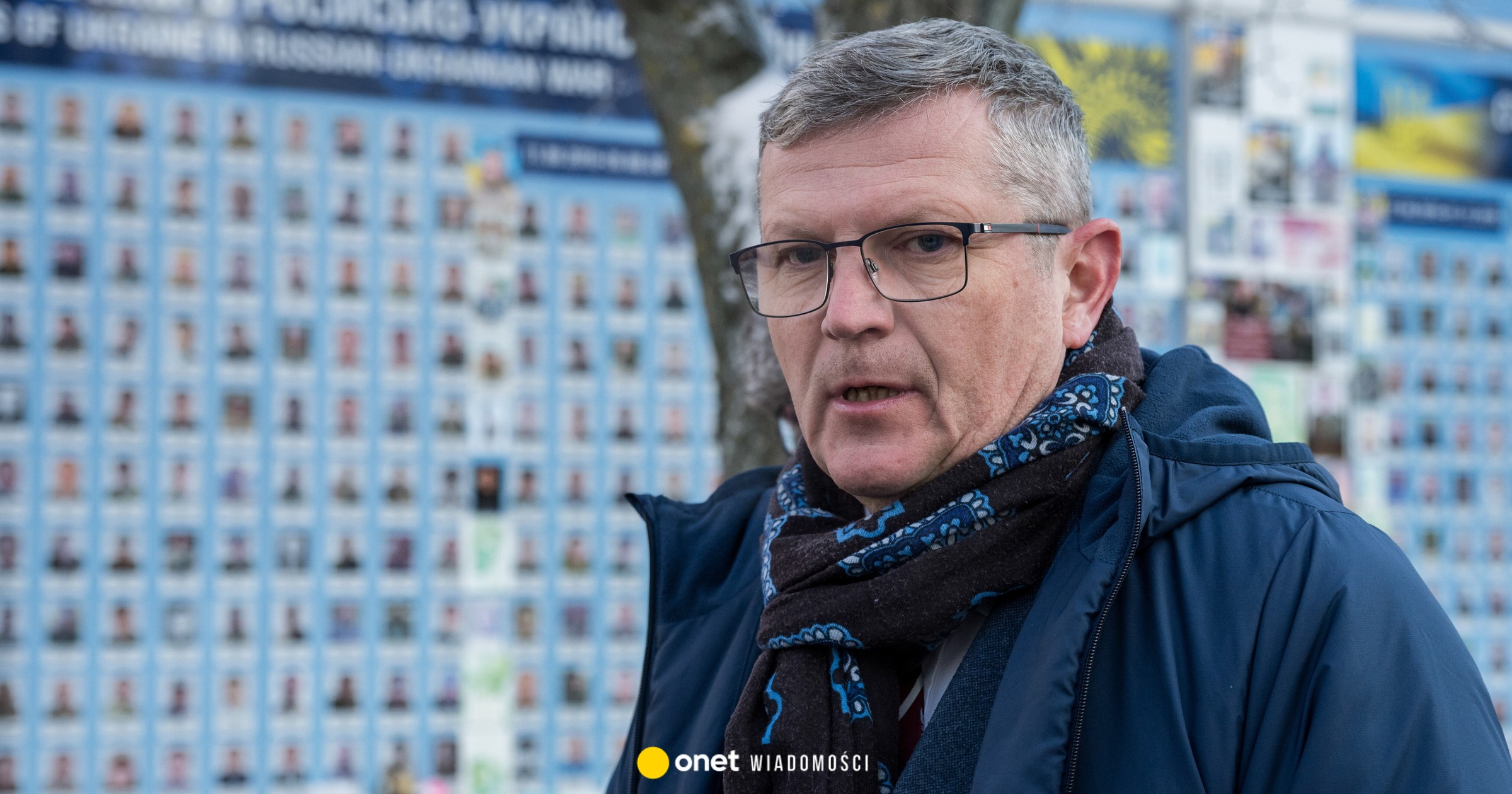
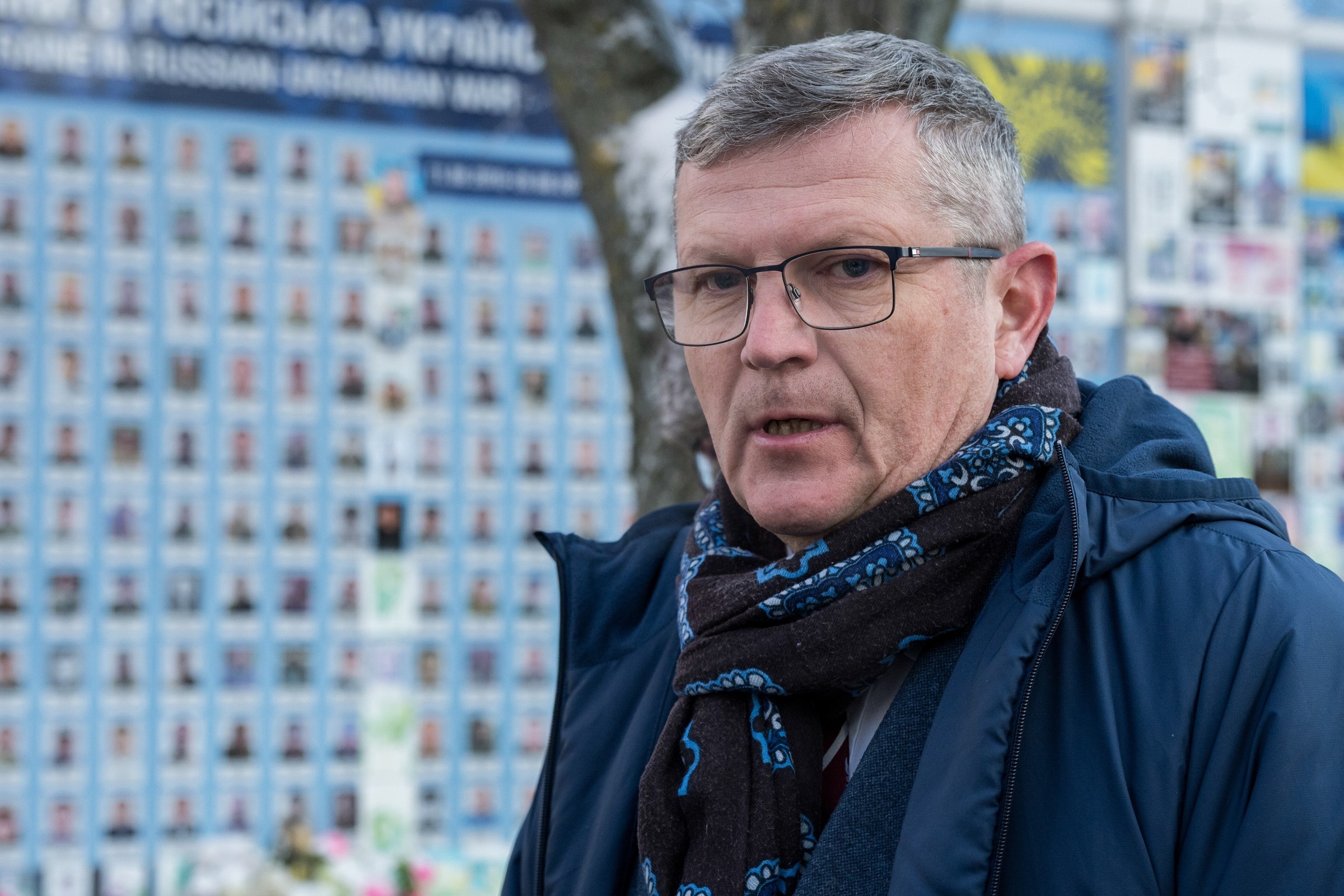
– First of all, we came to assure Ukrainian friends that, especially after the recent, very heavy bombings and raids, they are not alone, that Poland is with them, that the West is with them – said the deputy minister, starting the visit.
The article continues below the video
What were the goals of the deputy head of the Ministry of Foreign Affairs' visit to Kiev?
Who accompanied Marcin Bosacki to Kiev?
What problems did the Polish delegation encounter during their trip to Kiev?
What will Polish representatives in Kiev talk about?
Bosacki was welcomed on Mikhailovsky Square in the center of Kiev by the deputy head of the Ministry of Foreign Affairs of Ukraine, Oleksandr Mishchenko. Together they laid wreaths in front of the memorial wall for soldiers who died in the war with Russia.
— We will, of course, talk about a number of issues, both bilateral (…) and… [w relacjach z] allies. (…) about the security situation, about assistance, about introducing Ukraine, as far as possible – Poland is of course in favor of it – into the SAFE program [unijnego instrumentu, w którym państwa UE mogą liczyć na łącznie 150 mld euro dodatkowych środków na wzmocnienie własnej obronności]about joint production of weapons – he calculated.
“Two aspects of this visit.” Polish delegation in Kiev
The deputy minister emphasized that he was accompanied by representatives of the Polish defense industry and representatives of other industries, including banking.
— We will also talk about the upcoming conference on the reconstruction of Ukraine in June in Poland. There are many such topics, but operationalizing industrial and defense cooperation in this way is a very important thing today, he explained.
Bosacki noted that due to Russian bombing of infrastructure, the train by which the Polish delegation arrived in Kiev from Chełm was delayed.
— Unfortunately, part of Ukraine's railway network is, hopefully temporarily, damaged, so we actually traveled longer from Poland, from Chełm, by 2.5 hours longer. That's a lot. We saw disturbed places along the way. We will also help rebuild this infrastructure, he declared.
During the visit, the Deputy Head of the Ministry of Foreign Affairs is accompanied by, among others, KO MP, Maciej Tomczykiewicz and the chairwoman of the Polish-Ukrainian Parliamentary Group, Katarzyna Królak.
— There are two aspects to this [tej wizyty]. Russia has been doing everything to keep Poles and Ukrainians at odds for centuries, but not “peremog” [ukr. nie zwycięży]. It doesn't work because we support Ukraine. The second aspect is that if we want to build the future, we must talk and work and act. Hence our presence here, said Królak.
Russian attack using Oreshnik
During the attacks carried out last week on the night from Thursday to Friday, Russia used the Oreshnik hypersonic missile, which hit the Lviv region in western Ukraine.
According to the Russian side, the firing with this weapon was carried out in response to an alleged Ukrainian drone attack on Vladimir Putin's residence in the Novgorod Oblast in Russia. The Kremlin claimed that Ukraine carried out this operation at the end of December 2025. The authorities in Kiev deny this, and most NATO countries took a similar position.
The target of Russian attacks, mainly using drones, is infrastructure that is critical to the population: power plants and combined heat and power plants, as well as gas and electricity installations.
In many cities and villages in Ukraine, after such attacks, electricity supply is disconnected without notice, in an emergency mode. In some districts of Kiev there is a lack of light for up to several hours a day, in others the supply interruptions last 5-6 hours. After the attacks at the end of last week, residents complained about the lack of heat in radiators and running water in taps.