
Chancellor Merz went to India and hinted that another big economic announcement could be made this month


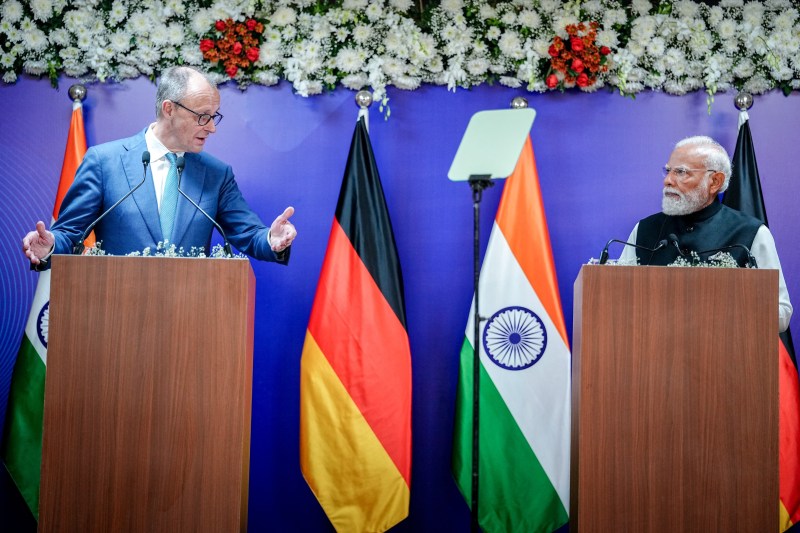
German Chancellor Friedrich Merz and Indian Prime Minister Narendra Modi. Photo: KAY NIETFELD / AFP / Profimedia
German Chancellor Friedrich Merz has hinted at the possibility of the European Union and India signing a free trade deal as early as the end of January, after meeting Indian Prime Minister Narendra Modi on Monday, according to Reuters.
The presidents of the European Commission and European Council will go to India at the end of January to sign the agreement, if it is finalized by then, Merz said during a visit to the western Indian city of Ahmedabad.
“In any case, they will take another important step to ensure that this free trade agreement comes into force,” Merz said during his first visit to India since taking over as chancellor.
The big economic announcement was expected only at the end of the year
Previously, it was expected that the negotiations would be concluded by the end of this year. However, according to German government sources, there are high expectations that the deal will be signed at the end of January after “very intense” talks between Merz and Modi.
Indian Commerce Minister Piyush Goyal, speaking at a separate event in the western state of Gujarat, said the deal was close to completion.
Merz said the world is facing “a resurgence of regrettable protectionism” that is also hurting Germany and India.
The deal with India would come quickly after Mercosur
For the EU, signing a deal with India would follow Friday's decision to strike a deal with South America's Mercosur group and would mark another step in creating its own trade networks as the United States has sent shockwaves through global trade, and – in addition – help reduce dependence on China.
In particular, Germany wants to work more closely with India on security to reduce the latter's dependence on Russia, Merz said.
The countries have signed a memorandum of understanding in this regard, in addition to agreements on critical minerals, the health sector and an artificial intelligence innovation hub.
“The MoUs signed today on all these issues will give new impetus and strength to our cooperation,” Modi said in a joint press conference with Merz.
India continues to work closely with Russia on security policy, and much of its military equipment is manufactured in Russia. India is also one of the biggest buyers of Russian gas and oil, along with China.
Germany is pressuring the Indian government to ensure that it prevents Indian companies from circumventing Russian sanctions and cuts energy imports from Russia – demands that India has so far rejected.


