Chisinau followed in the footsteps of Bucharest: it has 5 times more cars than it can support. Expert: “No matter how many parking lots are built, there won't be enough”


A draft law that wants to regulate the field of parking, initiated by the former vice mayor of Chisinau, Angela Cutasevici, raises a problem that Bucharest has also been feeling for years. In the capital of the Republic of Moldova, 400,000 cars circulate daily, while the optimal number would be a maximum of 90,000. The new normative act establishes the pricing of parking on the public domain, while the urban planners consulted by HotNews say that the only solution is to discourage the use of personal cars.
- “The town hall has no land for new parking lots. The only parking lot it can offer is the one on the side of the road. In the center, spaces for new parking lots – zero,” says urban planner Victor Chironda.
- The draft law initiated by deputy Angela Cutasevici establishes general principles regarding parking, such as their pricing according to the area, the type of car and the duration of parking.
“Many families also purchased a second car for protection and safety. Another impetus was the announcement regarding the application of VAT of 20% to the import of passenger cars starting in 2026 (measure later postponed – no)”, explains for HotNews, Angela Cutasevici, who was deputy mayor of Chisinau, and is currently a deputy from MAN, the party led by Ion Ceban, the current mayor. The bill initiated by Cutasevici would replace an old regulation from 1998 and would offer local authorities a modern tool to parking management.
“The law comes to regulate the essential notions – parking, parking, residence parking, taxes, tariffs. and establishes the roles of local authorities: how they plan, how they authorize, how they approve regulations and disciplinary measures,” explains Angela Cutasevici.
Cutasevic states that the law does not promise parking spaces for everyone, because this is impossible. “We're not realistically going to be able to provide parking for 400,000 cars,” she says, adding that the project just creates the necessary framework for public and private investment.
The draft law does not set rates, but only the general principles: parking will cost more in central areas, less in the outskirts, and prices will depend on the type of car and the duration of parking.
“It is important for the private sector to be involved as well,” emphasizes Cutasevici. There are already 88 private paid car parks in the capital, totaling 11,000 spaces, but their use depends on how the authorities manage public parking.

What does the situation look like in Chisinau?
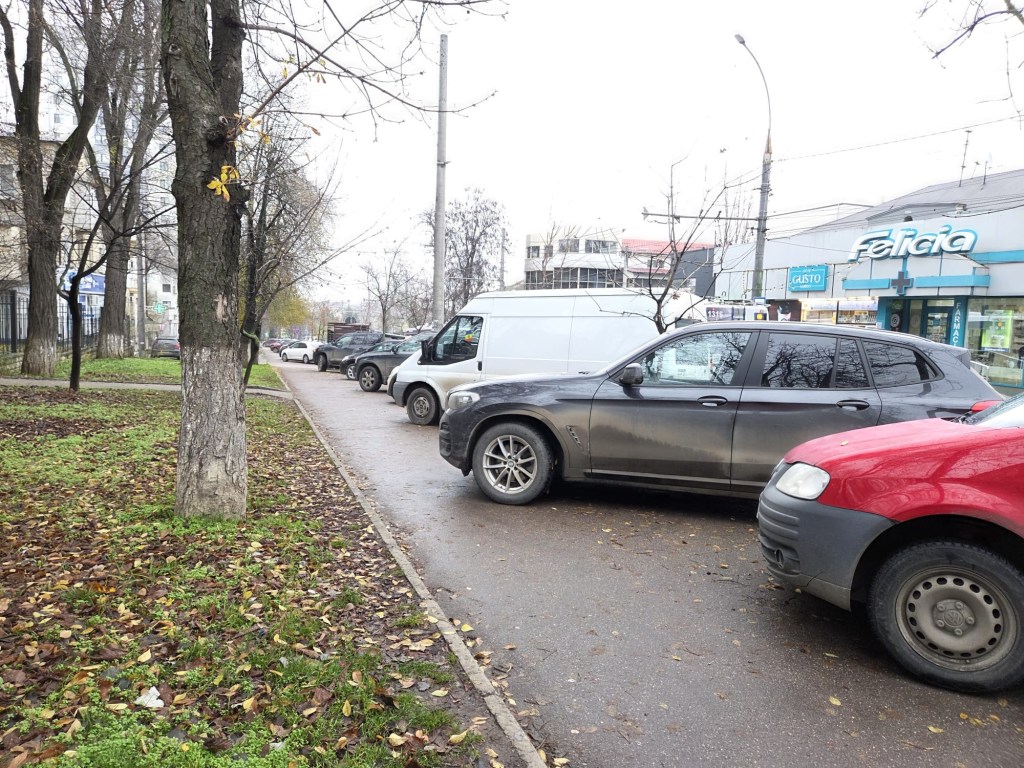
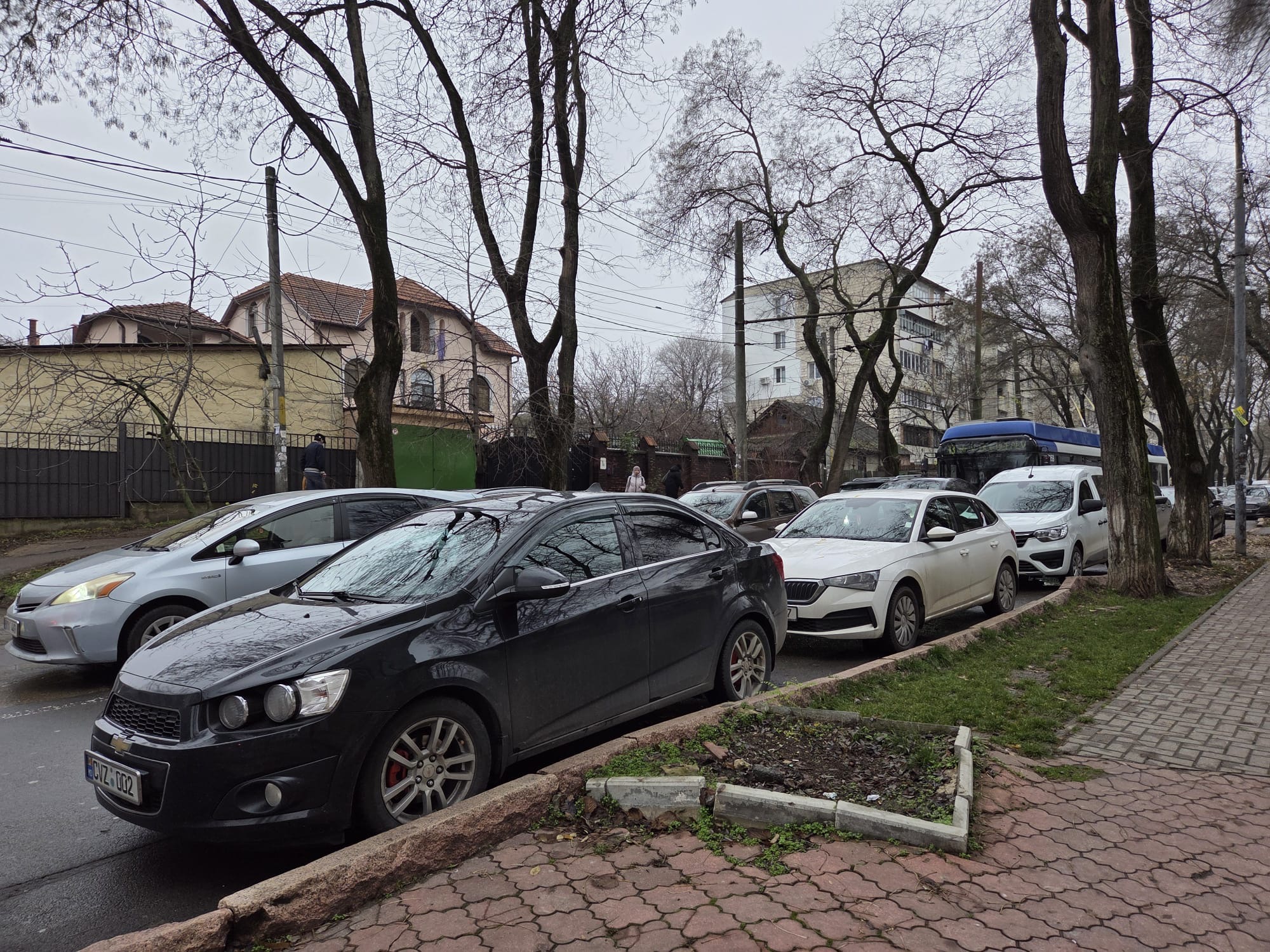
Any resident of Chisinau can feel the fact that the number of parking spaces is insufficient. An example is an important thoroughfare in the municipality of Chisinau, Gheorghe Asachi street. In the side streets, cars are left irregularly, in some places even on both sides of the roadway, narrowing the street and slowing down traffic, especially since public transport also passes through the area.
A similar situation can be found around Andrei Doga Street, where cars are randomly left on an unimproved surface, turned into mud due to the rains of the last few days.
Asked what Chisinau City Hall has done to solve this problem so far, the former vice mayor of Chisinau recalls that the city has invested in the modernization of public transport in recent years.
“More than 300 comfortable, safe transport units were purchased. More than 50 km of dedicated lanes were built in Chisinau,” says Cutasevici. But, she admits, a predictable schedule, more vehicles and infrastructure for cyclists are needed.
“It is important to encourage the population to use public transport and to discourage the movement of vehicles without necessity”, adds the deputy.
Expert: “The law is not the problem”
Urban planner Victor Chironda draws attention to another aspect. The city hall already had the legal possibility to introduce paid parking and reorganize the traffic, but it did not act.
“Yes, there is a huge imbalance between the city's capacity and the current number of cars. But this happens everywhere in the world. Some cities have adapted better, others less so. Chisinau is a city where this does not happen,” he states.
Chironda says the local government had clear studies and recommendations available. In 2021, the City Hall paid 500 thousand lei (Moldovan) for a study on the organization of parking lots, and in 2024 another 400 thousand for an update.
“The 2021 study says clearly: a new law is absolutely not necessary to implement paid parking. The municipality could already start arranging the necessary parking lots and infrastructure,” says the urban planner.
In his opinion, the real problem is not the legal framework, but the lack of administrative decisions.
“In six years, apart from promises and wasted money on studies, they have done nothing,” Chironda declares.
“The center will never be freed only through parking lots”
The urban planner points out that European cities that have succeeded in reducing traffic have not done so by building new parking lots, but by discouraging the use of personal cars.
“No matter how many parking lots you build, it won't be enough. The center will never be freed by parking lots alone,” he says. The solution, says Chironda, is to quickly introduce paid parking in central areas and turn parking into a controlled service.
In addition, Chisinau has a severe shortage of available land. “The town hall has no land for new parking lots. The only parking it can offer is on the side of the road. In the center, spaces for new parking lots – zero,” he explains.
Why the private parking solution does not work
Chironda recalls that in the past there were private initiatives, but their use is not very encouraged.
“As long as the person can leave the car for free on the side of the road or on the sidewalk, obviously he will not pay 50 lei (Moldovan lei, equivalent to 2.5 euros – no) per hour in a private parking lot. Private parking lots will never work under these conditions,” claims the urban planner.
On tariffs, he adds that public opinion is not a real obstacle:
“When the system will be implemented and there will be control – they will pay. Just like they pay when they go abroad,” says Chironda.
Currently, one hour of parking in the municipality of Chisinau costs from 20 lei (no – 1 euro) to 100 Moldovan lei (no – 5 euro).