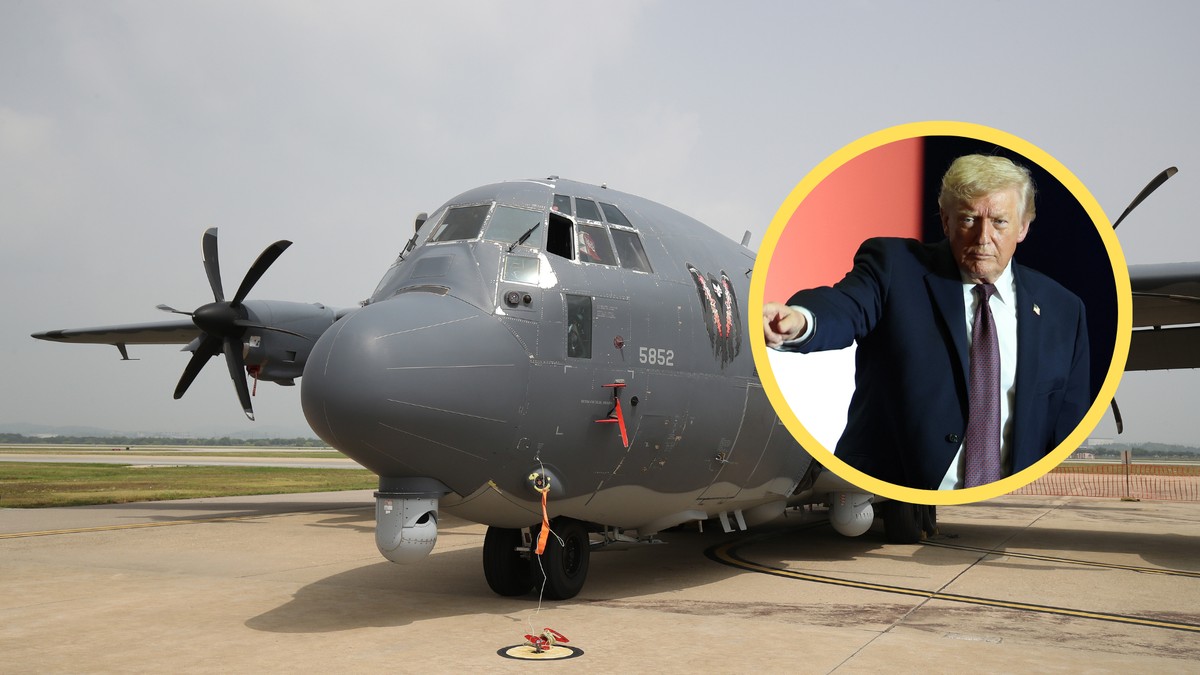
According to TWZ, at least 10 C-17 Globemaster III transport planes, two AC-130J Ghostrider attack planes and a CASA CN-235 turboprop plane, used by the US Air Force in special operations, have already arrived in Great Britain. Similar actions preceded Operation Absolute Resolve, in which US forces evacuated the self-proclaimed president of Venezuela, Nicolas Maduro, and his wife from Caracas.
President Donald Trump's administration emphasizes that the overthrow of Maduro does not change the sanctions policy against Venezuela. Tankers violating these restrictions will continue to be pursued and seized.
Americans are chasing a Russian tanker
One of the tankers subject to US sanctions is Bella 1. The ship, which was repainted with the Russian flag and renamed Mariner, has been wanted by the US Coast Guard since December. It is currently in the North Atlantic, carrying Venezuelan oil as part of the so-called shadow fleets. According to CBS News, Venezuelan authorities considered arming the crews of these tankers, including with Russian air defense systems and military personnel disguised as civilians.
The activities of tankers subject to sanctions are complicated by the fact that they are increasingly registered in Russian registers. The Kremlin is moving away from using exotic flags in favor of the Russian one, which provides ships with direct protection. According to the London daily Lloydslist, the number of Russian ship registers has increased by 40%. since the invasion of Ukraine.
Tension in the North Atlantic. Shadow fleet under the Russian flag
Since June 2025, Russia has registered over 40 ships under its flag that previously flew the flags of African countries such as Gabon, Sierra Leone and Equatorial Guinea. An example is the Marinera, formerly known as Bella 1, which sailed under the Panamanian flag. The Windward website indicates that two more tankers have changed their flags from Gambian to Russian in the last two weeks in an attempt to avoid interception by the US Navy.
Rising tensions in the North Atlantic and changing tanker registration strategies suggest potential U.S. operations could become riskier.