Now Trump has his eye on Greenland. Three scenarios. “The Greatest Threat”

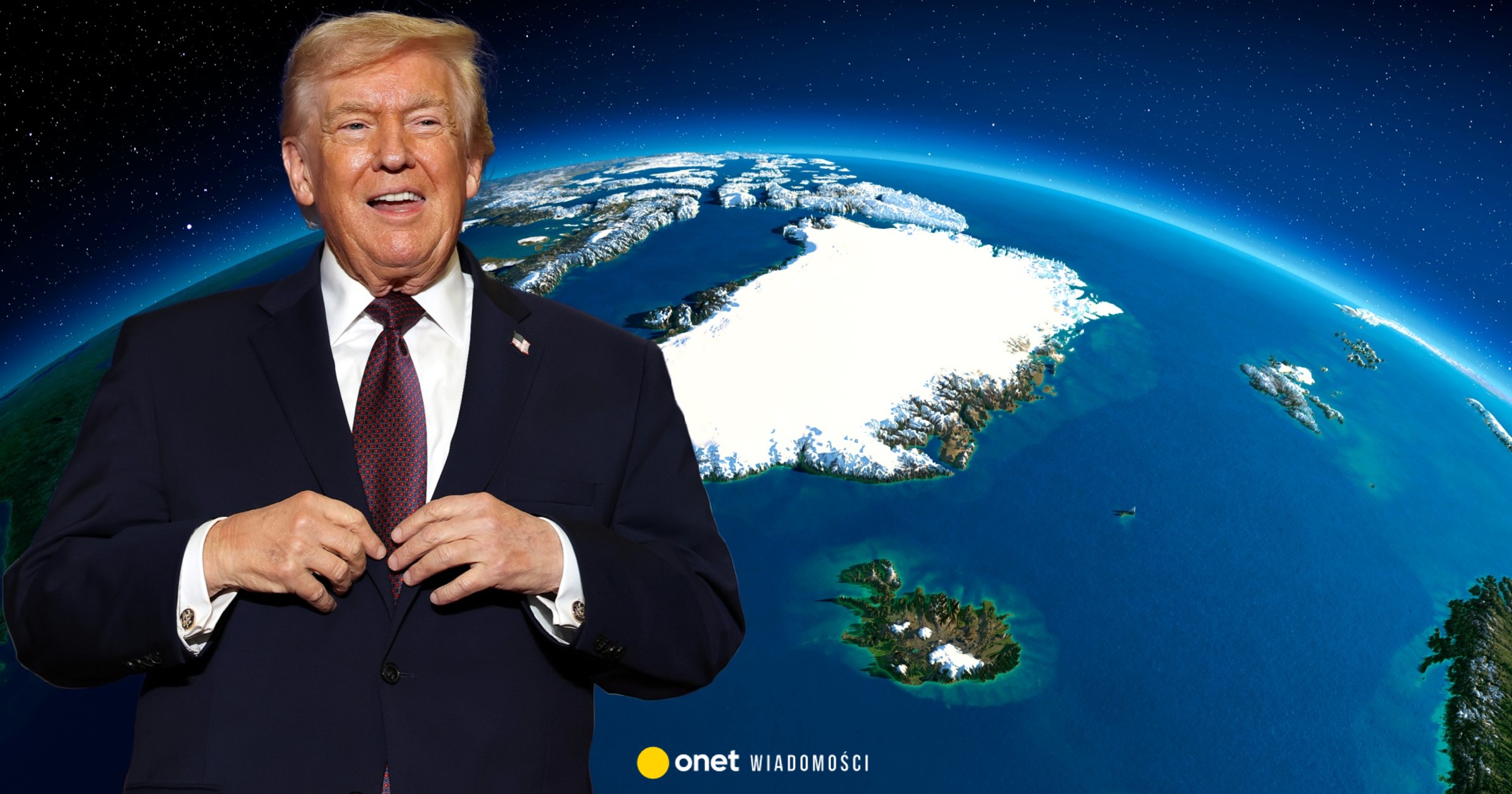
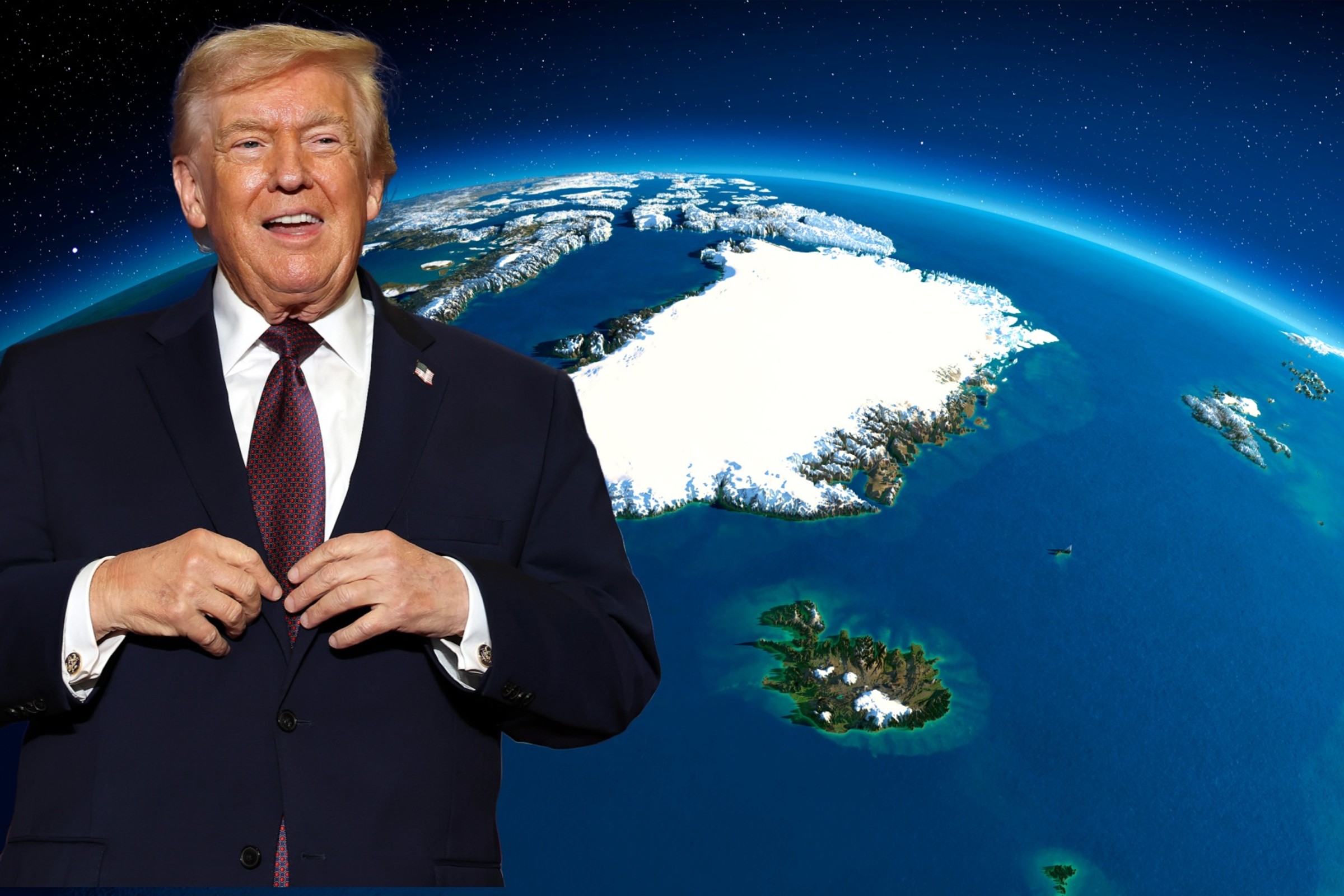
The speculation was fueled by Katie Miller's post on X [dawniej Twitterze]wife of Trump's deputy chief of staff and top adviser Stephen Miller, and former spokeswoman for the Department of Government Efficiency (DOGE), once headed by Elon Musk. Hours after the arrest of Venezuelan leader Nicolas Maduro, Miller shared a map showing Greenland in the colors of the United States national flag. She attached the inscription: “SOON” [“WKRÓTCE”].
Greenland is an area rich in mineral resources, which is why it is a tasty target for the USA, Russia and China. One scenario assumes that by expressing interest in the huge island, Donald Trump may want to force Denmark to arm itself more and protect the area. However, the American president's approach is much more pragmatic. And this is not good news anymore.
Shortly thereafter, Trump added his own comment. In an interview with The Atlantic magazine on Sunday, when asked about what the military operation in Venezuela means for Greenland, which is largely autonomous but belongs to Denmark, his answer was unequivocal. “I really don't know. But we need Greenland, absolutely. We need it to defend us,” we read. He suggested that other countries could also become targets of US intervention in the future.
The article continues below the video
On Sunday evening, during a flight to Washington on Air Force One, he again confirmed his claims. The island is surrounded by Russian and Chinese ships, and Denmark is “unable” to protect it. Trump announced that he would “take care of Greenland in about two months” and then bluntly ridiculed the Danish government.
Trump demands “full access” to Venezuela's oil, threatens Colombia and ridicules Denmark
“Do you know what Denmark did recently? To strengthen security in Greenland, they added another dog sled. It's true. They thought it was a great reinforcement,” he ridiculed the NATO partner. Last year, Copenhagen decided on military investments worth the equivalent of EUR 2 billion [ok. 8,4 mld zł, według obecnego kursu walut] for armaments in the Arctic.
Among other things, it is planned to send two dog sled units, but also several warships towards Greenland, as well as strengthen satellite capabilities on the island. What may be particularly painful for the Danish defense is that in 2003, the country, as part of the coalition of the willing, supported the US invasion of Iraq, as a result of which over 50 Danish soldiers lost their lives.
“No more annexation fantasies”
The Danish government's reaction was appropriately harsh. In a written statement, Prime Minister Mette Frederiksen said she “urges the United States to end threats against a historically close ally and another country and nation that has made very clear that they are not for sale.” She added that “it is absolutely absurd to say that the United States should take control of Greenland.”
Greenland's head of government, Jens-Frederik Nielsen, described the photo published by Miller as “disrespectful” and again emphasized that the country is not for sale. A few hours later, after Trump's comments on “Air Force One,” Nielsen apparently lost patience. “Enough is enough,” he wrote in another post. “Our country is not subject to the rhetoric of a superpower. We are a nation. A country. A democracy. This should be respected.”
Greenland is open to dialogue, Nielsen continued. “But this must be done through appropriate channels and in compliance with international law. No further pressure. No further suggestions. No further fantasies of annexation.”
The Danish ambassador to the US, Jesper Moller Sorensen, also spoke out against X and called on Trump to respect the territorial integrity of Greenland and Denmark. “Just a friendly reminder regarding the US and the Kingdom of Denmark: we are close allies and as such we should continue to cooperate,” the diplomat said.
The heads of government of other Nordic countries demonstratively supported the Danish government. “Only Denmark and Greenland have the right to decide on matters relating to Denmark and Greenland,” said, for example, Swedish Prime Minister Ulf Kristersson. “Sweden fully supports its neighbor.”
German Foreign Minister Johann Wadephul told Deutschlandfunk radio on Monday that European cohesion on Greenland was “absolutely clear.” We are ready to talk to Trump about the security situation in the Arctic, which the US president rightly drew attention to. “But this obviously has no bearing on the issues of the territorial integrity of Greenland and Denmark,” Wadephul said.
Three possible scenarios for Greenland
So far, we are seeing the typical dynamics that have been on display so often in recent months: Trump attacks Greenland again, the governments in Copenhagen and Nuuk reject these attacks and emphasize the island's sovereignty, and European partners express their solidarity.
However, the US military intervention in Venezuela clearly changed the perception of the situation. Suddenly, the situation in which Trump is trying to realize his ambitions for Greenland no longer seems like an abstract risk, but a real threat. Three possible scenarios emerge.
First, at best, the US president only uses the threat of an attack to change the situation in Greenland according to his ideas. This means forcing Denmark, and perhaps NATO, to further arm the island to demonstrate greater presence and power in an Arctic region that is increasingly becoming a geostrategic concern.
However, this can already be achieved on the basis of a decades-old security agreement, which Prime Minister Frederiksen also mentioned in her statement: The United States is already represented by a military base in Greenland and can easily expand their presence in agreement with Denmark.
Second, another goal that may be most important to Trump is access to raw materials that are likely to be in and around Greenland. The President of the United States, in keeping with his dealmaker mentality, may seek to reach an agreement that will give it broad rights to use resources such as oil, gas and rare earth metals.
Third, it is also possible that the US government wants to coerce through its actions Greenland's annexation to the United States. This is indicated by the appointment of Jeff Landry, the governor of Louisiana, as special envoy to Greenland, announced by Trump in December last year. The United States purchased present-day Louisiana and other territories from the French in 1803.
Currently international law prohibits the sale of sovereign territory without the consent of the people living there. However, Trump could increase the pressure until Copenhagen and Nuuk agree to a referendum on the island's future. Polls so far show that an overwhelming majority of Greenlanders oppose joining the United States.
Last year's parliamentary elections were won by parties that clearly opposed Trump's plans and strive for the island's long-term independence. However, Washington is apparently already working to change the attitude of the people of Greenland. Last year, Danish media reported that U.S. government employees in Greenland are deliberately trying to win over supporters of Trump's plan.
If these actions do not bring the expected results, a military attack similar to the action in Venezuela cannot be ruled out, the effects of which are difficult to predict. One thing is certain: if left to its own devices, the Danish army would have no chance against the mighty United States. Foreign Minister Wadephul stressed on Monday that Greenland “should in principle be defended by NATO” because it belongs to the member state of Denmark.
Europe's dependence
An invasion of NATO territory would effectively trigger the alliance clause and thus military support from other members. However, the treaties do not clearly regulate what happens if the aggressor is a NATO member state. In turn, Greenland left the EU several decades ago, which in such a case at least calls into question the validity of the European aid clause.
In addition, there is the high military dependence of Europe – and Ukraine, attacked by Russia – on the US, as well as close economic relations, which make possible sanctions extremely costly, and already any response to Trump's actions becomes a diplomatic balancing act. It is therefore not at all clear what the aid that European countries have repeatedly provided to Denmark would look like in a crisis situation.
“Possible US intervention in Greenland currently poses the greatest threat to the transatlantic alliance and cohesion within NATO and the EU,” writes Mujtaba Rahman, managing director for Europe at the political risk research and advisory company Eurasia Group, on LinkedIn. “Perhaps even greater than the threat posed by a Russian invasion of Ukraine.”