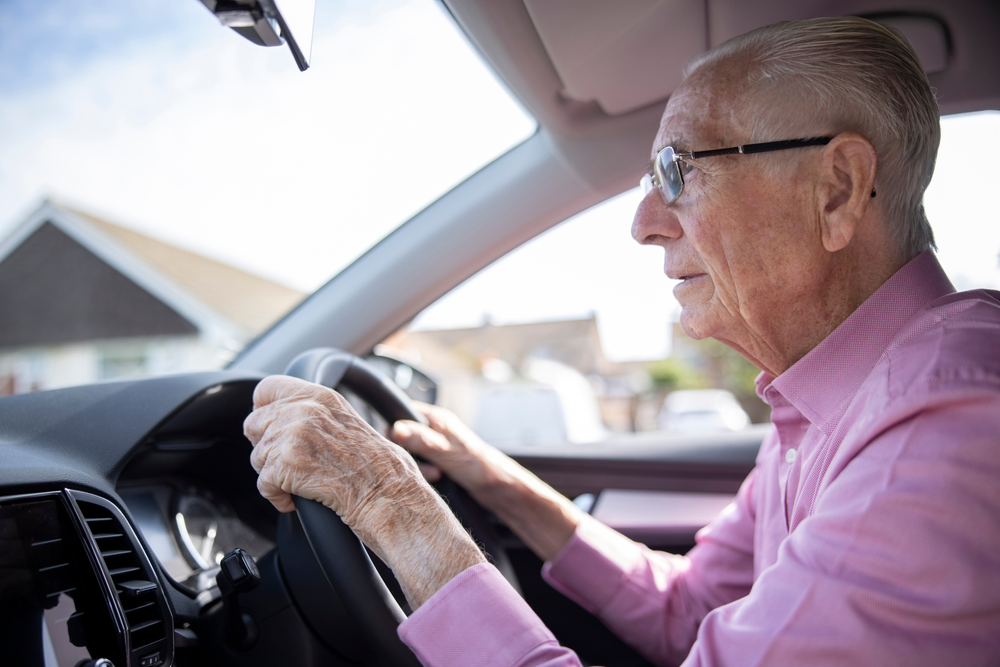
Elderly man behind the wheel, PHOTO: Shutterstock
Drivers over the age of 70 will be required to have their eyesight checked every three years, according to plans to reform UK road traffic laws, the BBC reports.
The changes are part of the government's new road safety strategy, which will be published on Wednesday.
Other proposed measures, first reported in the British press last August, include lowering the legal blood alcohol limit in England and awarding penalty points for not wearing a seat belt.
Almost one in four car drivers who died in 2024 were aged 70 or over, according to UK government data
Health professionals recommend that people over 60 have checkups every two years, especially since they can help diagnose other underlying conditions.
Drivers in the UK must be able to read a number plate from a distance of 20 metres, according to the Driving Licensing and Vehicle Registration Agency (DVLA).
But at present, drivers of any age are not required to prove their skills or health after obtaining their driving licence.
How has it been for drivers in the UK so far
Drivers must notify the DVLA if they become unfit to drive, but this is a self-reporting system.
Lilian Greenwood, Minister for Local Transport, said: “We know that driving can be very important to older people's wellbeing and helping them live independently, but we also need to make sure everyone is safe on our roads.”
“As the country's elderly population grows, our plans in the first road safety strategy in a decade will, where possible, preserve personal freedoms while taking action to save lives,” the official added.
Last year, a coroner's inquest into the deaths of four people killed by visually impaired drivers concluded that the enforcement of vision standards on public roads was “ineffective and unsafe”.
The Chief Coroner for Lancashire, Dr James Adeley, pointed out that the UK was one of only three countries that relied on self-reporting of sight conditions affecting the ability to drive.
In the report to Transport Secretary Heidi Alexander, the doctor said: “Self-reporting of eye conditions allows drivers to lie about their current driving status to eye assessors and avoid warnings not to drive.”
“Drivers can also admit to driving but then ignore instructions not to drive and fail to inform the DVLA,” he added.