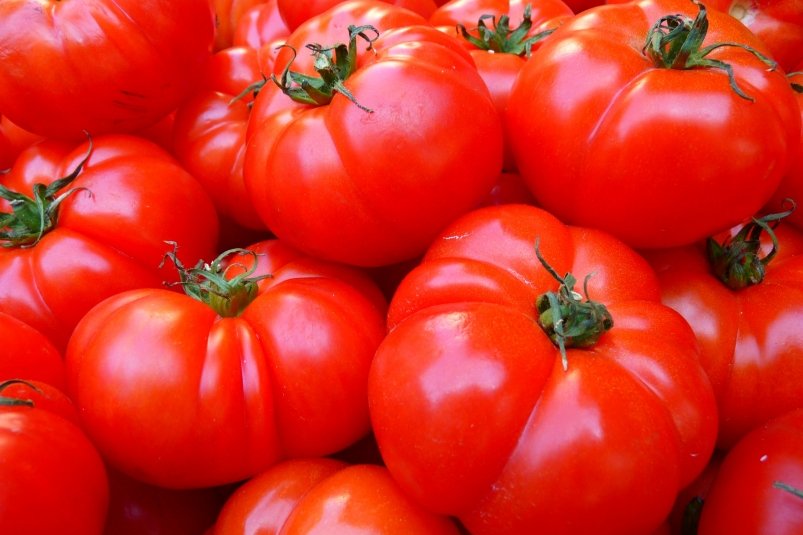
Early ripening tomatoes allow you to harvest in July before rains and late blight. They are not only small, but also large-fruited – ideal for salads, preparations and processing. The author of the Zen channel “Harvest Garden and Vegetable Garden” (12+) spoke about this.
Caring for early tomatoes: 7 key rules
1. Soil and location

Choose the sunniest place, protected from the north wind. The soil should be light, fertile, with a pH of 6–7. 2–3 weeks before planting, add 3–5 kg of humus per 1 m².
2. Landing
Plant seedlings after danger of frost. Deepen to 5–7 cm to stimulate root formation. Scheme: 40 cm in a row, 60 cm between rows (4–5 bushes per 1 m²). For tall varieties, install supports immediately.
3. Watering
Water rarely, but generously 1-2 times a week with warm water, strictly at the root. Avoid wetting the leaves. Drip irrigation is the ideal option.
4. Feeding
Do the first feeding 10–14 days after planting. Use fertilizers with phosphorus and potassium; nitrogen is not needed. Repeat every 2-3 weeks.
5. Formation
Form tall varieties into 1–2 stems, removing the shoots. This improves ventilation, reduces disease and directs energy to the fruit. Garter is required.
6. Protection from diseases
Maintain crop rotation. Mulch with straw or grass. If there is a threat of late blight, use “Fitosporin” or garlic infusion.
7. Harvest
Pick fully ripe fruits, they are the sweetest. Regular collection stimulates new ovaries. Remove overripe tomatoes immediately; they cause rot.
Three proven varieties:
Berkeley Tai Dai Haat — ripens in 100 days, fruits 200–250 g, golden-green on the outside, burgundy on the inside, fleshy and sweet. Harvest from July to September. Minimum number of stepsons, disease resistant. Suitable for salads, but not for long-term storage.
Abruzzo — ripening 105–110 days, fruits 250–430 g, pear-shaped, with thin skin and low-seeded pulp. Resistant to mosaic, Alternaria and rot. You can collect the seeds: fermentation for 2–3 days, washing, drying.
Mikado Black — ripens in 100–105 days, fruits 250–300 g, dense, with a fruity aftertaste. The bush is powerful, productive, with potato leaves. Requires the formation of 2 stems and removal of the lower leaves, but gives a stable harvest even in cool summers.
These varieties combine early ripening, large fruit and rich taste. They are suitable even for difficult climates. The main thing is not to forget about basic care. Then in September you will still be picking ripe, aromatic tomatoes