Cocaine is a source of profit for all drug cartels in Latin America, so cutting them off will significantly weaken the cartels, Vice President JD Vance said on Sunday. In this way, he responded to allegations that the US was not guided by anti-smuggling considerations in the operation against Venezuela.
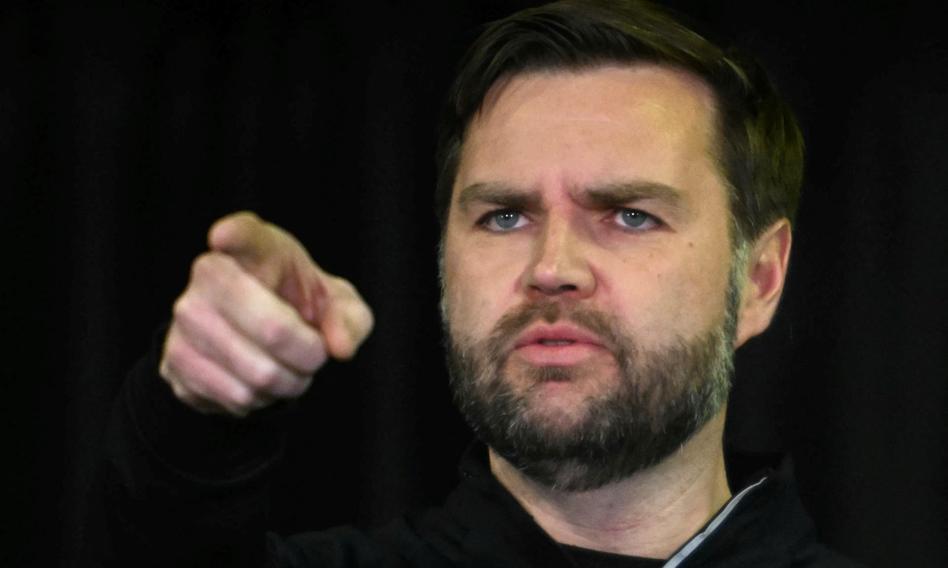
Vance defended the Trump administration against criticism that, contrary to the authorities' official justifications, the operation to capture Nicolas Maduro was not motivated by the fight against drugs. In a post on the X platform, the vice president also admitted that Venezuela is not the main source of fentanyl, which is responsible for the vast majority of overdose deaths in the US.
“First of all, fentanyl is not the only drug in the world and it is still present in Venezuela (or at least it was). Secondly, cocaine, which is the main drug trafficked from Venezuela, is a source of profit for all cartels in Latin America. If we cut off cocaine revenues (or even reduce them), we will significantly weaken the cartels. Plus, cocaine is harmful too!” – Vance wrote.
He added that although most of the fentanyl is smuggled into the US by cartels from Mexico, stopping this practice is also a priority of President Donald Trump's policy.
The US wasn't just about oil?
Vance also responded to critics accusing Trump that the U.S. intervention was motivated by the desire to seize Venezuelan oil. During Saturday's press conference, Trump announced that the US would extract Venezuelan oil, sell it to other countries and that the profits from this would constitute compensation for the US, including due to the expropriation of American companies from Venezuela by the government of Hugo Chavez, Maduro's predecessor.
“I understand concerns about the use of military force, but should we just let communists steal our goods in our hemisphere and do nothing? That's not how great powers behave,” Vance wrote. “The United States, thanks to President Trump's leadership, is a great power again. Everyone should take this to heart,” he added.
Vance was previously known for his isolationist views and ardent opposition to military interventions. As commentators noted, contrary to previous practice, the vice president was not present in Florida together with other decision-makers during the operation to capture Maduro. According to White House officials, he was to connect via video call.
DEA: Venezuela is not a major producer of cocaine
The U.S. prosecutor's office accuses Maduro of leading a criminal group called Cartel de los Soles (Spanish: Cartel of the Suns), which the American authorities have officially recognized as a terrorist organization.
Experts quoted by the BBC, however, assessed that the name Cartel de los Soles does not refer to any specific criminal organization, but rather is a term used to describe corrupt Venezuelan officials and military officials, regardless of whether they belong to the same group.
The US has been gathering troops in the vicinity of Venezuela for several months, justifying it with the fight against the smuggling of illegal substances. U.S. officials have said cocaine smuggled from Venezuela is contributing to the U.S. overdose epidemic and is often laced with deadly fentanyl.
However, Venezuela is not a major producer of cocaine, although it borders the largest producer of this substance in the world, Colombia. A 2025 report by the American drug enforcement agency DEA stated that 84 percent cocaine intercepted by the services in the USA comes from this country. The document also mentions other countries, but not Venezuela.
Most of the Colombian cocaine in the US is smuggled through other routes, mainly through the Pacific, and only a small part reaches the US market through the Caribbean Sea, to which Venezuela has access, according to US and Colombian government data, quoted by the New York Times.
According to DEA data, in 2019, 74 percent shipments of cocaine to the USA were transported across the Pacific, mainly from Colombia and Ecuador, and only 24 percent – across the Caribbean Sea. In 2025, the Colombian Navy assessed that “the Pacific corridor has become the main route for cocaine to North America.”
According to 2020 estimates by the U.S. Department of State, between 200 and 250 tons of cocaine passed through Venezuela annually, equivalent to 13%. world supply of this substance. However, other countries had a much larger share in this practice, for example Guatemala, through which 1.4 thousand people passed through in 2018. tons of cocaine, the NYT reported.
America's war on fentanyl
In recent months, U.S. forces have carried out numerous attacks on suspected smuggling boats in the Caribbean and Pacific Seas. After one of those attacks, Trump declared that the destroyed boat was “filled mostly with fentanyl.”
However, as the media emphasize, Venezuela plays virtually no role in the trade in this substance. Fentanyl sold in the US is produced mainly in Mexico using semi-finished products imported from China and smuggled to the US by land through the southern border – according to data from the DEA and the US Department of Justice.
In the 2025 DEA report, in the section devoted to fentanyl, the threat associated with this substance originating in Mexico and smuggled to the United States by Mexican drug cartels was mentioned. Fentanyl “super labs” in Canada were also mentioned. Venezuela was not mentioned among the sources of fentanyl.
The US Customs and Border Protection (CBP) reported that from October 2024 to August 2025, less than 4.2 thousand were intercepted at US borders. kg of fentanyl, of which as much as 96 percent – on the border with Mexico. Less than 1 percent it fell on the border with Canada, the BBC reported.
The US accuses Maduro of, among others, for participation in a “narco-terrorist conspiracy”. According to the US prosecutor's office, Maduro and his accomplices supported the cocaine trade with the Colombian FARC and ELN militias, the Mexican Sinaloa and Zetas cartels, and the Venezuelan Tren de Aragua. As a result of their actions, “thousands of tons” of cocaine were allegedly sent to the United States.
The document published on Saturday by the federal prosecutor's office in New York lists specific cases of alleged crimes against Maduro, such as knowingly issuing diplomatic passports to drug smugglers. In addition to Maduro himself, charges were brought against, among others, his wife, son Nicolas Ernesto Maduro, current Interior Minister Diosdado Cabello and his predecessor Ramon Rodriguez Chacin, and Tren de Aragua gang leader Nino Guerrero.
From Washington Oskar Górzyński (PAP)
osk/adj/