“Turning Point”. Trump's new geopolitical puzzle. China spotted an opportunity

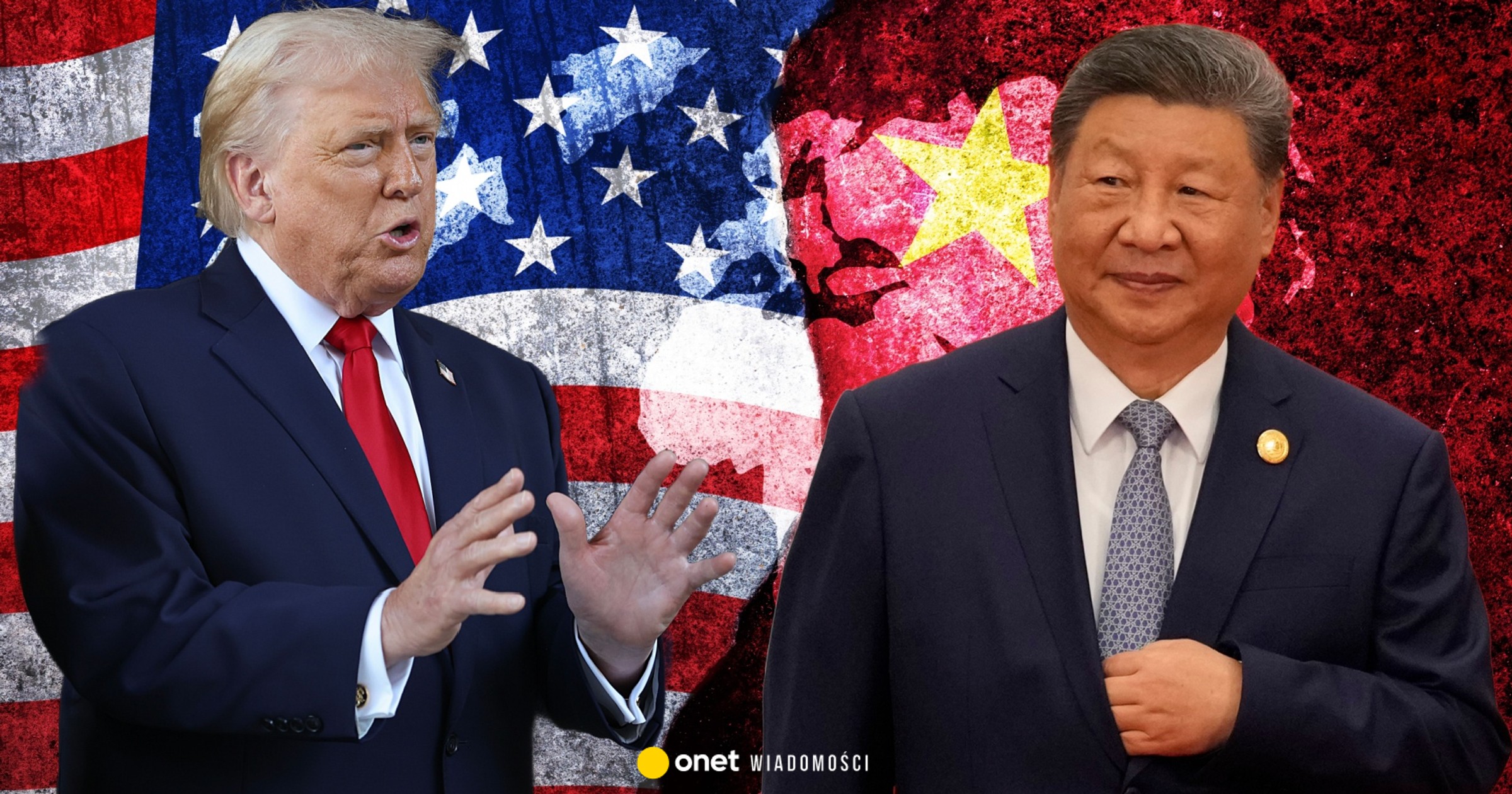
When President Donald Trump announced Saturday that the United States would “manage” Venezuela for now, he and his closest advisers made it clear that the United States might not stop there — and demanded that the rest of the world take note.
This is Trump's second and last term as president. It is possible that this is why the American leader is racing against time, focusing on short-term results. In turn, autocrats around the world who are able to play on the geopolitical chessboard for much longer may benefit from rising tensions between the United States and its neighbors. Chief among them is China, which wants to play its own game.
POLITICO's anonymous informants also lift the veil of secrecy and present the likely next steps of the US president.
Defense Secretary Pete Hegseth says bluntly about the Venezuelan leader: he “had a chance” to leave the country on his own. Now he has become another example of a leader paying a high price for failing to respond to pressure from Donald Trump. “He had fun and found out,” Hegseth comments on Maduro's behavior.
The Americans are now making specific threats against three other countries that may soon be targeted by the administration: Colombia, Cuba and Mexico.
The article continues below the video
The reaction didn't take long. “All nations of the region must remain vigilant as the threat affects everyone,” the Cuban government said in a statement.
Meanwhile, the White House's warnings are becoming more forceful and decisive. Trump again accused Colombia's president of “producing cocaine” and once again admitted that he “has to watch out for himself.” He also added that Americans would “talk about Cuba.”
Secretary of State Marco Rubio went even further. “Listen, if I lived in Havana and worked in the government, I would be worried,” Rubio said.
Earlier, during a telephone interview with Fox News, Trump warned that “something is going to have to be done with Mexico,” stating that asked President Claudia Sheinbaum if she wanted “help” from the US military in fighting drug cartels.
“America's dominance in the Western Hemisphere will never again be questioned,” the American leader said.
Colombian President Gustavo Petro condemned the attack, emphasizing that it was aggression against all of South America. He announced the mobilization of troops along the country's border with Venezuela to stop a possible influx of refugees.
Brazilian President Luiz Inacio Lula da Silva, who has been trying to establish good relations with Trump in recent months, wrote in a post on X that Maduro's overthrow “crossed an unacceptable line” and “recalls the worst moments of interference in the politics of Latin America and the Caribbean.”
Mexico has also criticized what Sheinbaum says are attacks violation of the United Nations Charter. The Mexican, Colombian and Cuban embassies in Washington did not respond to requests for comment about Trump's latest threats against their governments.
At the same time, some countries have made efforts to play a mediating role. The Colombian Embassy in Washington said in a statement that Petro offered to help mediate to resolve the crisis.
Trump has long made no secret of his dreams of a great America
In his inaugural speech almost a year ago, Trump outlined a more aggressive expansionist foreign policy, shocking longtime allies with threats to make Canada the “51st state” and colonize Greenland, an autonomous region belonging to Denmark.
In his first year in office, he focused simultaneously on several different foreign policy fronts — the Middle East, Asia and Europe. He also made many unsuccessful attempts to resolve the war in Russia in Ukraine. That frustrated some allies, who repeatedly emphasized that it was a far cry from the isolationist “America First” approach with which Trump ran for office.
Although the upcoming mid-term elections in November this year provide a political incentive to focus on domestic affairs, Trump has decided to open a new front in foreign policy by continuing to work towards regime change in Venezuela. The president — and, by extension, his party in Congress — will be judged for it, too.
For Trump, who in his last term no longer has to worry about his own electoral results, it's short-term operational success in Venezuela may be an incentive to take additional actions throughout the region, which the president and his advisers have already announced.
Katie Miller, a former administration official turned podcaster and wife of deputy chief of staff Stephen Miller, posted on her X account on Saturday a photo of a map of Greenland colored with the American flag with one word in the caption: “COMING SOON.” By press time, the Danish embassy in the U.S. had not responded to POLITICO's request for comment.
In his prepared speech on Saturday, Trump invoked the Monroe Doctrine, a 19th-century foreign policy plan that has experienced something of a revival in conservative circles. It stems from President James Monroe's 1823 declaration of the United States' sphere of influence in America, which also served as a warning to would-be European colonizers to limit their goals to their own affairs.
— The Monroe Doctrine is serious. But we have far exceeded it, Trump said. “Now they call it the Donroe document.”
Florida supports Trump's actions. Cuba in the crosshairs
In South Florida, where both Trump and Rubio live, many community groups strongly support further action, particularly on Cuba.
Juan Carlos Porras, a Republican from Miami and a Florida state representative, praises the actions of the administration, especially Rubio, calling him the “mastermind” of the changes. “Even more changes in Cuba would really take it to the next level,” he says, adding that in theory it could happen quickly, given the “precision and power” that has proven effective in Venezuela.
At least one congressman suggests that Maduro's overthrow is itself likely to destabilize Cuba's governmentgiven its economic dependence on Venezuela.
“This could be a turning point,” says Republican Congressman Carlos Gimenez of Florida. —Venezuela supported the Cuban regime, so if Venezuela becomes a democracy, it will end. So we hope that the regime will collapse under its own weight.
First: Venezuela
However, even with the presence of American forces in the region, everything indicates that due to the unstable situation in Venezuela, actions in Caracas may take priority.
“There are no plans at this time” for another military operation in America — says one source close to the White House national security team, anonymously, in an interview with POLITICO. To coordinate political changes in Venezuela and the extraction of the country's oil resources, the United States will continue to need capabilities [wojskowych]to put pressure on the new leaders,” the informant adds.
Kevin Whitaker, a retired diplomat who served as U.S. ambassador to Colombia during Trump's first term, is cooling his emotions. In his opinion, the White House has no plans to take action in other Latin American countries in the near future.
“Even though Secretary Rubio was very clear about the message Cuba should get from this action, he did answer questions about it,” Whitaker argues. — The fact that they did not raise this issue suggests that it is not part of the Trump administration's immediate plans. And this is understandable: they have taken on many challenges here, he adds.
The US administration must now work to avoid divisions in the Venezuelan army or the rise of criminal groups that could further destabilize the country.
Even if Trump remains preoccupied with Venezuela for now, Maduro's ouster sends a clear signal to the rest of Latin America. It cannot be ruled out that disregarding the sovereignty of other nations may lead to the outbreak of further conflicts in the future.
Unrest in Mexico. China is quietly watching
Even Sheinbaum, widely seen as maintaining positive relationships with both Trump and Rubio, can't rely on that alone.
Trump informed Sheinbaum on Saturday morning about intention to send US armed forces to eliminate drug cartels trafficking fentanyl in the territory of her country. According to Alex Gray, who served as chief of staff of the National Security Council during Trump's last term, it's something Trump considered during his first term.
“It may be in Mexican territory, but it is often territory in which the Mexican state is unable to maintain order,” he emphasizes. Sheinbaum, adds, “has worked well with us on combating drug trafficking, but there is a certain lack of state capacity to take action in some of these areas.”
This is Donald Trump's second and last term as president. It is possible that this is why the American president is racing against time, focusing on short-term results. In turn, autocrats around the world who are able to play on the geopolitical chessboard for much longer may benefit from rising tensions between the United States and its neighbors.
— China may see opportunities: a potential failure for the United States, increased divisions within the U.S. if it fails, and a long-term stimulus for Latin American countries that want to offset U.S. influence by turning to China, says Stephen McFarland, a former ambassador to Guatemala under Obama who also served in diplomatic roles in Ecuador, Peru, El Salvador and Bolivia.
In turn, Chile's former ambassador to China, Jorge Heine, explains that Trump's actions against Venezuela may encourage Beijing to be more aggressive in its territorial claims against Taiwan.
— Beijing might reason: “Well, why not Taiwan?” says Heine. — You could say that China has much greater claims on Taiwan than the United States has on Venezuela.