The capture of Venezuelan President Nicolás Maduro by US forces became, in just a few hours, the main news of the world media. The lightning operation, publicly confirmed by Donald Trump, is intensively analyzed by experts, commentators and political leaders, between the enthusiasm of those who welcome the fall of an authoritarian regime and the concern of those who see in this episode a dangerous precedent for international law.
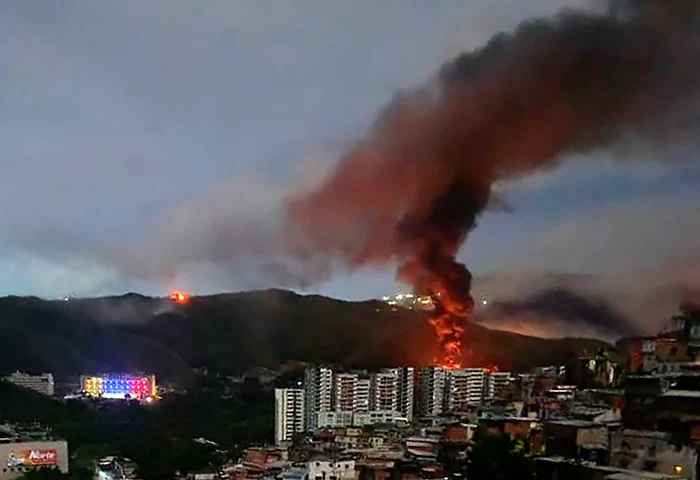
Western sources describe the intervention as a “30-minute war”/PHOTO:X
According to confirmed information, Nicolás Maduro and his wife, Cilia Flores, were captured on Saturday morning following a high-precision US military intervention. The leader of Caracas, in power for 13 years, is accused by Washington of narco-terrorism and direct links to drug trafficking networks. Just a day before the operation, Maduro had met at the presidential palace with an emissary of Chinese President Xi Jinping, in a gesture meant to emphasize rapprochement with Beijing amid rising tensions with the United States.
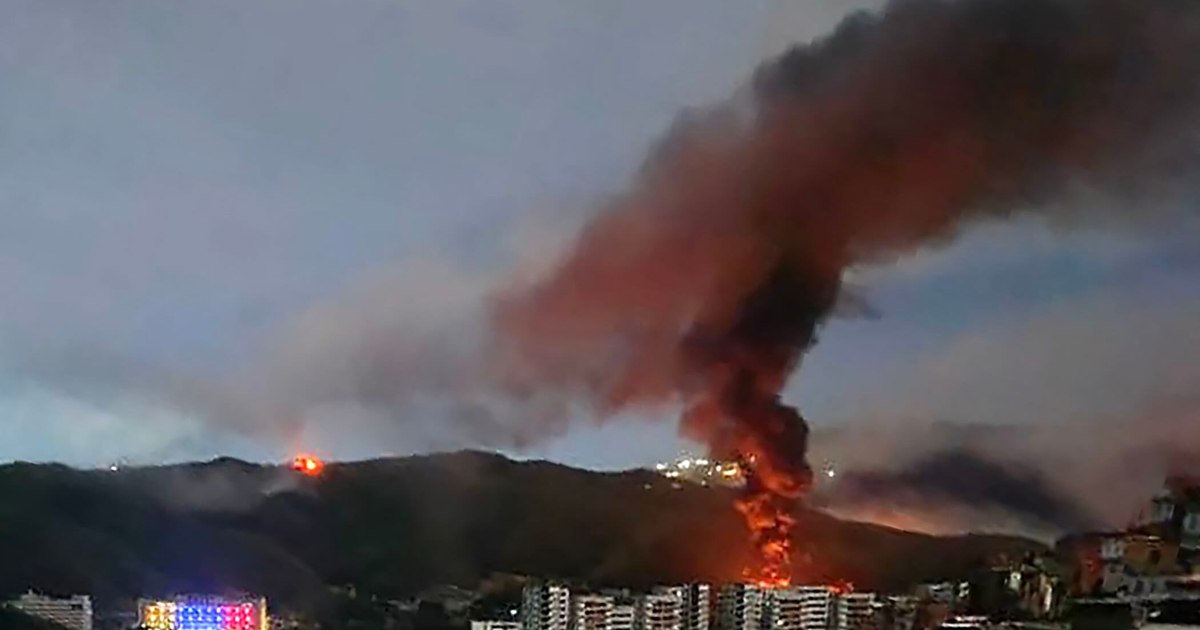
Western sources describe the intervention as a “30-minute war”. Simultaneous explosions were reported around 02:00 at the La Carlota Air Base and at the Fort Tiuna military complex, the command center of the Venezuelan military. Shortly after 02:30, the skies of the capital calmed down. It was not a classic invasion, but a surgical extraction operation, focused exclusively on neutralizing leadership.
Donald Trump personally confirmed on his social media that Maduro and his wife have been removed from the country. The capture of Cilieí Flores, nicknamed in Chavista circles the “prima combatant”, is considered by analysts to be a key element of the operation. For years, US intelligence has claimed she played a central role in managing the finances of the network known as the “Sun Cartel”.
The US strategy was one of “decapitation”, not occupation
There are no US troops in control of Venezuelan territories, and the strikes exclusively targeted command and communications centers in Caracas, Miranda and La Guaira. By paralyzing these nodes, the Venezuelan military would have been left without coordination and leadership at a critical moment.
Moreover, Saturday's operation seems to have been only the end point of a wider campaign, carried out discreetly in recent months. The destruction of drug trafficking routes, the interception of Venezuelan oil tankers and constant naval pressure set the stage for the decisive blow.
The authorities in Caracas declared a “state of external disturbance” and called for the mobilization of the population. In the absence of Maduro and his top commanders, however, the regime's messages seem to fall on deaf ears. The Chavista revolution, analysts note, risks stalling due to lack of leadership.
The energetic dimension of the intervention does not go unnoticed. Just 24 hours before his capture, Maduro publicly accused the US of trying to “steal” Venezuela's oil. With his disappearance from the political scene, access to the Orinoco's huge reserves of heavy crude oil – critical to US refineries – appears to be reopening. Markets are already reacting, anticipating the installation of a transitional government more favorable to Washington.
However, not everyone sees this episode as a victory without costs. Sultan Barakat, a professor of political science at Hamad bin Khalifa University in Qatar, warns that the US action marks a dangerous turning point. “It is probably the final nail in the coffin of international agreements. The principle of state sovereignty has been seriously undermined,” he said, noting that the intervention provides the US's global rivals with a precedent for similar actions.
Beyond the fate of Nicolás Maduro, the operation in Venezuela raises a fundamental question: Are we witnessing the beginning of a new era, in which brute force and swift strikes replace the fragile rules of the international order?