Article by Luminița Paul – Published on Friday, 02 January 2026 21:08 / Updated on Friday, 02 January 2026 21:09
Where do curling stones come from, how much do they cost and how are they produced? Ailsa Craig Island, 1 km square, provides the granite needed for their manufacture, which belongs to a company founded 175 years ago. It has supplied all the stones used in the Winter Olympics since 1998, when the sport returned to the Olympic program.
Ailsa Craigan uninhabited 1 square kilometer island located 16 kilometers off the southwest coast of Scotland, is the source of the extremely dense granite used to make curling stones for the Winter Olympics.
Jim English, co-owner of Kays Curling, explained to the AP that a special type of granite is being sought. “We need stones that have a very dense texture on the surface” he pointed out. The regular green granite that makes up the body of the stone is found at one end of the island, and the blue granite that forms the sliding surface is on the other side.
Kays manufactured all the curling stones for The Winter Olympic Games in Milan-Cortina. Founded in 1851, the company manufactures them in its workshop in the town of Mauchline, near Ayr.
“We can say that we have probably won every gold, silver and bronze medal since the sport returned to the Olympic program in 1998,” English said.
How much does a curling stone cost? Between $930 and $990
Also called Kays Scotland, the company holds the sole license to mine granite in Ailsa Craig, which is owned by Lord David Thomas Kennedy, 9th Marquess of Ailsa. It is believed that the island, with a height of approx 340 meters and a circumference of 3.2 kilometerswas formed by volcanic activity millions of years ago.
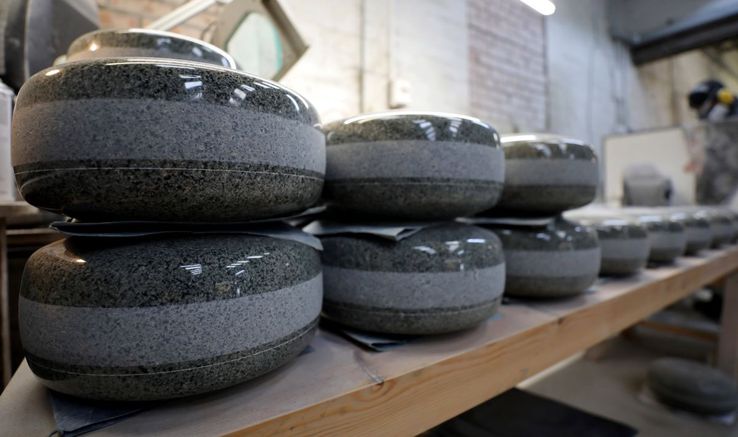
The Scottish Geology Trust wrote that the island is composed “almost entirely of microgranite”, whose “essentially flawless nature” makes it ideal for curling stones.
The curling rinks for the 2006 Turin Olympics were the first completely made of granite by Ailsa Craig. Previously, Kays had also used common green granite from a quarry in Wales.
Common green stones “they fall naturally, so we simply pick them off the groundRicky English, director of operations at Kays and son Jim, told the same source.They weigh between 6 and 10 tons.
The blue ones must be detached from the rock slope. Engineers drill and inject a charge of gas to break the rock along its natural fissures. These boulders weigh under 2 tons. They are picked up in containers and transported back to the port of Girvan. Galloway Granite cuts them and carves round “cheeses” out of them, then sends them back to Kays.
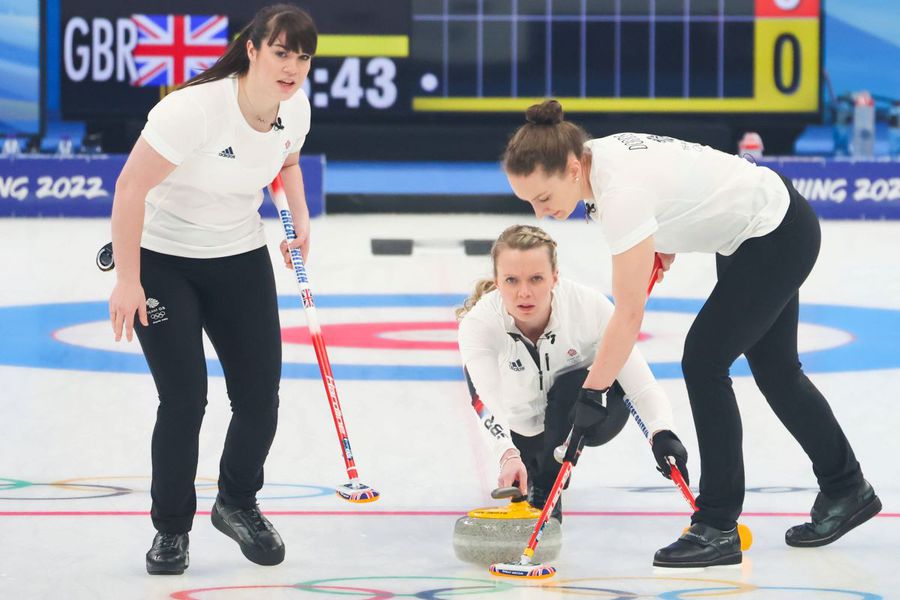
Team Great Britain during the Beijing 2022 Olympic final Photo: Imago Images
There is also luxury curling, in Qatar and Antarctica
Common green granite makes up most of the stone, including the “band” in the middle. A hole is drilled in the center of the stone, which weighs an average of 19 kg. The blue insert is glued in place and the handle is attached. Simple inset stone costs 930 dollars, one with a double insert – 990.
Kays produces between 1,800 and 2,000 stones per year. Canada is the largest market, while China, Japan and South Korea are increasing their orders.
And an unusual detail: Kays also sent stones to less common places for curling, such as Qatar and Antarctica, where a travel agency used the sport as part of a “luxury experiences“.