China's “spies on wheels” map their surroundings. Experts warn: These are also tools of sabotage

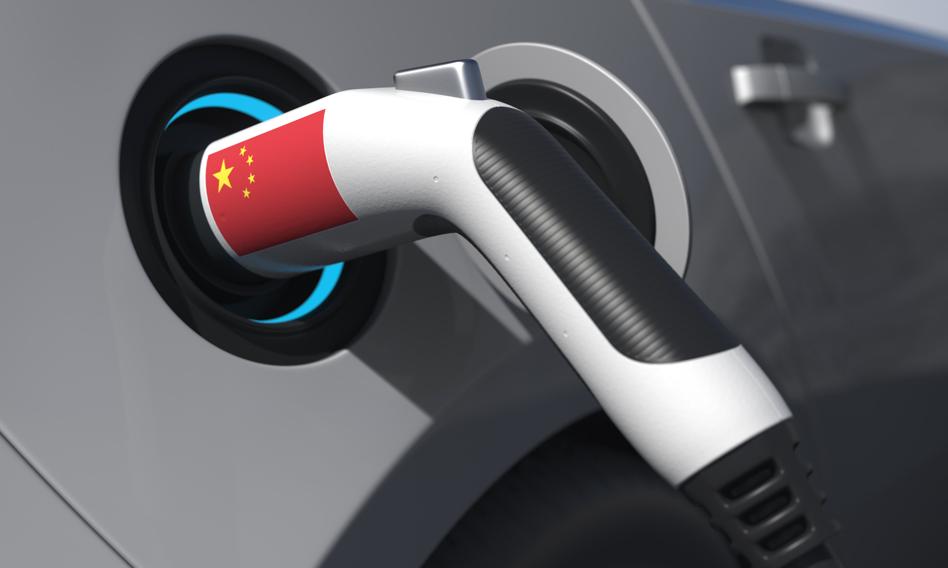
A ban on Chinese cars entering critical infrastructure zones could reduce security threats, Agnieszka Rogozińska, a national security expert, told PAP. The OSW report shows that vehicles from China can be used for espionage or terrorist attacks.
Maciej Pertyński, an automotive industry expert and juror in the prestigious World Car of the Year competition, believes that it is a mistake to see Chinese smart cars as a threat while ignoring other cars or, more broadly, devices with components manufactured in China.
I try to be realistic. I use Chinese sports cameras, even if one of them is called GoPro. My iPhone – I checked it – was manufactured in Zhengzhou, and probably about one third of Teslas driving around the world also comes from China – explained the informant to PAP.
“Smartphones atabout“weeps” – gigantic siegeć sensorthat
More and more intelligent cars with the ability to extensively collect data appear on the Polish and European market – according to the report of the Center for Eastern Studies published on Wednesday. “Smartphones on wheels.” Such vehicles are equipped with connectivity technologies that enable environmental scanning, geolocation, infrastructure communication and real-time remote services..
Michał Bogusz, an analyst at the China Team of the Center for Eastern Studies, explained in an interview with PAP that all smart cars – i.e. those with an integrated computer system managing all vehicle functions – may pose a threat to the cybersecurity of both individual users and entire countries.
– Firstly, it's just a giant long-range sensor platform. Such a system collects not only information about the immediate surroundings of the car, but also about where it moves or with what networks or devices it interacts – he explained. – And a dozen or so cars constitute a whole network of detectors that are controlled by one system – he added.
Risk of espionage and mapping of military bases
According to Dr. Agnieszka Rogozińska, an expert on hybrid threats and national security from the Academy of War Arts and the Piotrków University, who spoke to PAP, we can distinguish two main risk areas related to smart cars: cybersecurity and intelligence and surveillance threats.
As part of the first one, modern vehicle systems are susceptible to attacks, including taking control of the car, which becomes particularly dangerous as the number of such vehicles on the market increases. In Poland, this percentage in October this year. has already exceeded 10 percent and is constantly growing.
In the intelligence context, according to the expert, the key problem is unlimited access to sensory and geospatial datawhich can be used to map critical infrastructure, military facilities and industrial plants. These data, including audio and video recordings from the surroundings and interior of the car, are sent to external clouds managed by entities over which European countries have no control, which creates conditions for conducting espionage activities.
There is a risk that this information may be exchanged as part of cooperation between China and Russia in order to draw additional countries into the Russian sphere of influence, Rogozińska emphasized.
Is a ban on entering critical infrastructure enough?
In her opinion, there is currently a lack of specific legal regulations in Europe, and countries have difficult access to data on intelligence activities undertaken by manufacturers. The information collection process usually takes place without the user's knowledge, which requires the creation of an efficient legal apparatus and monitoring tools for the services and the army.
According to the PAP interlocutor, China should serve as an example, which from 2021 introduces restrictions, defines data sensitive to state security and subject vehicles, including: Tesla, rigorous testing.
An effective preventive solution would also be to introduce a ban on Chinese cars entering zones near critical infrastructure, such as airports or military units. – However, such action, although justified, requires a solid legal basis to avoid accusations of anti-competition – noted Rogozińska.
The expert noted that Chinese strategies directly assume combining civilian and military means, which means that intelligent vehicles, which are de facto “spies on wheels”, may become a tool of sabotage. – We are on the threshold of new, multidimensional threats that require our services to create a complete checking and response system – she concluded.
Skeptic's voice: Chinese components are everywhere
Maciej Pertyński has a different opinion. He admitted that Chinese cars – like any device connected to Wi-Fi – could be used for spying or sabotage, but he doubted whether the law could effectively prevent this. In his opinion, regulations that cannot be enforced are doomed to failure, especially since it is not known exactly what systems were installed in the vehicles and where.
– Anything can be a weapon and we cannot protect ourselves from it. Moreover, it is not only China's domain. In Russia, all Porsches stopped working on one day. Apparently they received an electronic command – recalled Pertyński, recalling the event that took place at the beginning of December this year, when hundreds of Porsche cars in Russia were remotely disabled by the manufacturer as part of the tightening of system blockades. The owners of these vehicles lost access to key digital functions and control systems (more on this in the article on Bankier.pl: “I'm not going anywhere. Porsches in Russia have hung up, blocked and won't start”).
Westwater begins to reactć
Before the OSW report appeared, foreign analytical centers had already informed about the threat. In September 2024, the US Department of Commerce issued the document “Protecting America from Connected Vehicle Technology from Countries of Concern”, which became the foundation for gradually introduced restrictions on the import and sale in the US of Chinese software and equipment used to connect vehicles to the network.
Similar studies were also created in Europe. The Swedish National Center for China (NKK) published last December “Security Concerns Regarding Chinese Connected Cars: A Short Overview” report. Meanwhile, the British think tank China Strategic Risk Institute created the study “Brussels Is “Behind the Curve” as Chinese Spy-EVs Become Commonplace).
All these publications show that modern Chinese cars, which are de facto “data tanks on wheels”, can be used by Beijing to mass collect information about critical infrastructure, map the environment using cameras and surveil users. (PAP)
dec/ ag/ bst/ mhr/