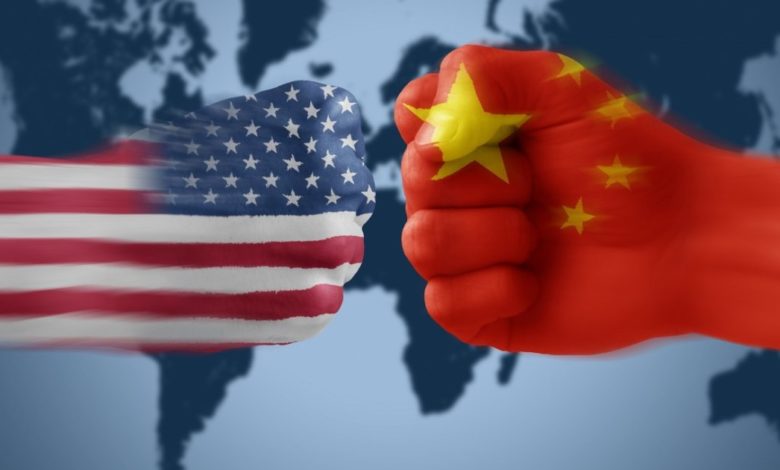
China is strengthening its presence in Latin America, signaling that it has no intention of withdrawing from a region Washington considers part of its sphere of influence. The move comes as the Trump administration seeks to reassert US dominance in the Western Hemisphere.
In its national security strategy released in December, the US administration promises to “restore US preeminence in the Western Hemisphere” and “lock in competitors from outside the hemisphere”. Although China is not explicitly mentioned, the reference is widely interpreted as referring to Beijing.
Less than a week after the US document was published, China quietly released a new policy document on Latin America and the Caribbean — the first of its kind in nearly a decade. Analysts say that the text anticipates an intensification of the strategic rivalry between the two great powers in the region, writes The Wall Street Journal.
“China has always stood in solidarity, through thick and thin, with the Global South, including Latin America and the Caribbean,” the 6,700-word document states. The text refers to a “significant shift in the international balance of power,” a phrase often used by President Xi Jinping to suggest the decline of the United States' global dominance.
An emerging strategic competition
Beijing is closely following President Donald Trump's every major initiative in Latin America — from pressure on the Venezuelan regime to attempts to reassert American influence over the Panama Canal. For China, the region represents a counterpoint to what it sees as its strategic encirclement by US-led military alliances in Asia.
“The competition between the great powers in Latin America has only just begun”shows an analysis by the Washington-based Center for Strategic and International Studies (CSIS).
According to the think tank, China's strategy aims to expand diplomatic and economic relations and position Beijing as a viable alternative to Washington. China has increased its political influence through massive investment in infrastructure, access to strategic resources—including critical minerals and energy—and active diplomacy at the local level.
Currently, 24 states in the region have joined the Belt and Road Initiative, up from none before 2017. China has also become the main trading partner for several Latin American economies. “China's strategy is essentially not to give an inch,” says Ryan Berg, co-author of the CSIS analysis.
Venezuela, a test of limits
Washington's pressure on Venezuela's Nicolás Maduro's regime is a major test for Beijing, which describes the relationship with Caracas as a “strategic partnership under any conditions.” China has condemned as “illegal hegemony” and “unilateral intimidation” the strengthening of the US military presence around Venezuela, including the interception of oil tankers suspected of evading sanctions.
At a meeting of the UN Security Council on December 23, China's deputy representative, Sun Lei, harshly criticized the United States, saying that Beijing opposes any action that “infringes on the sovereignty and security of other states.”
However, most of China's support for Venezuela and other governments targeted by the Trump administration remains declarative. Analysts do not expect Beijing to take actions that could lead to a direct military confrontation with the US.
Even so, China recently attracted attention by airing on state television a simulation of military exercises in the Western Hemisphere that showed Chinese forces engaging “adversary” ships and aircraft near Cuba and Mexico. Officially, the exercises were presented as technological demonstrations, but the strategic message did not go unnoticed.
Influence beyond economics
Washington is increasingly paying attention to China's efforts to create a global network of strategic logistics points, including at ports that could support military operations. A recent report by the Pentagon mentions Cuba as the only country in the Americas where China has considered the possibility of a military base.
In parallel, Beijing is expanding its influence through “soft power” tools, including technological cooperation and space programs.
The Trump administration, for its part, is trying to limit US technology exports to China while maintaining trade relations in areas such as agriculture and rare minerals. The White House says it is moving quickly to “restore America's strength at home and in the world.”
Panama and the Taiwan Stake
Panama has become a clear example of Sino-American rivalry. After Trump claimed that Beijing was exerting excessive influence over the Panama Canal, Panamanian authorities announced their withdrawal from the Belt and Road Initiative and the country's president was absent from a regional summit organized by China.
At the heart of the Chinese document, however, is another priority: reducing the number of Latin American states that still recognize Taiwan. Seven of the 12 governments that maintain diplomatic relations with Taipei are located in the region. China offers undefined benefits to countries that accept the “One China” policy, and several have already taken this step in recent years.
However, political developments in states such as Honduras show that Beijing's influence is not guaranteed.
Although the US security strategy does not directly mention China, references to “debt traps”, “espionage” and “cyber risks” are seen as clear allusions to Beijing's role in the region.
In this context, analysts say, China is trying to present itself as a less intrusive alternative to an America that appears to be reviving the Monroe Doctrine — an approach that, paradoxically, could strengthen Beijing's message in Latin America, say analysts consulted by the WSJ.