From hopes of peace to war with Europe. Putin has fallen into his own trap and now he simply cannot end the war

Throughout 2025, the hope of a quick end to the war between Russia and Ukraine has resurfaced several times. Each time, however, the peace talks ended without concrete results, being followed by new declarations and political promises, including from former US President Donald Trump. Although the conflict will end at some point, the likelihood of this happening in the near future now seems less likely, writes Meduza.io.
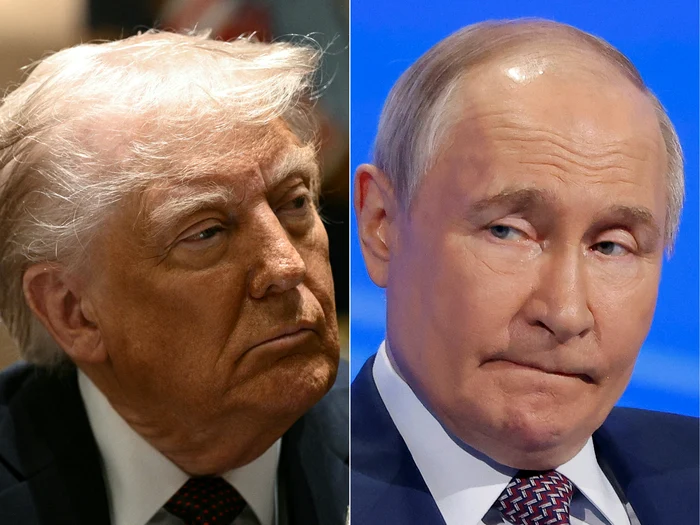
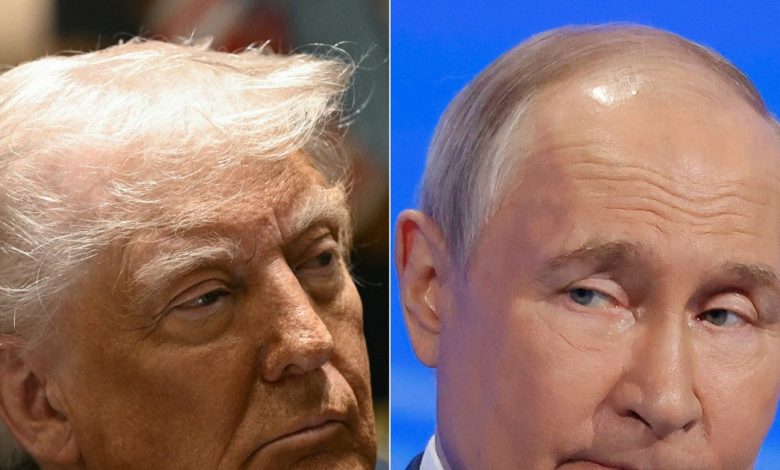
Donald Trump and Vladimir Putin/PHOTO: AFP
Towards the end of the year, talks of peace were increasingly replaced by warnings of a possible confrontation between Russia and Europe. According to political analyst Aleksandr Baunov, a senior fellow at the Carnegie Center in Berlin, this shift reflects a gradual evolution from the rhetoric of negotiations to a logic of protracted confrontation, including with NATO.
In Russia, the idea of a European threat is increasingly present in the official discourse. Statements that Europe “has always been at war with Russia” ignore the fact that, until 2021, the European Union was Russia's main economic partner and investor. However, the Russian leadership officially announced the continuation of the war in 2026, a message reinforced by successive statements of the main political and diplomatic officials.
The highly publicized meeting between Donald Trump and Volodymyr Zelensky did not produce a peace deal, but it did outline the parameters of a possible deal. However, Moscow rejected these formulas, claiming that they leave room for interpretation and citing new reasons for revising its negotiating position. The de facto withdrawal from negotiations was followed by the reassertion of the military option.
In parallel, Europe is openly discussing the need to prepare for a possible conflict with Russia in the coming years. The Kremlin rejects these warnings and says it has no plans to attack Europe, claims viewed with skepticism in Western capitals given the precedents before the invasion of Ukraine.
Putin has become a prisoner of his own decisions
Baunov argues that Vladimir Putin has become a prisoner of his own decisions. Once started, the war generated a process difficult to stop, in which each step justifies the next. In this context, stopping the conflict becomes more difficult than continuing it, and Moscow's demands tend to expand.
The conflict also had a profound impact on Russian society. According to the analyst, traditional moral norms — including the idea that besieging cities and attacking civilians are unacceptable — have been eroded. War is increasingly presented as a necessity or even a value, and cynicism and indifference to suffering have become more visible in public discourse.
At the same time, in the Western space, a growing fatigue towards the conflict can be observed. Discussions of the war are often avoided, and some Western commentators have begun to give space to voices close to the Kremlin in an attempt to “balance” the debate. But critics warn that these positions reflect political constraints in Russia rather than independent views.
Baunov points out that the war in Ukraine also affected the international order built after World War II. Russia, which has long based its global status on its role in defeating Nazism, risks redefining its international position solely on the outcome of the current conflict—one whose finality remains uncertain.
In conclusion, the analysis suggests that Russia traded a globally recognized historic victory on a protracted conflict with unclear results and high moral costs. Even in the event of a military success, Baunov warns, the new “victory” could not have the same political or ethical legitimacy as the past one.