Traveling on German railways is a real nightmare. This is how Deutsche Bahn robs passengers of their dignity. “We could learn something from Poland or Switzerland”

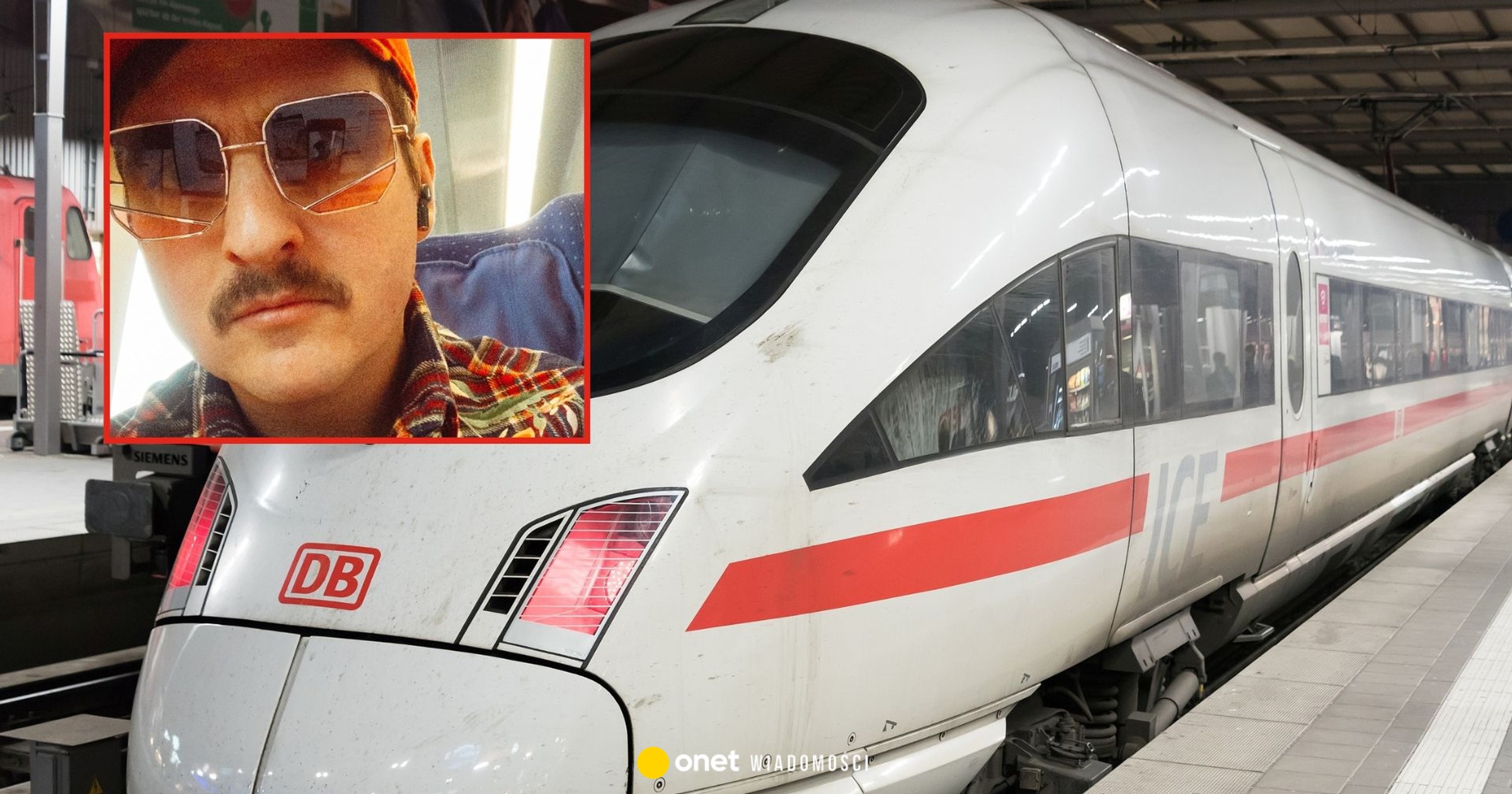
There are no available seats on the Intercity-Express (ICE) train to Vienna operated by Deutsche Bahn. People are crowded in the corridors. You can smell them and feel their presence very close. It's not necessarily pleasant. This is because the ICE train from Berlin to Munich has been canceled. However, a few minutes later the train to Vienna was leaving and about 100 people ran from one platform to the other. On to this train, which is now completely overcrowded.
Soldiers in uniform on their way home on the weekend sit on the floor. Eight of them sit at four-person tables at the on-board bar. Whoever needs to use the toilet has a problem. First, you have to get through the crowd of people.
On the other hand, the toilets in four carriages are closed. In front of each of them there is a yellow sign with the inscription: “Toilet closed. Please use other toilets.” But where are they?
A woman with mental disabilities starts screaming: “I really need to go to the toilet. And everything is closed. I really need it. Oh God. I can't do it.” He pushes through the crowd. He goes from one toilet to another. He turns back. He tries the other way around. People roll their eyes.
Deutsche Bahn, which becomes particularly clear that day, it takes away people's dignity. But at least the railway logo on Instagram has been in rainbow colors for some time now. When the railway switched to green electricity, it painted its trains green for several million euros, and now rainbow-painted trains also run on the tracks. Of course, the railroad's press release includes the standard phrases of “diversity,” “inclusion” and “tolerance.”
Some time ago I interviewed Claus Weselsky, when he was still the most powerful railway trade unionist in Germany. Weselsky then said: “Marketing will not replace punctual trains“.
The article continues below the video
The railway marketing department goes a step further: it actively mocks customers. The railway responds in a malicious and passive-aggressive manner to passengers who draw attention to the uncertainty of connections on social media. The post of an Instagram user who believes that traveling by car is “more reliable”, “cheaper” and “sometimes even faster” was published by the railway along with a photo of cars standing on a multi-lane road and the caption: “There's a traffic jam here.”
When Beatrix von Storch, as an outraged railway passenger, complained about the delay and the rainbow flag on the train in a post on
In an interview with FAZ, the then head of social media proudly stated: “We defended the values of Deutsche Bahn with a combination of humor and conviction.”
But what are Deutsche Bahn's values? The answer to this question may cause anxiety among the public.
German Railways has just produced its own YouTube series with actress Anke Engelke, which aims to bring these values closer. Engelke plays a conductor who, as a tragic heroine, tries to cope with the shortcomings, chaos and unpunctuality of the railways. There is nothing defensible about these irregularities. And for the head of social media to present himself as the savior of decency, inclusivity, tolerance and diversity is simply embarrassing, if not malicious.
Ask people who use wheelchairs how diverse, inclusive and tolerant railways are. Traveling in a wheelchair spontaneously is almost impossible. The railways recommend that you register your journey at least a day in advance to ensure that you can board the train. Many trains is not adapted for disabled people.
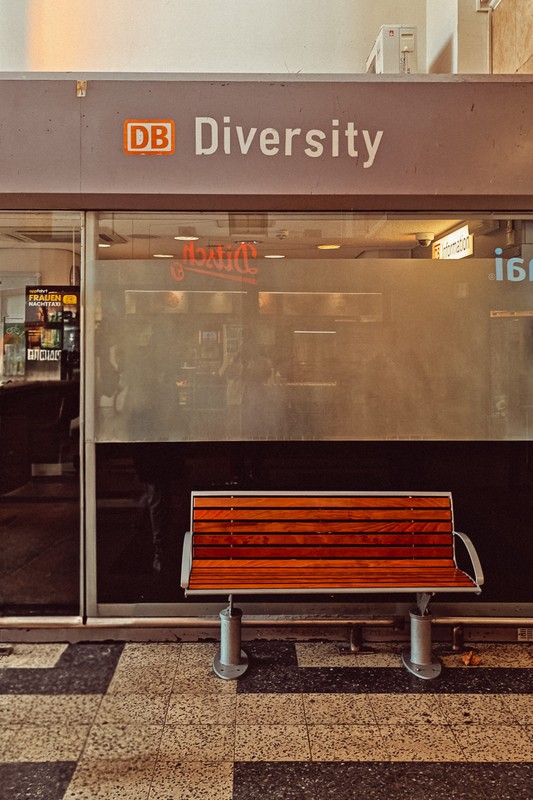
Deutsche Bahn boasts of “diversity”Die Welt
In 2020, the Ministry of Transport responded to a press inquiry that 22 percent. all railway stations are not adapted for disabled people, which means that people using wheelchairs, strollers or walkers have very difficult or even impossible access to them.
There are constant reports of wheelchair passengers being refused transport due to the lack of a ramp or lift – even though they had been requested in advance. The railways are also apparently not interested in wheelchair users traveling in first class. Very few trains have wheelchair spaces or disabled toilets. Promoting diversity while limiting – this is the railway's strategy.
The market cannot solve the problem
If the railway were a private enterprise that had to face competition, one might say: it's not pleasant, but the market will sort it out. However, the railway belongs 100 percent. to the German state. The turn is – Angela Merkel liked to use this phrase – without an alternative. The few private railways that run around Germany on some unimportant routes are not worth your attention.
Some time ago I met the sociologist Harald Welzer at Lake Schlachtensee in western Berlin. Welzer is a naturally calm person. But when we talked about railways, he became angry. “The management of Deutsche Bahn should be punished using medieval methods,” he said. — They have done real damage to democracy.
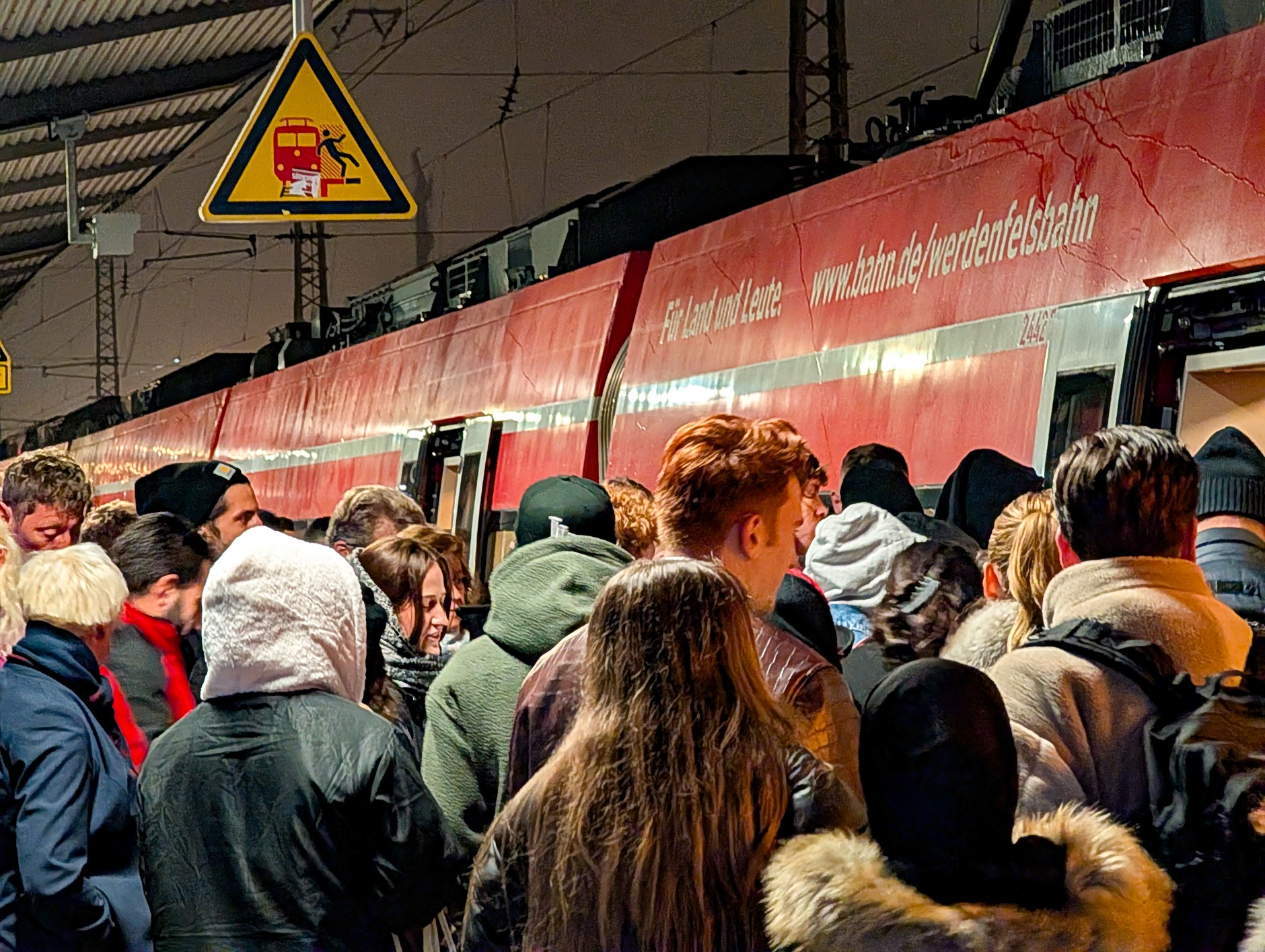
A crowd of passengers crowds to board a DB regional train on the platform of Munich Central Station in Bavaria, Germany, November 6, 2025.Michael Nguyen/NurPhoto via Getty Images/Getty Images
In November, former SPD MP Fritz Felgentreu published a longer article on this topic on X. Like Welzer, Felgentreu notices connection between the disastrous condition of the railways, the growing popularity of extremist views and the crisis of Germans' confidence in their governments and democracy.
This can be interpreted as meaning that the railway management significantly contributes to the delegitimization of the state. And this, in turn, is a category of extremism introduced under the then Minister of Interior Nancy Faeser (SPD), who is under the surveillance of the Federal Office for the Protection of the Constitution. Perhaps something would change if the railway was put under surveillance.
“It would be a great progress to imitate Poland”
Felgentreu, a party colleague of Faeser, wrote about the state of the railways: “The slow decline of the once proud German railway” has become “at the same time a symbol of a crisis of trust”. He wrote about “reliability, diligence, punctuality, cleanliness, conscientiousness” and perseverance, which he considers “essential”. “To see that it is still possible, we do not have to go all the way to Singapore or Japan. We could learn something from Poland or Switzerland, for example,” he argued.
According to the “Reisereporter” website, in 2024 only 62.5 percent long-distance trains in Germany ran on time. In Belgium this percentage was 96%, in the Netherlands 90.8%. and in Denmark, 90.5 percent. In Switzerland, the punctuality of trains was 98.6%.
In an interview, railway trade unionist Weselsky said that in 2018, then Minister of Transport Andreas Scheuer (CSU), during a railway event in which the Swiss consul general also participated, called out to the room: “We will show the Swiss how to ride a train.” The Swiss still laugh at Scheuer to this day.
Just before Christmas, on the Berlin – Munich route again. There is an accident between Nuremberg and Erlangen with fatalities. It's tragic. And an accident is an accident. In other countries, tracks are fenced and railway crossings have barriers. Tractors hit by trains are a regular feature of local newspapers in this country.
Therefore, traffic between Bamberg and Nuremberg is completely suspended. Five minutes before Bamberg, an announcement appears. Detour via Wuerzburg. This means a two-hour delay for people who wanted to go to Erlangen or Bamberg, for example. A very nice conductor says: “We will never get permission for a special stop. You have to report it in advance.”
As I mentioned, the accident is tragic. But does this mean that a special stop cannot be allowed? The train is standing. Message: “Dear Sirs, please do not pay attention to the displays on the train.” There is information about the next stop in Augsburg. To calm passengers, free water is distributed.
Upon arrival in Nuremberg, many passengers discover that the Nuremberg-Bamberg line is still closed. So people share taxis to get to Erlangen or Bamberg. Travel cost depending on the purpose of the trip: from 80 to 140 euros (from PLN 338 to PLN 592).
The train staff are not at fault. But he has to endure anger, insults and aggression every day. Every time a train fails to arrive or is late, conductors, on-board bistro staff and information desk staff have to endure what the railway management has done over many years under the CSU transport ministers. Every time there is neither drink nor food in the on-board bistro. Whenever reservations are not displayed. Every time entire parts of a train are missing.
At the end of September, the then head of the railway, Richard Lutz, said goodbye. He passed away earlier than expected. He came in jeans and a turtleneck sweater. He received chocolates, a bouquet of flowers and a severance package, which, according to “Business Insider”, amounted to between 2.4 and 2.8 million euros (from PLN 10 million to 12 million). A state that allows this delegitimizes itself.