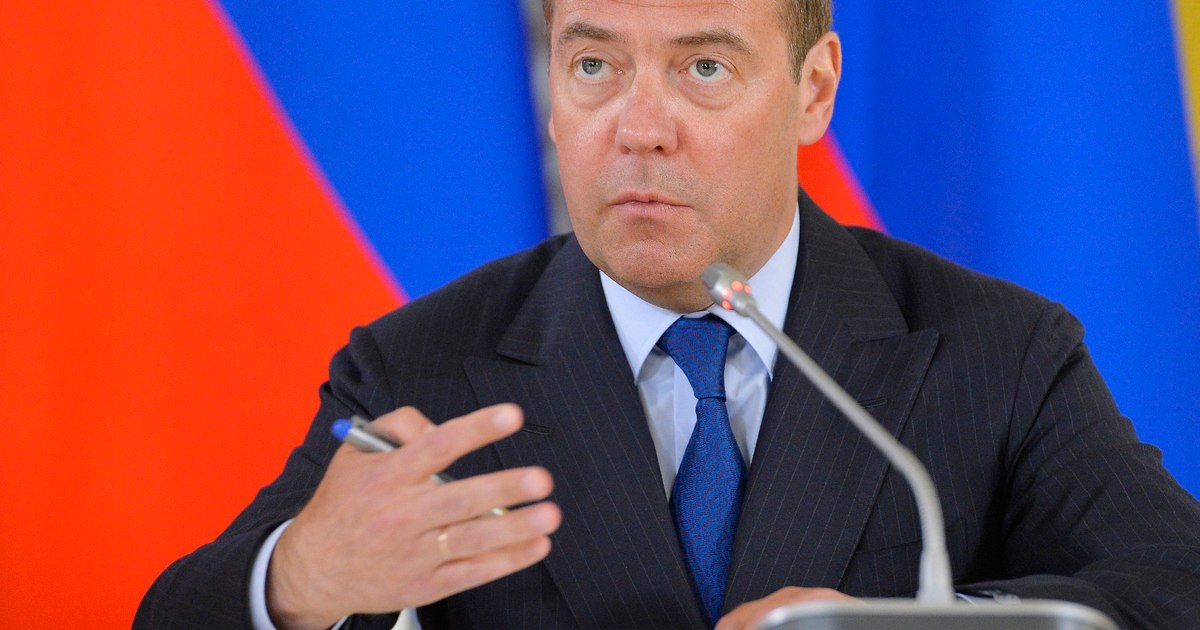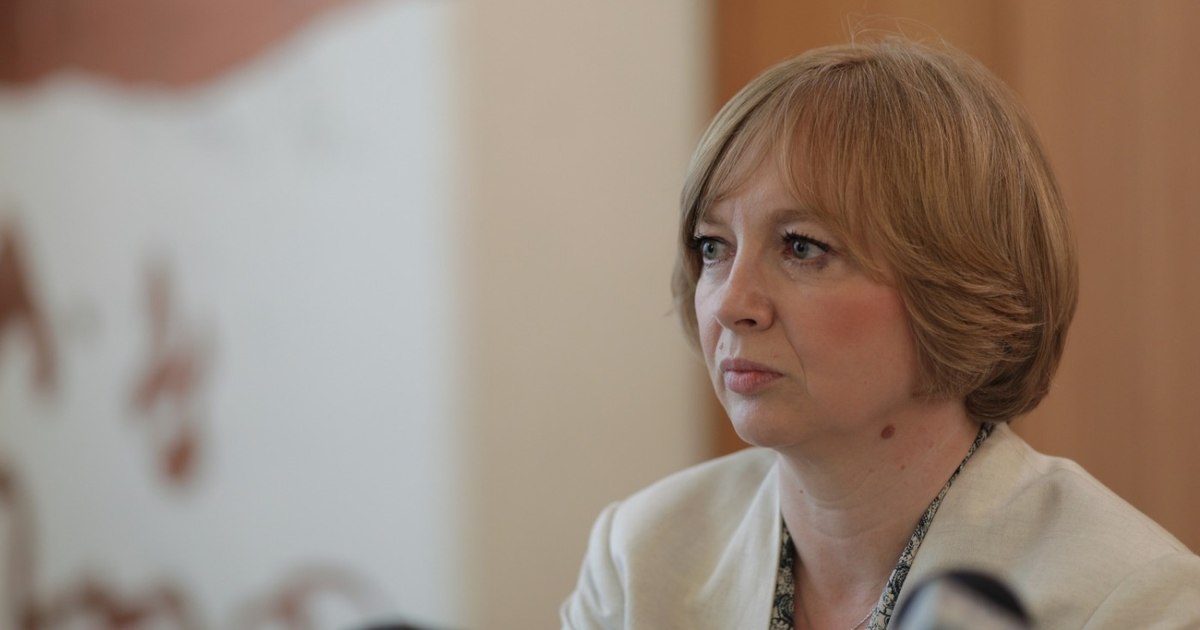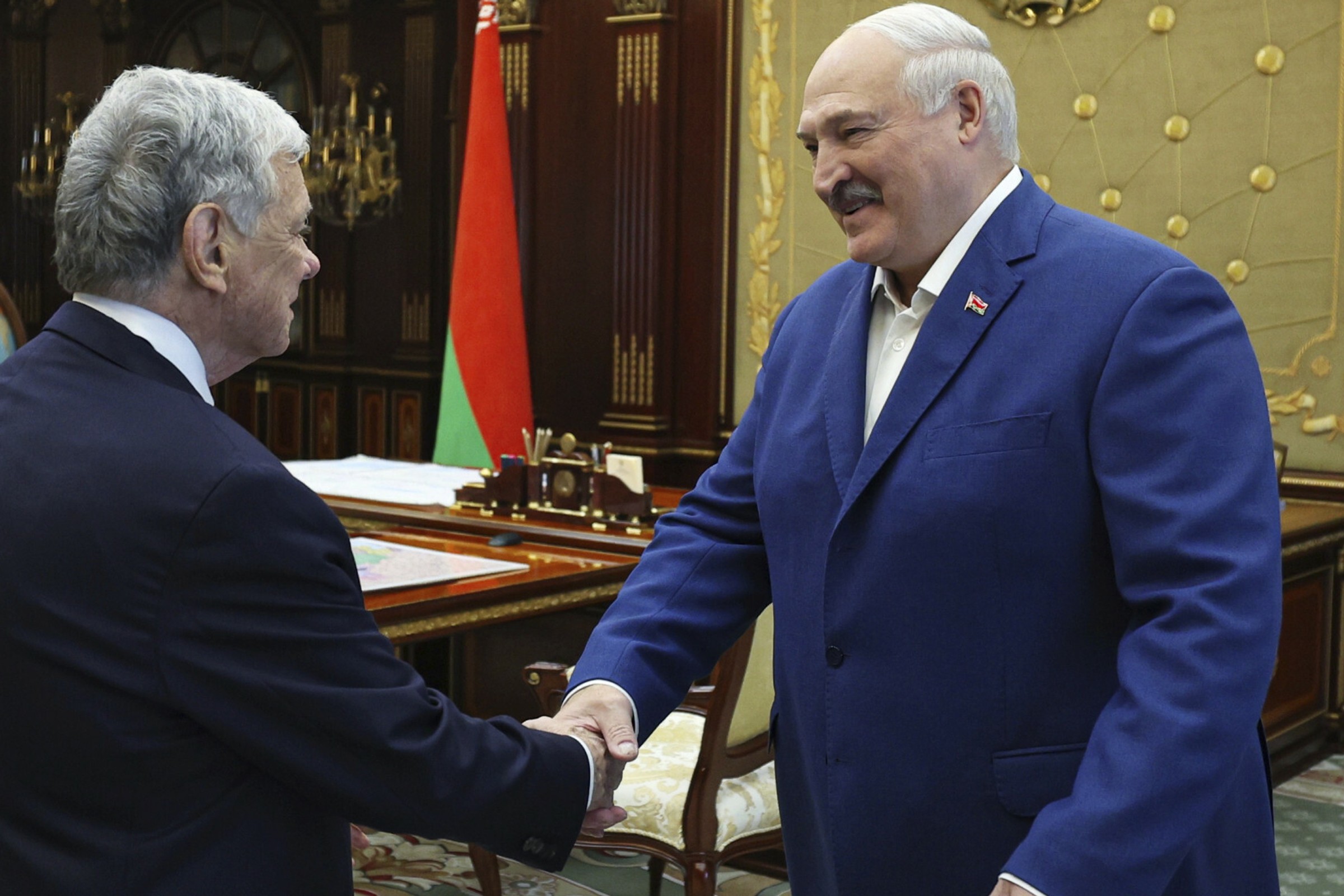
On Saturday, the Belarusian authorities released 123 political prisoners. This decision was made after two days of negotiations between Coale and Lukashenko and the lifting of sanctions on Belarusian potash by the US. Among others, he was released. Nobel Peace Prize laureate Ales Bialatsky.
Saturday's events are another episode of the Trump administration building relations with Lukashenko in order to free Americans imprisoned in Belarus and to gain support in a country located in the Russian sphere of influence.
The article continues below the video
Who is John Coale?
What were the results of Coale's negotiations with Lukashenko?
How many political prisoners were released in the last negotiations?
What sanctions were lifted after the prisoners were released?
It was he who negotiated with Lukashenko for the release of political prisoners. Who is John Coale
John Coale, an American lawyer who has been cooperating with Donald Trump for several years, but had not previously established himself as a diplomat, was responsible for the negotiations with Lukashenko.
For years, he was known in Washington and New York as a lawyer against large tobacco companies and weapons manufacturers. In the late 1990s, he was one of the authors of a court settlement between the largest tobacco companies and state authorities, according to which these companies were to pay as much as USD 386 billion. (the final amount turned out to be much lower) to cover health care costs in specific states.
In the 1990s and early decades of the 21st century, Coale was an outspoken Democrat. He donated large sums to the accounts of Democratic Party candidates, and supported Hillary Clinton in the 2008 party primaries. However, when she lost the nomination fight against Barack Obama, he switched support to the Republican candidate, John McCain. Behind the scenes, he also advised Sarah Palin (McCain's vice presidential candidate), and at one point he even tried to get Palin, who was hated by the Democrats, to establish contacts with Clinton and thus win over some Democratic voters to the Republican side. This plan had no chance of succeeding, and Obama became president.
When Clinton ran again in 2016, Coale initially supported another Democratic candidate, Martin O'Malley, the former governor of Maryland, but he had no chance of winning the nomination and quickly withdrew from the election. Coale endorsed Clinton again.
Nevertheless, for those who followed Coale's political and legal trajectory, it may have been only a certain surprise that in 2021 he found himself at Donald Trump's side. Although he did not vote for him in 2016 or 2020, he believed that Trump was treated unfairly by social media platforms that blocked his accounts after the attack on the Capitol. Coale argued that platforms such as Google and Meta have too much power and their actions amount to censorship, thus violating the First Amendment to the Constitution. Therefore, after long discussions with Republican politicians, including: Lindsey Graham, in 2021, became involved in a court battle against the above-mentioned corporations on behalf of Trump.
In the meantime, Coale gradually moved away from supporting democratic politicians, and towards the right – as he said in an interview with Bloomberg – he was pushed by “wokeism”, which he accused the left side of the political scene of promoting.
Trump's special envoy to Belarus
As a lawyer representing Trump's interests, Coale quickly found himself in the wide orbit of the presidential administration. He joined the negotiating team that talked to Alexander Lukashenko's regime in April this year. He did not lead it, but he was an important figure in it, alongside the then chief envoy for Ukraine, General Keith Kellogg, and Christopher Smith, responsible for Eastern European affairs at the State Department. In February 2025, Smith was the first high-level American politician to visit Belarus since bilateral contacts were frozen in 2020.
Coale met Lukashenko in April and spent several hours with him over food and vodka. Then, in an interview with Politico, he described that Lukashenko “really wants better relations with the United States.” The talks resulted in the release of one of the American citizens detained in Belarus.
At Gen. Kellogg's side, Coale also took part in subsequent talks with Lukashenko, which in June led to the release of 14 political prisoners, including Sviatlana Tsikhanouskaya's husband, Siarhei. In September, Minsk – in exchange for lifting sanctions on the Belarusian air carrier – released 52 political prisoners. At that time, the American delegation arrived in Belarus without Kellogg – it was headed by Coale, and Smith was present on behalf of the State Department.
The Friday-Saturday negotiations resulted in the release of 123 political prisoners, which the Americans exchanged for the lifting of sanctions on the export of Belarusian potash. After the negotiations ended, Coale stated that political prisoners still in Belarusian prisons (there are currently about a thousand of them, including Andrzej Poczobut) could “be released in one large group in the coming months.” He also reported that Belarus agreed to stop releasing balloons to Lithuania. Earlier, the authorities in Vilnius introduced a state of emergency throughout the country for this reason.