Meeting with sparks at the US central bank to approve the measure insisted on by Donald Trump

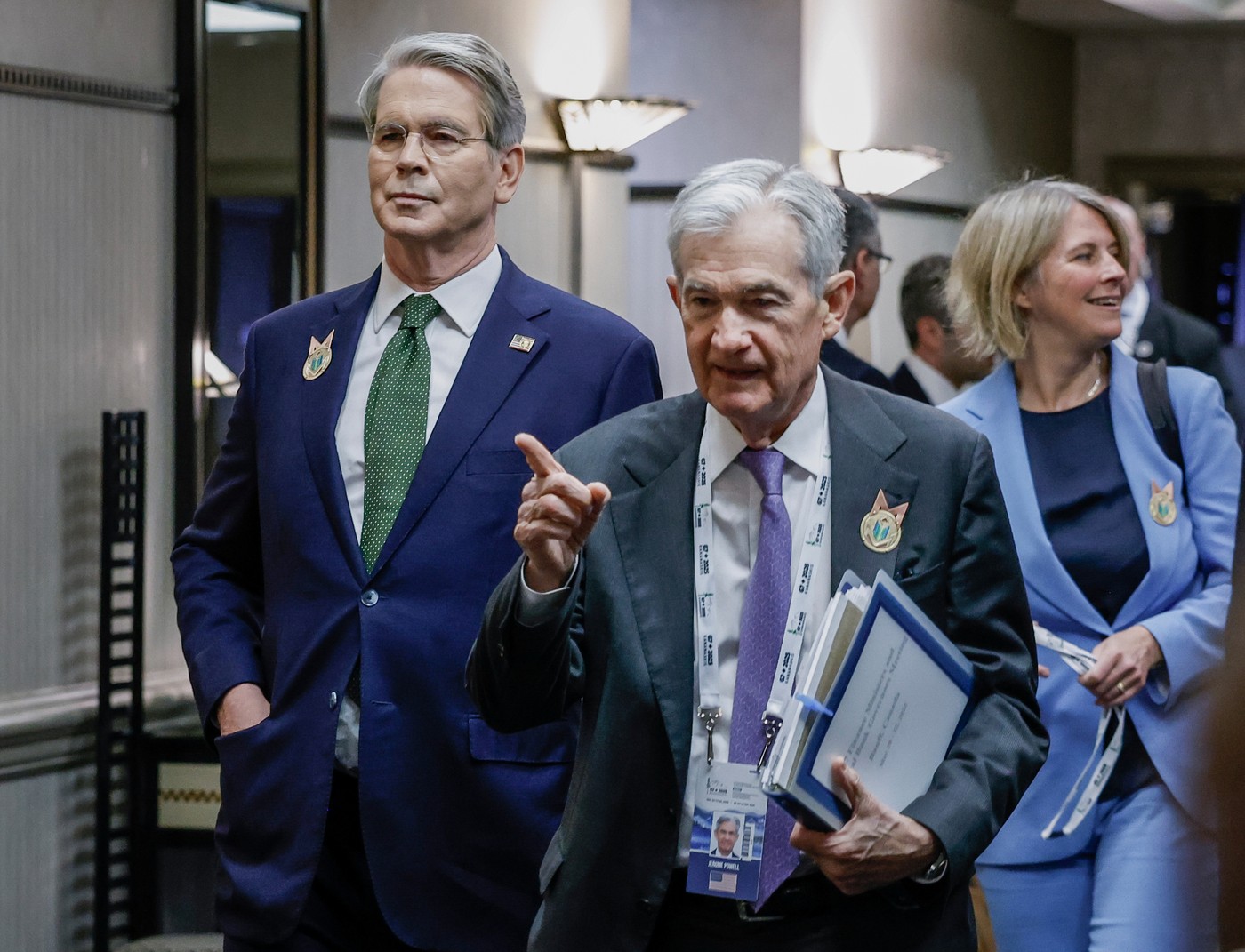
Federal Reserve Chairman Jerome Powell, center, with US Treasury Secretary Scott Bessent, left. Photo: Jeff McIntosh / AP / Profimedia
The Federal Reserve (Fed), the central bank of the United States, agreed to cut interest rates at its December meeting only after a highly nuanced debate on the risks facing the US economy today, according to minutes of its latest two-day session, Reuters reports.
President Donald Trump has repeatedly called on the Fed since assuming his second term as president in January to cut benchmark interest rates to boost economic growth. He harshly criticized the Federal Reserve for its lack of action in this regard and repeatedly insulted its chairman, Jerome Powell, whom he even threatened to fire.
Even some who supported cutting interest rates at the Fed's last meeting acknowledged that “the decision was borderline” or that they “could have supported keeping the target range unchanged” given the different risks facing the U.S. economy, according to the minutes released Tuesday.
Based on economic projections released only after the December 9–10 meeting, six officials strongly opposed a cut, and two of them dissented as voting members of the Federal Open Market Operations Committee (FOMC).
A “majority of participants” ultimately supported a cut, with “some” arguing that it was an appropriate, forward-looking strategy “that would help stabilize the labor market” after a recent slowdown in job creation.
Others, however, “expressed concern that progress toward the committee's 2 percent inflation objective has stalled.”
Unusual debates at the US Federal Reserve
“Some participants suggested that, based on their economic outlook, it would probably be appropriate to keep the target range unchanged for some time after reducing it at this meeting,” the minutes said in a reference to a debate in which officials expressed divergent views in favor of both tighter and looser monetary policy – an unusual outcome for the central bank, which has now occurred at two consecutive meetings.
The quarter-percentage-point rate cut approved in December lowered the Fed's benchmark rate to a range of 3.5 percent to 3.75 percent, the central bank's third consecutive move after officials agreed that slowing monthly job creation and rising unemployment warranted slightly less restrictive monetary policy.
But as rates have fallen and approached a neutral level — one that neither discourages nor stimulates investment and spending — opinion within the Fed has become more divided over the extent of future cuts. New projections released after the December meeting point to just one rate cut expected next year, while wording in the new monetary policy statement suggests the Fed is likely to remain on hold for now until new data shows either inflation is falling again or unemployment is rising more than expected.
The lack of official data during the 43-day government shutdown – an information gap that has yet to be fully filled – continued to influence policymakers' perspectives and views on risk management.
Some who opposed or were skeptical of the latest cut “suggested that the release of a considerable amount of labor market and inflation data between meetings would be useful in assessing whether a rate cut was warranted.”
The Fed's next meeting will be held on January 27-28, and investors currently expect the central bank to keep its benchmark rate unchanged.