Greece finds itself again at the intersection of the interests of the great powers. This time, the stake is not symbolic, but deeply strategic: the control of the maritime infrastructure. At stake is influence over the Mediterranean and the question of who will shape Europe's trade routes in the coming decades, writes defense24.com.
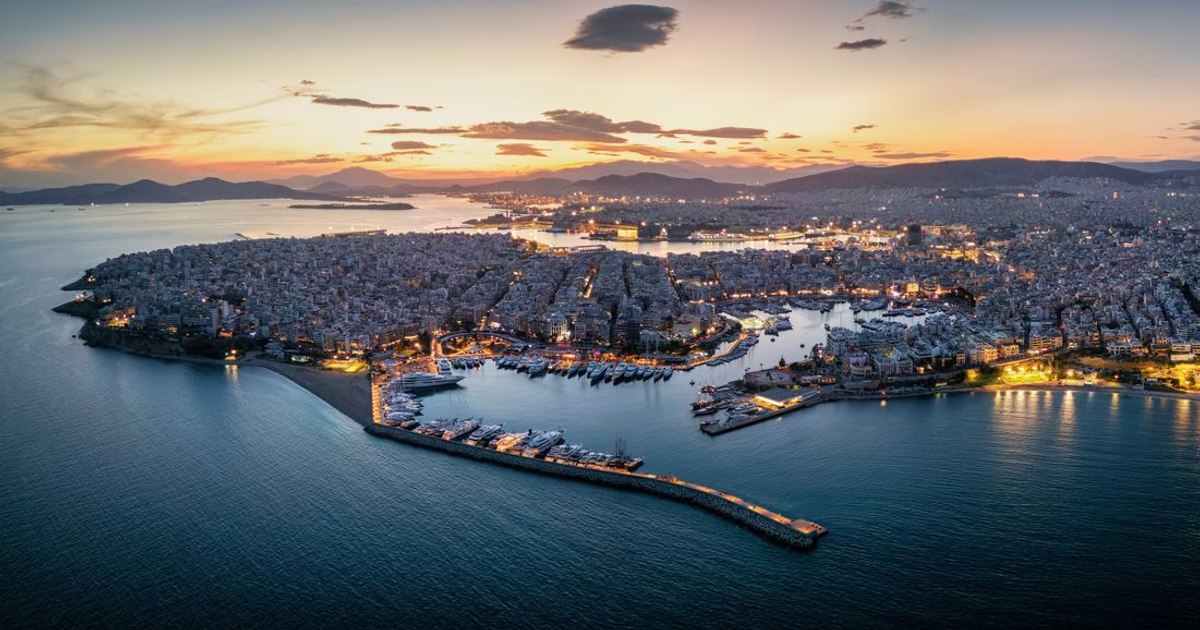
Port of Piraeus/PHOTO: shutterstock
Athens is at the confluence of China's Belt and Road Initiative and US efforts to limit its expansion. Trying to maintain a delicate balance, Greece seeks benefits from both directions. In this context, its ports are no longer mere logistical hubs, but key pieces in a changing geopolitical landscape.
Piraeus – China's gateway to Europe
At the center of this competition is the port of Piraeus, located near Athens on the eastern coast of the Mediterranean. Piraeus is an essential node on the trade corridor connecting Europe with Africa and Asia. Just a decade ago, the port was in a critical situation, severely affected by the Greek financial crisis.
The turning point came with the entry of the Chinese state-owned company COSCO. In 2009, it took over the concession of two container terminals for a period of 35 years, subsequently expanding its operations. In 2016, COSCO became the majority shareholder, with 67% of Piraeus Port Authority. In the same year, Greece officially joined the “Belt and Road” Initiative, and in 2019 it joined the China-Central and Eastern Europe Cooperation Platform.
For Beijing, Piraeus has become an essential link in expanding its economic influence in Europe. President Xi Jinping has described the port as the “dragon's head”, emphasizing its role as China's first major logistics hub on the mainland.
Economic gains for Athens
Chinese investments have transformed Piraeus into one of the most dynamic ports in Europe, strengthening Greece's position in the maritime and logistics sector. The modernization projects have created more than 10,000 jobs and made significant improvements to the infrastructure.
Financial data published in March 2025 show that in 2024 the port recorded a record net profit of 87.4 million euros, with total revenues of more than 230 million euros. Container traffic reached approximately 5.4 million TEU, placing Piraeus in the top five container ports in Europe. In 2008, before COSCO's entry, the volume was only 0.7 million TEU.
Washington's reaction
The rapid rise of China's influence in the region has prompted a strong response from the United States. Amid trade tensions and strategic disputes, Beijing's maritime expansion has become a major concern for Washington.
The US administration is preparing one of the most ambitious maritime initiatives in decades, aimed at reducing the global network of ports controlled by China. The plan includes the assessment of Chinese assets in key ports, including Piraeus, and the possibility of their takeover by Western companies.
A maritime imbalance
In this area, China has a considerable lead. By 2024, Beijing had invested in more than 120 port projects globally. Its shipbuilding industry is estimated to be hundreds of times larger than that of the United States, a gap that could take years or even decades to close.
In response, the US resorted to regulatory tools: higher port fees, sanctions and stricter controls. In January 2025, the Department of Defense included COSCO on its list of companies with ties to the Chinese military, signaling a possible escalation in competition for global port infrastructure.
Elefsina – the American alternative
In parallel, Washington is looking to develop alternatives to Piraeus. A recent project targets the town of Elefsina, where the US International Development Finance Corporation has provided a $125 million loan to upgrade the local shipyard. The port is designed as a regional logistics hub with both commercial and military potential.
Greece, a bridge state between the great powers
Greece's geostrategic position between two rival great powers represents both a challenge and an opportunity. Athens seems to adopt a calculated foreign policy based on several directions: Euro-Atlantic engagement (EU and NATO), cooperation with China in the framework of the “Belt and Road” and Mediterranean partnerships.
This approach allows Greece to remain flexible and capitalize on the competition between Washington and Beijing. Investments are increasing, ports are developing, and the country's logistical importance is being strengthened.
In the long term, this strategy could transform Greece into a leading regional maritime actor. If it maintains its current course, its ports could become key strategic points on the geopolitical map of the Mediterranean.