The Constitutional Court of Romania (CCR) is expected to rule on Sunday, December 28, on the notification of the High Court of Cassation and Justice (ÎCCJ) regarding the new project of the Bologna Government to reform magistrates' pensions.
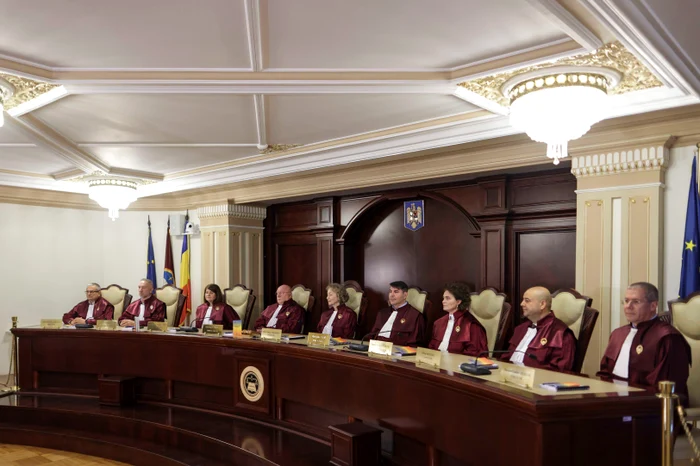
Constitutional Court of Romania/PHOTO: Inquam photos/Octav Ganea
At the beginning of December, the judges of the High Court decided, with unanimity of votes, to refer the CCR in connection with the new project regarding the reform of magistrates' pensions.
The magistrates were summoned by the President of the Supreme Court, Lia Savonea, to express their position, within the United Sections, in relation to the new project of special pensions for judges and prosecutors. The 102 judges present at the meeting voted unanimously to refer the CCR.
According to the ÎCCJ judges, the project presents “normative gaps, violates international standards, and its emergency character was not demonstrated or was built on a counterfactual reality”.
“The normative project discriminates against magistrates against other categories of beneficiaries of service pensions, brutally violates the independence of the judiciary, de facto eliminates the service pension for magistrates, violates the international standards established by the jurisprudence of the European Court of Justice, the European Court of Human Rights, it also violates the binding nature of the decisions of the Constitutional Court”, said Victor Alistar, spokesman for the High Court.
Also, according to the ÎCCJ, the law creates “an obvious discrimination between the categories of service pensions, being clearly unfavorable to magistrates, although they are the only ones with guaranteed constitutional status”.
The judges consider that the challenged law creates a disadvantageous and discriminatory legal regime for magistrates regarding their right to pension, in relation to professional categories in similar or similar situations (other beneficiaries of service pensions).
Bolojan: “There is a very big difference between the average pension and the magistracy pension”
In November, Prime Minister Ilie Bolojan explained, regarding magistrates' pensions, that the current level – the equivalent of 80% of the last gross salary – is “abnormal” compared to the contributory system and the principle of equity.
“I want you to think that a pension with which a magistrate retires today is almost 5,000 euros. But think that an average pension in Romania is 500… 550-600 euros today. There is a very big difference between the average pension and the magistracy pension, and then these things, that I like, that I don't like, must be corrected. It's a problem of having a fair system as much as possible”, said Ilie Bolojan to Euronews.
According to his proposal from that time, the pension should be reduced to 70% of the last salary, i.e. approximately 3,500 euros net, from which the CASS of 10% will be applied, resulting in an average pension of approximately 3,200 euros net monthly.
“It is a pension suitable for the vision of a magistrate. Consider that it is a pension that very few Romanians collect after a working life of 40 years, 35 years, and so on, which is based on contribution and, however we would say, at what it is today in Romania, it is a pension that ensures a decent old age anyway, to say nothing more”concluded Ilie Bolojan.
The Prime Minister explained that Romania can no longer support, from a social and economic point of view, retirements at the ages of 48-50:
“Only 53% of Romanians between the ages of 55 and 64 are active on the labor market, although this category should be involved in economic activity. Our country is in the penultimate place in Europe for the economically active population in this age category.
If we want to have more money in the state budget, this money must be collected from working people. If we want to get the economy on a healthy footing we have to take steps to get more people in the economy, we only have half in the economyit is.”