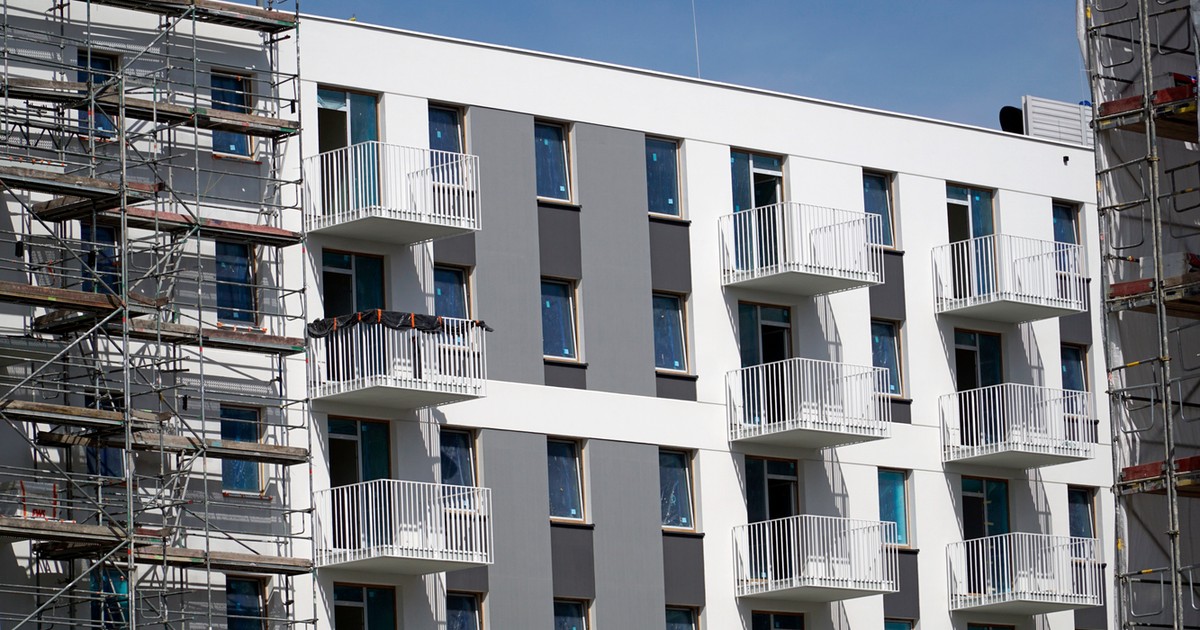
The year 2025 brought a clear change in the mood on the housing market. After a weaker start and buyers' caution, especially in the first half of the year, The following months brought a gradual unfreezing of demand. They turned out to be the key impulse reducing interest rates and improving the availability of mortgage loans.
See also: How much money does the state “take” from you? We checked who has it the worst [DANE]
As Agnieszka Mikulska, housing market expert at CBRE, points out, The past year was marked by striving for stability after very dynamic previous years.
— Developers systematically introduced new apartments, which allowed for the reconstruction of the offer. Currently, buyers have a wide selection of premises at stable prices, without significant changes, he emphasizes.
An additional factor that influenced the return of some customers was withdrawal from the announced government program supporting the purchase of apartments. — People who postponed their decisions, counting on new subsidies, returned to the market if they had appropriate funds at their disposal, Mikulska notes.
JLL data shows that quarterly apartment sales in the first half of 2025 were similar to the results from 2024, but a clear recovery occurred only in the second half of the year. As a result Apartment sales throughout 2025 were approximately 10 percent higher. higher than the year before, when approx. 39,000 were sold. premises.
As Oscar Kazanelson, chairman of the supervisory board of Robyg and Vantage, points out, the second half of the year was clearly better than the first. — In the third quarter, we sold as much as 40 percent. more apartments than in the second one. This confirmed that demand, especially in the largest agglomerations, remains sustainable, he emphasizes.
Roger Andersson, managing director of Vastint in Poland, adds that demand on the housing market remains selective and strongly dependent on price, location and project quality. — Limited supply following weaker development activity and the growing importance of apartments for rent may contribute to stabilization in some cities and, locally, to price increases, he says.
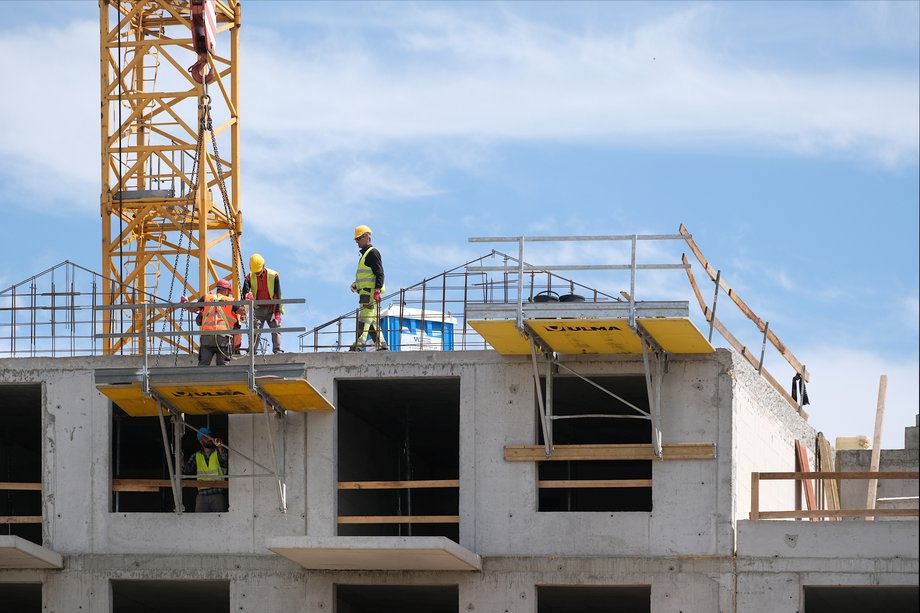
In 2025, the market remained a buyer's market
|
iwciagr / Shutterstock
Worth reading: New tariffs for electricity and gas. What will change from 2026?
Diversified demand and return of credit customers
The structure of demand has changed significantly. Customers from the mid-price segment returned to the market, largely financing their purchases with a mortgage loan. As CBRE points out, this is confirmed by both NBP data, showing a decline in the share of own funds, and the growing number of loan applications reported by BIK.
According to CBRE, Warsaw remains the market closest to equilibriumwhere demand has already recovered, the offer is gradually growing and prices are stabilizing despite statistical fluctuations related to the Price Transparency Act. Gdańsk is also close to equilibrium. In other large cities, supply still outweighs demand – especially in Łódź and Katowice.
In turn, JLL experts point out that smaller regional cities remain in a more difficult situation because sales there are based mainly on credit demand, which responds more strongly to the level of interest rates. An alternative are satellite towns around the largest agglomerations, competing with lower prices or more attractive products.
What kind of apartments are customers looking for today?
The change in the demand structure is one of the most important trends in recent quarters. Compact premises that meet both personal and investment needs are the most popular.
The most frequently chosen are:
- functional two-room apartments
- small three-room apartments
- areas up to 55 sq m
- investments well connected to developed urban infrastructure
It also plays an increasingly important role energy standard – says JLL. Rising maintenance costs make customers pay attention to the efficiency of buildings, pro-ecological solutions and technologies that reduce energy consumption. The importance of this trend will further increase due to the planned introduction of energy classes for multi-family buildings in 2026.
A large offer favors price negotiations
In 2025, the market remained a buyer's market. According to JLL analyses, in the middle of the year the offer in the six largest markets reached a record level 61.7 thousand apartments. Although developers managed to limit new introductions in the second half of 2025, the offer at the end of the year still remained very high – approx. 57 thousand premises.
The result was price stabilization, and in some cities even price correction. The average price increase nationwide was 3-4%. year to year, with clear regional differences – from a decrease of approx. 2%. in Łódź for an increase of 5%. in Tricity.
It was an additional factor stabilizing the market Act on price transparency, effective from September 2025.which – as both CBRE and JLL emphasize – improved the negotiating position of buyers and increased the transparency of offers.
2026: moderate growth and increasing challenges
Forecasts for 2026 are cautiously optimistic. The decline in loan costs should increase buyer activity, but a high offer will limit the pressure on price increases. Both CBRE and JLL expect growth of 2-3%. year to year, i.e. close to inflation.
At the same time, the market will face new challenges that may affect the supply and costs of investment implementation: :
- planning reform and general plans of municipalities (indicate CBRE and JLL)
- Shelter Act and the obligation to provide temporary shelter
- rising construction costs and new technical conditions
- regulatory pressure in the area of lease and the green deal
As Agnieszka Mikulska from CBRE summarizes, the coming months will be a test of market resilience: — Stabilization of prices and demand is good news, but developers will have to operate in an increasingly demanding regulatory environment.
The housing market forecast for 2026 remains cautiously optimistic. The decline in loan costs should increase buyer activity, but the high offer and new regulations will limit the pressure on price increases.
– Stability after several years of uncertainty is itself a huge value for the market today – sums up Tomasz Łapiński, president of Cordia Polska.
PRS: institutional leasing is gaining importance
Institutional rental remains one of the fastest growing segments of the housing market. In the conditions of high housing prices and limited availability of loans, PRS is increasingly becoming a permanent housing choice, not just a temporary solution.
— Renting is increasingly not a temporary solution, but a conscious housing choice – emphasizes Grzegorz Jamroziak, Asset Management Director at AFI Poland.
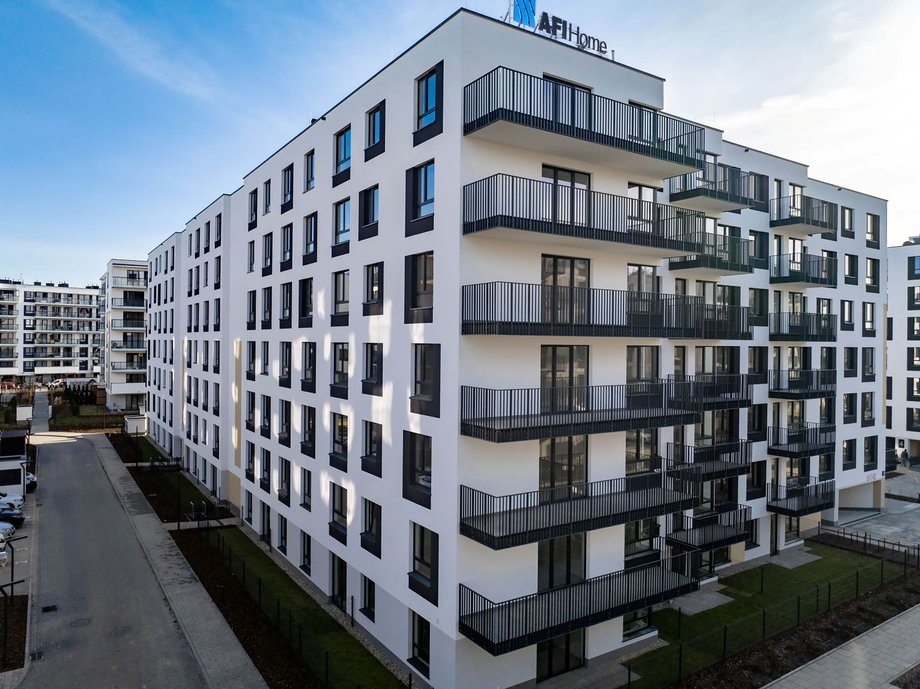
AFI Home Metro West
|
AFI Poland
Read also: Lower your tax for 2025. You must take these actions in December
Experts indicate that professionalization of the offer – including standardization of contracts, predictability of costs and high standard of service – allows PRS projects to maintain stable rent levels even in times of greater competition.
JLL's analyzes show that the share of individual investors, which for years accounted for approximately one third of purchase transactions, has shrunk significantly in 2024-2025. The reasons included, among others: announcements of new taxes, possible restrictions on short-term rentals and a decrease in the attractiveness of rental returns. As a result Institutional entities began to play an increasingly important role in the demand structure.
— Institutional leasing is no longer a niche and is increasingly a real alternative to purchasing an apartment, especially in large cities, JLL experts point out.
Stable rents and professionalization of the offer
After a period of very dynamic growth rents, the rental market in 2025 entered the stabilization phase. Both CBRE and JLL emphasize that the high supply of apartments for sale and the gradual return to the availability of mortgage loans have limited the pressure on further rent increases.
In the largest cities, rents in PRS projects increased moderately or remained at a similar level until the end of 2024. However, the key advantage of the sector remains not price, but quality: cost predictability, standard of service, flexibility of contracts and increasingly better investment locations.
CBRE points out that changing the housing model of younger generations favors the further development of PRS. — Renting is increasingly a conscious choice, not a temporary solution. This applies especially to professionally mobile people and foreigners, emphasize CBRE analysts.
PRS and regulations and prospects for 2026.
JLL experts point out that in 2026, the PRS sector will remain relatively immune to some of the risks that will affect the development market. Projects implemented for long-term rental are easier to adapt to new technical and energy requirements, and the scale of operations allows for amortization of rising construction costs.
At the same time, as JLL experts point out, regulatory pressure in the rental area – including possible changes in short-term rentals and further discussions on taxation – may indirectly favor PRS, increasing the advantage of the institutional offer over the private one.
In the medium term, both CBRE and JLL expect dfurther, gradual increase in the stock of apartments for institutional rent, especially in Warsaw and Tricity and other largest agglomerations where demand for rental remains structurally high.