Will Gen Z's Revolt Continue in 2026? Young people are ready to overthrow the system, but they don't know what to put in its place. “A country different from that of their parents”


And in the elections in Romania, but also in other countries, the young people of the generation around the age of 23-29 expressed themselves strongly in the past year. “Their politics is an explosion of frustration,” a former CIA analyst says of Generation Z in an article for The Free Press, explaining the strength but also the limits of the new movements.
- “Young people have been lost in cyberspace all their lives and now they have to face the messiness and madness of living in real history,” says Martin Gurri.
In Bulgaria, Bangladesh, Peru, Madagascar, Morocco and other parts of the globe, Gen Z youth – those born between 1997 and 2012 – took to the streets this year in an attempt to topple governments.
In Romania, Ana Ciceală, a candidate with no funds and no notoriety, but supported by an enthusiastic body of young volunteers, obtained an unexpected vote of almost 6% in the local elections in Bucharest. She managed to collect half of the votes of Cătălin Drula, the representative of USR, the party that a decade ago represented, almost alone on the ballot, the camp of the “rebels”.
“The problems on the public agenda resonated with the youngest,” Ciceăla declared at the end, confirming the target audience of his messages: young people.
“Today's young men and women are at war with the world”
In his critical analysis of the Gen Z protests, a former CIA analyst, Martin Gurri, currently a publicist and guest researcher at the Mercatus Center, an American libertarian think tank affiliated with George Mason University, also sees the limits of the Gen Z revolt.
Even when they succeed in overthrowing governments, revolutionaries do not know how to replace the old systems, he argues.
“Today's young men and women are at war with the world. Deprived of local customs and traditions, they tend to experience reality as an exasperating friction and suffer from excessive levels of anxiety, depression and suicide. Their politics are an explosion of frustration,” says Gurri, in the text for the conservative publication “The Free Press”.
Bloomberg sees another side: “Overwhelmed by rising rents and cost of living”
Explaining the context of the riots, Gurri paints a portrait of the young generation – “attached to smartphones”, growing up “in an annoying and confusing virtuality” and “in a different country from their parents”.
Gurri's observations lay less emphasis on the economic aspect of the riots.
By comparison, in a different analysis, Bloomberg offers more pragmatic arguments for protests by young people “overwhelmed by rising rents and living costs and facing a future in which robots and artificial intelligence threaten their jobs.”
“He knows how to destroy, but he doesn't know how to build”
In his analysis for The Free Press, Gurri basically reiterates a thesis developed in his book, “Public Revolt,” which describes how politics is changing amid the explosion of information sources.
This new information dynamic creates constant recurring crises for whoever is in power, the former CIA analyst says in his book.
And this dynamic is fundamentally unstable because it is one that knows how to destroy but does not know how to build, believes Gurri, who in an interview earlier this year said that he voted for Trump and believed that he could build a stable system and a positive agenda.
Nepal, a new prime minister elected on the Discord gaming platform
Several social characteristics seem to favor revolutions: Generation Z movements have taken shape in places where young people are disproportionately numerous and governments are unfamiliar with the Internet, the author says.
One of the examples Gurri provides in his analysis is that of Nepal, which he says illustrates the pattern of political engagement of Generation Z.
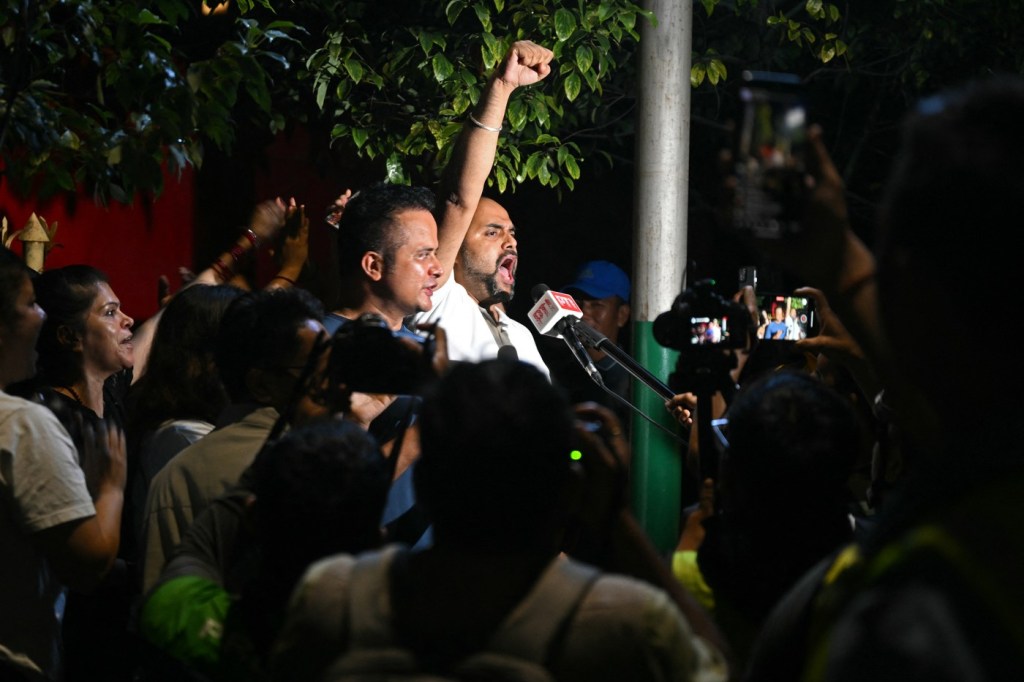
Nepal has been badly governed for decades, the ruling elite – deeply corrupt – so young Nepalis have started a campaign on social media, exposing the luxurious lifestyle to the children of the ruling class.
The initially peaceful protests erupted after the government shut down several digital platforms. And the uprising turned violent after the government responded with violence to the peaceful demonstrations, killing more than 70 young people.
The Maoist regime disintegrated overnight and the country found itself without a functioning government.
In a historically unprecedented development, a prime minister was elected by holding a poll on the gaming platform Discord, Gurri says, and the illegitimate caretaker government turned to the Gen Z movement for ideas.
What comes after the revolt?
The former CIA analyst says, however, that the principles desired by Generation Z were not clear, that “the protest movement never got beyond the stage of denying the old system” and that “it did not bother to imagine alternatives.”
Gurri says several Gen Z groups put together a draft agreement “laden with the abstract language of the Internet” — calling for, for example, “an inclusive world” — but were not specific when calling for reforms.
Therefore, he says, after new elections scheduled for March 2026, the old parties, led by the old political class, will likely control the next government.
“Gen Z has nothing real to replace them with, and the only process of change they have mastered in their young lives is that of fierce but intermittent rebellion,” believes the former CIA analyst.
Madagascar: “a rebellion without leaders, without a coherent ideology”
Madagascar, where this year saw the overthrow of the shaky regime of President Andry Rajoelina, is another example in the analysis of the Gen Z uprisings.
Like their Nepalese brethren, the rebels have coordinated on social media, lacking a formal organization, recognized leaders and a coherent ideology.
This, Gurri says, gave them certain tactical advantages: the movement could not be decapitated by regime reprisals. It also meant that the protests progressed unpredictably.
Madagascar's youth blamed corruption and economic problems. “I grew up in a country marked by extreme poverty,” they wrote, “a persistent reality to which previous generations have failed to bring equitable and sustainable solutions.”
Requests: Real but fuzzy solutions
They called for “real solutions” – always unspecified, Gurri says – to the “endless electricity and water cuts” and denounced the regime's “favoritism and corruption”, calling for “transparency, accountability and deep reforms”.
Madagascar is one of the poorest countries on Earth. 80% of the population is below the international poverty line, 60% of people have little or no access to electricity at home.
Gurri, however, questions the status of the protesters.
“Given the Facebook page with 100,000 followers, the skillful online mobilization and the use of French in many of the posts, the young insurgents clearly had access to electricity, laptops and smartphones and shared a considerable level of education,” he pointed out.
In Gurri's view, the protesters fought for the poor, but they were the offspring of restless elites—an observation that, he says, can be extended to Gen Z movements everywhere, including the one that brought Zohran Mamdani to New York City Hall.
Everything in sight
It was the Internet that facilitated the lines of attack of the protesters.
Street demonstrations were organized on Discord, protesters consulted, also on Discord, with their Nepali counterparts, and online images of looted villas shocked and demoralized the regime.
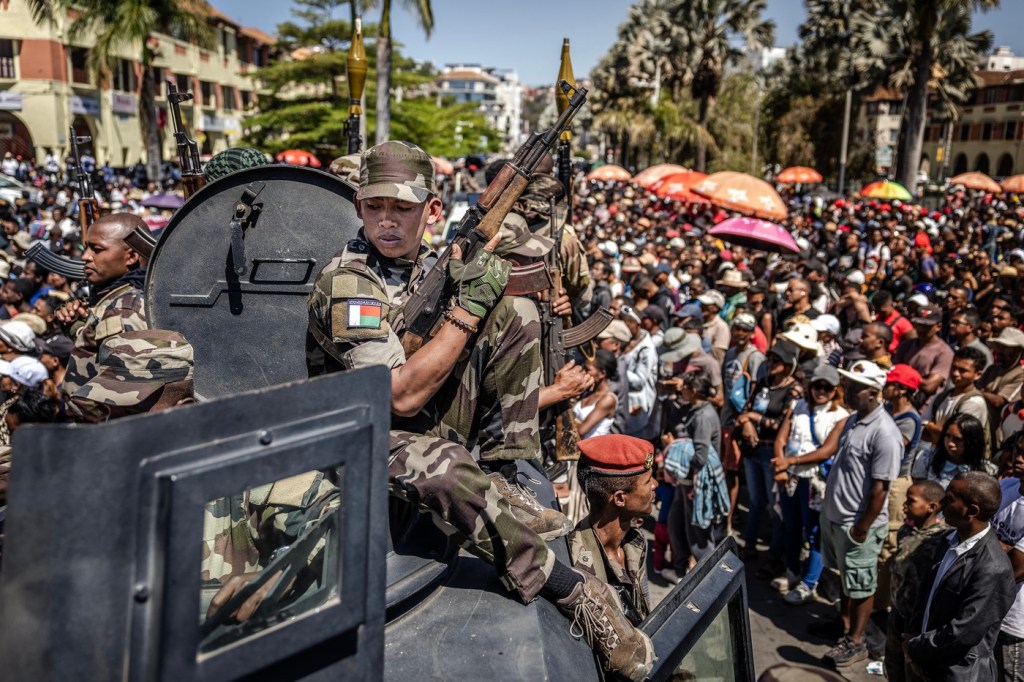
The Senate President was discredited when it was revealed that he had several propaganda accounts on Facebook, and the identity of the masked agents who fired on unarmed civilians was discovered and made public on TikTok and Instagram.
When Rajoelina fled, radical transparency tracked him down, and activists used an online tracker to watch him take a private jet to Mauritius, then be evacuated by the French to Réunion Island.
With the collapse of the government, however, the military filled the power vacuum, Gurri notes.
“The Gen Z movement embraced the new government at first, but has since become disillusioned. That's how this generation is: they don't offer plans, but they reject others' — sometimes, it must be admitted, rightly so,” says the former CIA analyst.
The world dominated by generation Z
Gurri believes that other similar uprisings may occur in other parts of the world and suggests that the effect could be one of chaos.
He notes that Europe, “which rigorously controls its digital environment” has also been touched by these uprisings. The former CIA analyst's example is Bulgaria, where protesters forced the resignation of Prime Minister Rosen Jeliazkov.
Hotnews analyzed with the help of a journalist from Sofia the context of the protests in Bulgaria, where the government fell following demonstrations against corruption and tax increases, demonstrations in which young people from generation Z participated, but which were initiated by a political force – We Continue the Change – Democratic Bulgaria, which was the strongest supporter of judicial reform and anti-corruption.
The local conditions of all these Gen Z protests are the immediate cause, the spark that lights the fire, but the fuel is global, and the patterns of disruption have followed demographic changes and the logic of an interconnected information system, says Gurri.
Similar protests have occurred in the past, and the Arab Spring is an example, says the former CIA analyst. The new generation is not necessarily different, he believes.
The alienation of today's youth, “which seems so theatrical, is totally real,” says Gurri. “They've been lost in cyberspace all their lives and now they have to face the misery and madness of living in real history,” he adds.
Ultimately, concludes the former CIA analyst, in the context of this uprising, many countries, rich and poor, will find themselves trapped in a version of Alfred Hitchcock's classic horror film, when a bird attack triggers an explosion and fire in a quiet American town.