The warning of the Secretary General of NATO for Europe, in the context of the discussions on the separation from the US


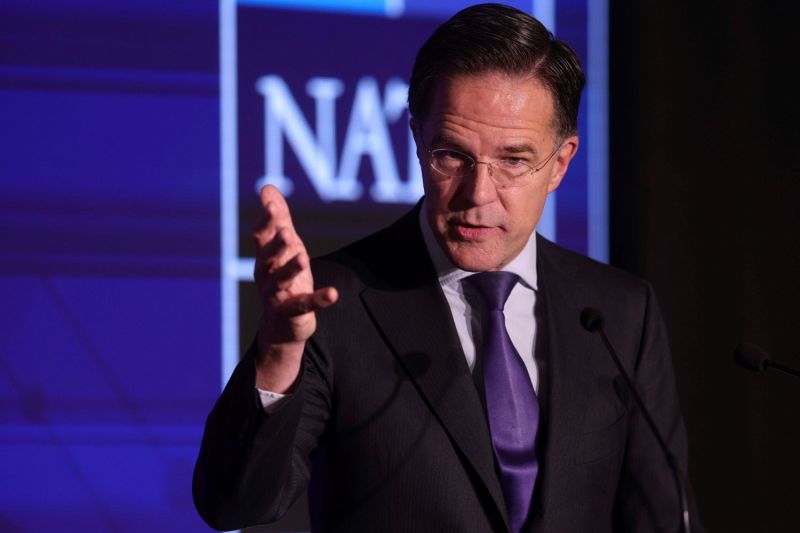
Mark Rutte, Secretary General of NATO. Photo: Inquam Photos / Octav Ganea
Mark Rutte noted that most of NATO's economic and military power is still outside the EU, especially in the United States, which makes transatlantic cooperation indispensable, writes Politico.
NATO Secretary General Mark Rutte has rejected calls for Europe to disengage militarily from the United States, arguing that Washington remains a reliable security partner despite growing doubts within the EU.
“I am absolutely convinced that the United States fully supports NATO. There is no doubt about that,” Rutte told the German news agency (dpa) on Friday, rejecting the idea that the EU is pursuing full defense independence from the US.
Rutte said Europe needed to take greater responsibility for its own security, including higher defense spending, but stressed that this should happen together with the United States, and not outside the transatlantic framework.
He stated that the US will remain militarily engaged in Europe and committed to the alliance.
Rutte's statements were a direct reaction to recent comments by Manfred Weber, the leader of the European People's Party, who questioned whether Europe can still rely on Washington amid political uncertainty in the US.
In an interview with Funke Media Group, Weber argued that Europe must be prepared to act more autonomously.
“We cannot seriously expect Trump to secure a peace solution on his own with the help of American soldiers,” Weber said, calling for European soldiers to operate under the European flag as part of future security arrangements in Ukraine.
The exchange of views comes amid a wider debate in Europe about strategic autonomy, as the EU increases defense spending and prepares for a more volatile geopolitical environment.
While many leaders agree that Europe needs to do more militarily, Rutte warned that these efforts should not be interpreted as a break from NATO.
He noted that most of the defense alliance's economic and military power still resides outside the EU, mostly in the United States, making transatlantic cooperation indispensable.