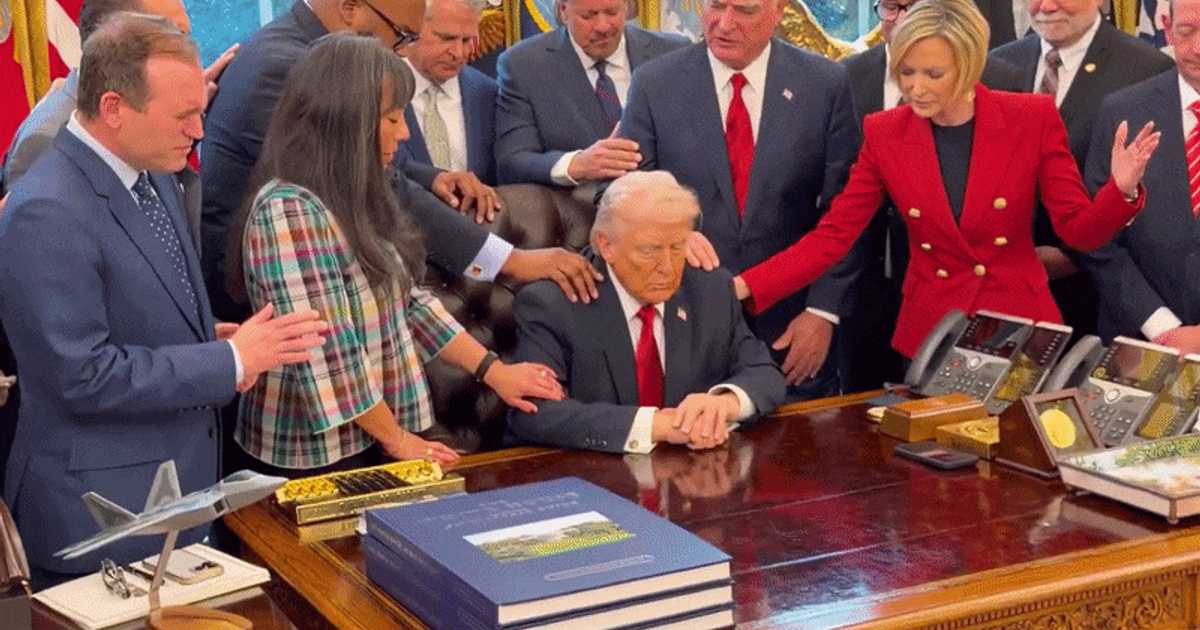
Putin tried to outwit Bush. He was talking about the USSR, Ukraine, NATO and Georgia


The documents were made public on December 22 by the American organization National Security Archive after winning a lawsuit for access to public information. They show that in some private conversations Putin expressed bitterness about the collapse of the USSR. Meanwhile, in the early 2000s, he publicly declared his pro-Western attitudeand in 2008 he even seemed favorable towards Ukraine's aspirations to join NATO. This spell was broken with the Russian invasion of Georgia.
In the minutes of June 16, 2001, prepared on the basis of a confidential meeting between Bush and Putin, the Russian leader stated – as the archive described – “a short history lesson (according to your own interpretation) regarding the collapse of the Soviet Union“.
“What really happened? Soviet goodwill changed the world. The Russians voluntarily gave up thousands of square kilometers of territory. Unheard of. Ukraine, for centuries part of Russia, given back. Kazakhstan – committed. Caucasus too. It's hard to imagine, and it was decided by party secretaries,” Putin said.
The Soviet republics broke away from the USSR as a result of a combination of political factors, economic and socialincluding the consequences of the invasion of Afghanistan and political reforms prompted by growing dissent and economic stagnation in the late 1980s and early 1990s, which cast doubt on Putin's claim of “good will.” However, similar statements appeared in other statements he made in the 2000s, such as
Anyone who does not regret the collapse of the USSR has no heart. Anyone who wants to recreate it in its former form has no sense.
In the following years, Putin used this nostalgia for the USSR as a tool to consolidate his power and justify the invasion of Ukrainepresenting it as fight against Nazism and the ideological continuation of World War II. An example of this narrative are monuments erected in the occupied territories of Ukraine, linking the historical message of World War II with the ongoing conflict.
The article continues below the video
During the same meeting with Bush in 2001, Putin also raised the topic of Russia's membership in NATO. He then asked questions why Russia was not in NATO, which may shed light on the motives behind his actions. “Let me come back to the issue of NATO expansion. You know our position. You made an important statement saying that Russia is not an enemy. What you said about 50 years into the future is important,” Putin assured.
“Russia is European and multi-ethnic, like the United States. I imagine we could become allies” — said the Russian president and added: “But we feel excluded from NATO. If Russia is not part of this alliance, of course we feel left out.
As an example, he gave the USSR's application to NATO in 1954, claiming that the reasons for rejecting this candidacy are no longer valid. “NATO gave a negative answer, citing four specific reasons: no agreement on Austria, no agreement on Germany, totalitarian control over Eastern Europe and the need for Russia to cooperate with the UN on disarmament,” Putin added. “Now all these conditions have been met. So maybe Russia could become an ally.”
However, Putin noted that the problem with Russia's absence in NATO is that “NATO is expanding and we have no influence on it.”
“Artificial state”. Already in 2008, Putin insulted Ukraine
Putin returned to the NATO issue in 2008, this time in the context of Ukraine's efforts to join the allianceaccording to the minutes of April 6, 2008, the last meeting between Bush and Putin as president of Russia.
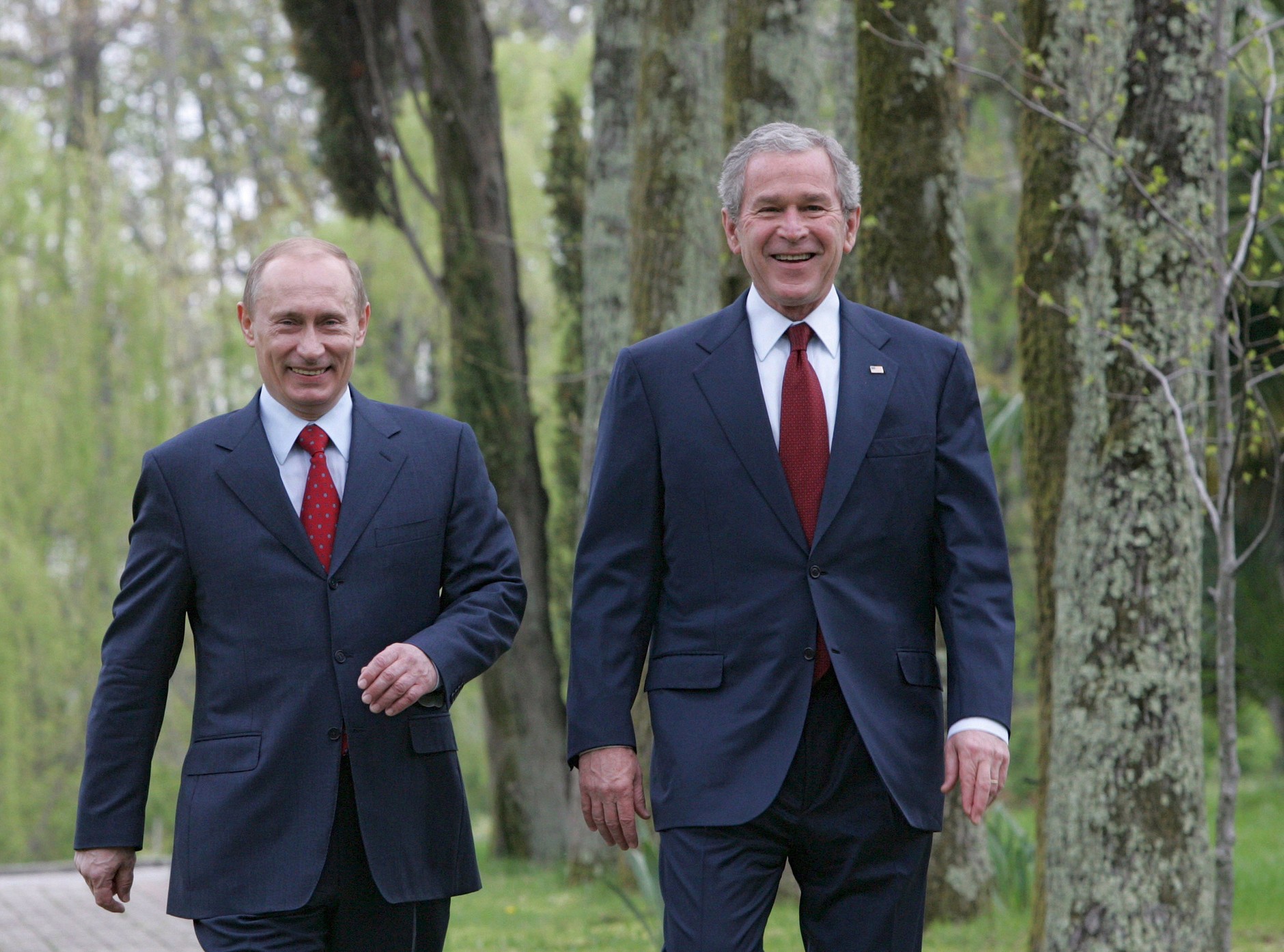
Vladimir Putin, president of Russia, and George W. Bush, president of the United States, on a walk in Sochi, April 6, 2008.EPA/VLADIMIR RODIONOV – POOL / PAP
According to Kyiv Post reports at the time, Bush supported assigning Ukraine a NATO Membership Action Plan (MAP), saying: “Every country in the world told me that Russia has no veto power […] and I take them at their word.” He described it as “the right policy.” Ultimately, however, this plan was rejected, among others. through Germany and France.
During the meeting in Sochi in 2008 Putin expressed similar concerns to those he lists today as official war goals against Ukraine. “This will not be news to you, I don't expect an answer. I just want to say it loud. I would like to emphasize that admitting a country like Ukraine to NATO will create a field of conflict between us in the long run, a long-term confrontation,” Putin warned.
During the conversation, Putin also called Ukraine an “artificial state” — a term he has used to justify the invasion in recent years. “Ukraine is a very complex country. It is not a naturally formed country. It is an artificial state created in Soviet times,” he argued.
“If you go to western Ukraine, you will see villages where only Hungarian is spoken and people wear bonnets. In the east, people wear suits, ties and big hats. NATO is perceived by a large part of the Ukrainian population as an enemy organization” — he added. “This raises the following problems for Russia. This may result in the deployment of military bases and new weapons systems right next to the border with Russia. This creates uncertainty and threats for us.”
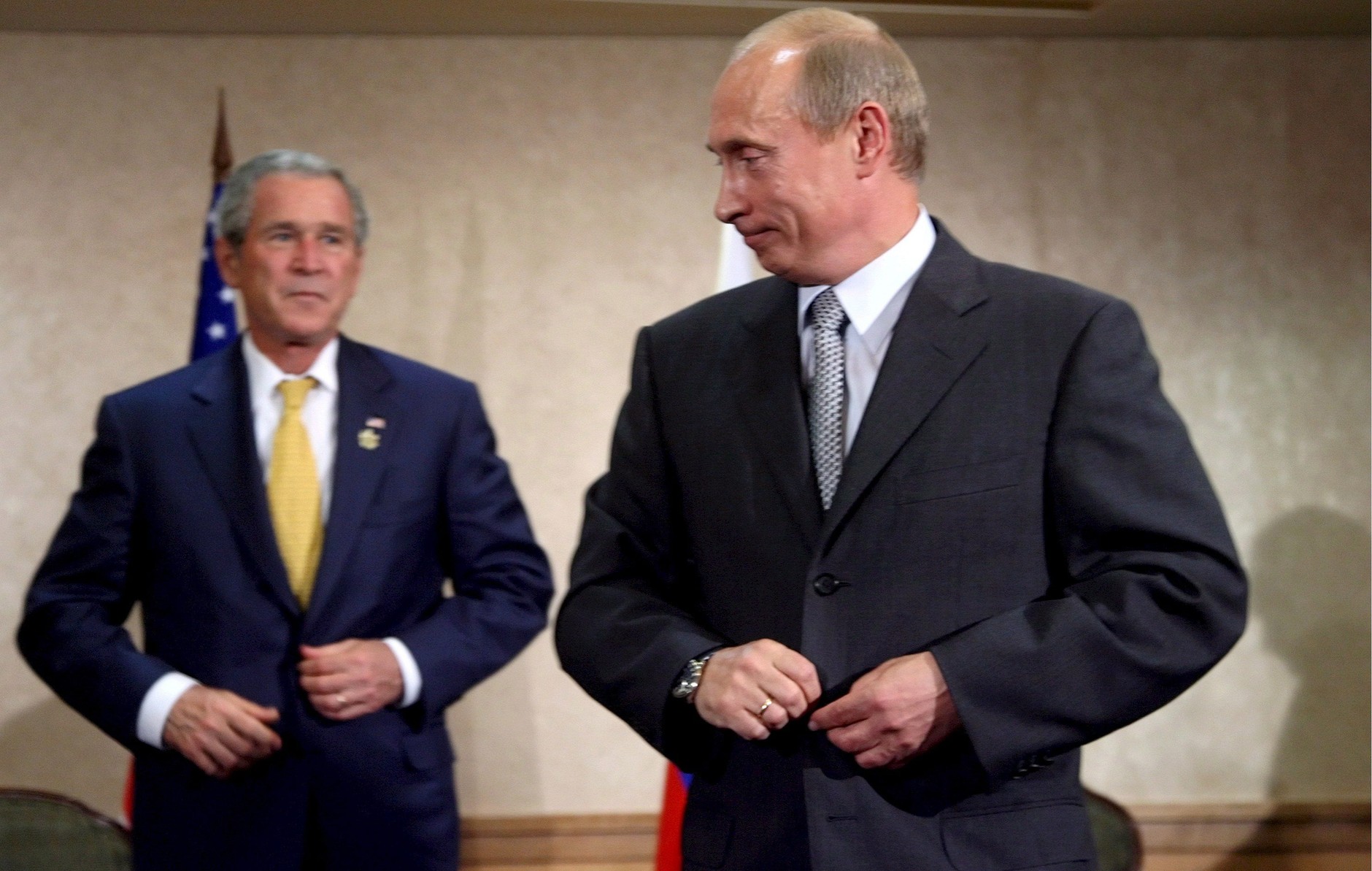
George W. Bush, president of the United States, and Vladimir Putin, president of Russia. Sydney, September 7, 2007EPA/SERGEI CHIRIKOV / PAP
These words contrast with Putin's previous public statements about the relationship between Ukraine and NATO. In 2003, he said that he was “absolutely convinced that Ukraine will not withdraw from the process of deepening cooperation with NATO and, more broadly, with the West. […] The final decision rests with NATO and Ukraine. This is a matter for these two partners,” according to the Kremlin's protocol at that time.
“They believe that under the NATO umbrella they can restore their territorial integrity.”
They also deserve attention Putin's statements regarding Georgia's aspirations to join NATO — the conversation took place just four months before the Russian invasion of the Caucasus.
“As for Georgia, they believe that under the NATO umbrella they can restore their territorial integrity. Is this the right path? Expand NATO's military umbrella and allow them to launch military operations in Abkhazia and South Ossetia?” – he said and added: “Georgians should be forced to solve their internal problems in a different way. They will do it if they have to.”
Putin also claimed that NATO membership would force Georgians to take up arms. “Georgia should resolve this issue peacefully. Admitting it to NATO will only encourage it to reach for military solutions” – said Putin. “And for Russia it is always a threat, [związane] with the deployment of new bases and weapons systems close to our borders.”
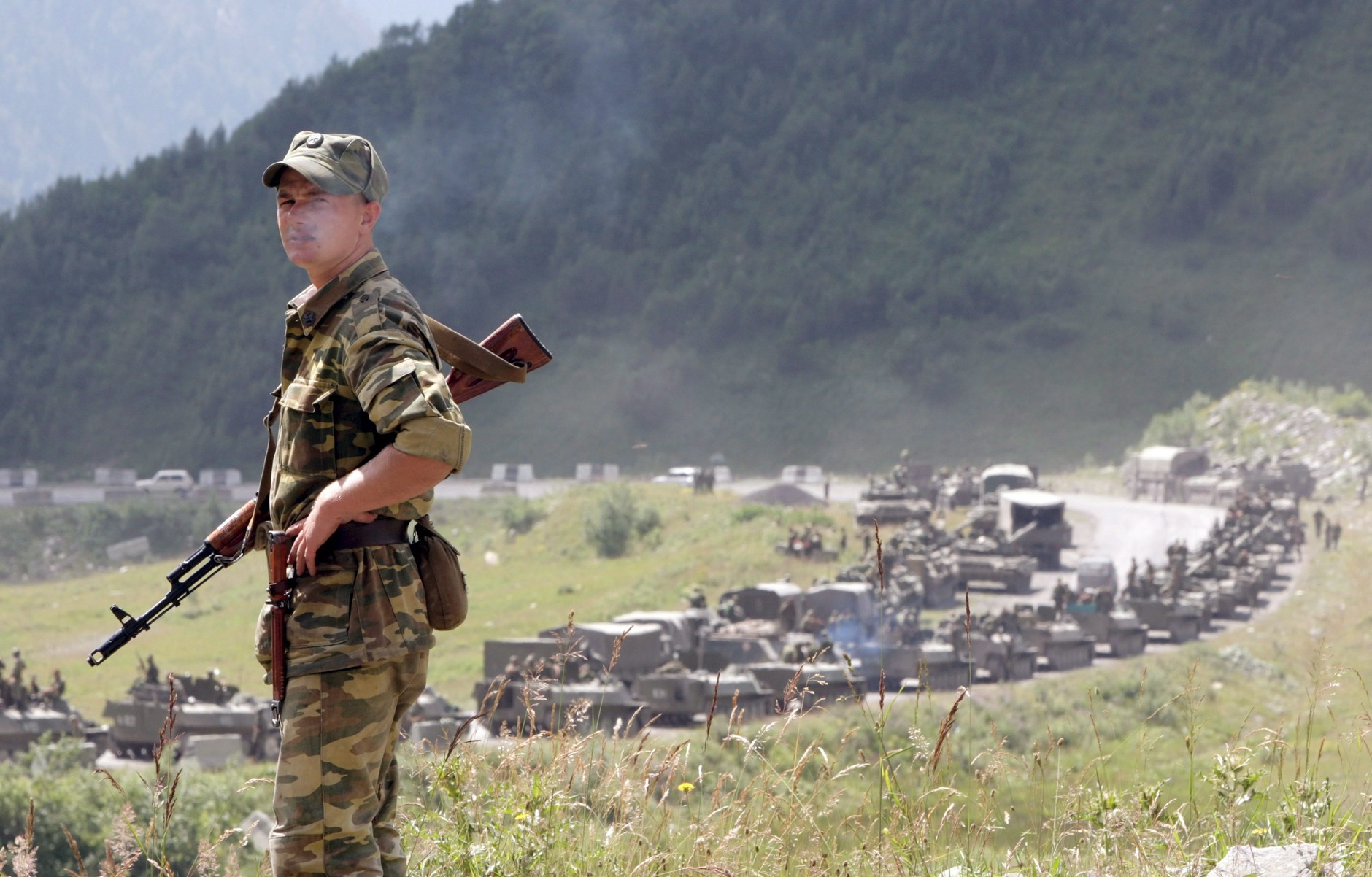
Russian soldier against the background of a column of troops. Tskhinvali, August 9, 2008PAP/EPA/YURI KOCHETKOV / PAP
On April 20, a Georgian reconnaissance drone was shot down, probably by a Russian fighter, why Moscow denied it, blaming it on NATO. NATO Secretary General Jaap de Hoop Scheffer then ironized that he would “eat his tie” if a NATO MiG-29 “magically appeared in Abkhazia and shot down a Georgian drone.”
In August of the same year, Russia began land invasion of Georgia.