A former high-ranking commander of the Russian army, dismissed by Vladimir Putin following a large-scale purge at the top of the Ministry of Defense, died suddenly on Christmas Day. It is about Colonel General Iuri Sadovenko, 56 years old, former deputy of the Minister of Defense and one of the key figures of the circle of power around the former minister Serghei Shoigu.
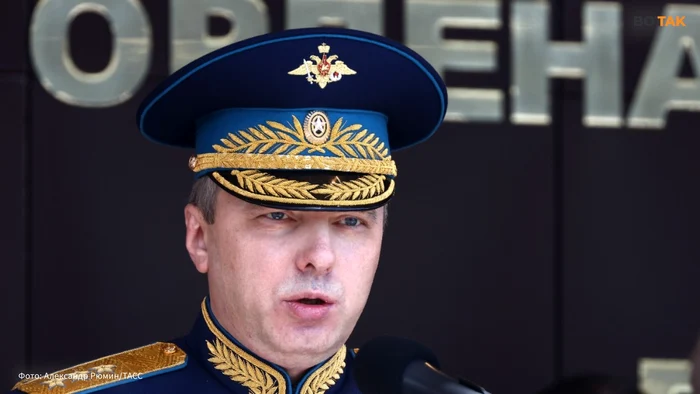
Russian general Iuri Sadovenko/PHOTO:X
Russian state media said Sadovenko died of a “heart condition,” without giving further details. Until then, there had been no public information that the general suffered from serious health problems.
Born in Ukraine, Sadovenko was considered one of the most trusted people of Sergei Shoigu, current secretary of the Security Council of the Kremlin. In the early years of the war, he was seen as a true “keeper of secrets” in the Ministry of Defense, having access to highly sensitive decisions and information.
His forced resignation came in May 2024, with the removal of Shoigu, in a move interpreted as one of the harshest restructurings of the Russian military apparatus since the start of the invasion of Ukraine. Sadovenko was also on the sanctions lists of Great Britain and other Western states.
His death adds to a growing series of sudden and poorly explained deaths among Russia's elite, a phenomenon seen since the run-up to the February 2022 invasion. Over the past few years, scores of high-ranking officials, generals, businessmen and propagandists close to the Kremlin have died under questionable circumstances.
Sadovenko's personal life had already been rocked by the scandal
His wife, Maria Kitaeva, left him for another deputy defense minister, Timur Ivanov, in an episode that made waves in Moscow's power circles. Later, Ivanov – also an ally of Shoigu – was dismissed and imprisoned for acts of corruption.
Sadovenko's death comes amid a new spate of suspicious deaths. In recent days, the death of Lieutenant-Colonel Stanislav Orlov, known by the nickname “The Spaniard”, commander of a unit of football hooligans sent to fight in Ukraine, has been confirmed. There are suspicions that he was killed in his home in occupied Crimea.
Also during this period, Lieutenant General Fanil Sarvarov died as a result of a car bomb explosion in Moscow. Earlier, former deputy and Olympic wrestling champion Buvaisar Saitiev died after falling from a window, in a case initially declared an accident.
The list goes on with transportation, energy and oil industry officials. The Minister of Transport, Roman Starovoit, was found dead shortly after he was dismissed, in a case officially classified as suicide, but disputed by the independent press. On the same day, another high-ranking official died suddenly in the ministry's headquarters.
Heads of major Russian energy companies had a similar fate. From oligarchs falling from hospital or luxury apartment windows, to executives found dead in their offices or dying suddenly of presumed medical causes, the pattern repeats itself with disturbing regularity.
More recently, Kirill Vyshinsky, one of the Kremlin's main propagandists and chief executive of the Russia Today media empire, died “unexpectedly” after a previously unknown illness. Just a few months before, he was constantly appearing on radio shows and openly supporting the invasion of Ukraine.
Dozens of influential figures have thus disappeared from the foreground of Russia: by falling from windows, alleged heart attacks, suicides or violent attacks. Officially, each case is treated separately. Taken together, however, these deaths outline a climate of fear, instability and silent purging in Kremlin power circles — a sign that, in Vladimir Putin's Russia, past loyalty does not guarantee present safety.