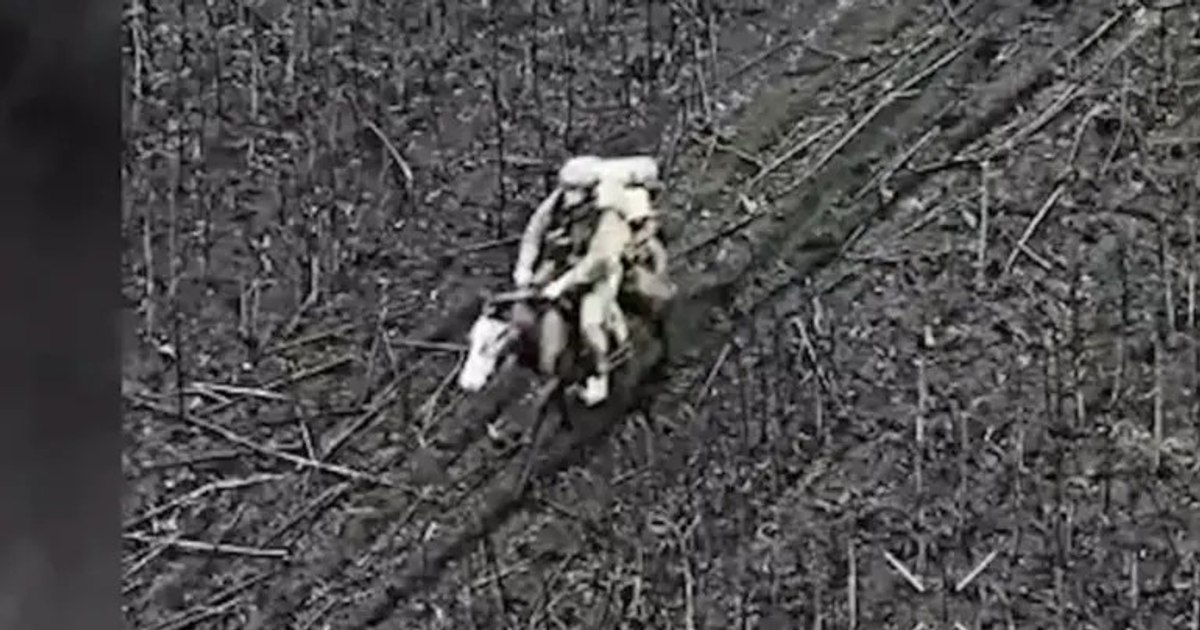
The recent images from eastern Ukraine showing Russian soldiers attacking Ukrainian positions on horseback are not an isolated episode or a spur-of-the-moment improvisation. According to an analysis published by Forbes, the use of cavalry is part of a tactical adaptation to the realities of a war increasingly dominated by drones.
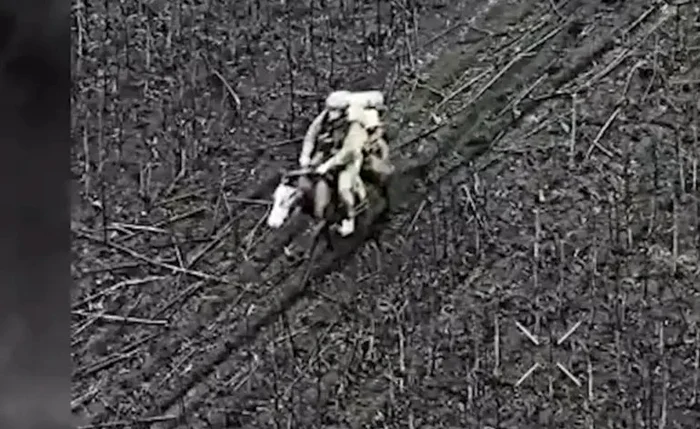
Russian soldiers moving on horses during an attack/PHOTO:X
The 92nd Brigade of the Armed Forces of Ukraine released a video in which Russian soldiers can be seen moving on horses during an attack. Analysts cited by Forbes believe that this method is intended to reduce the vulnerability of Russian troops to reconnaissance and attack drones, which severely complicate logistics and movement on the front.
The commander of a mortar battery within the Ukrainian brigade, Anatolii Tkacenko, explained that moving on horseback offers certain tactical advantages: it is quieter and allows crossing swampy terrain, where light vehicles have major difficulties.
“We used to destroy them when they were riding motorcycles, but now, because of the mud, they frequently fall and the motorcycles break down. There are many factors influencing the situation”said Tkachenko.
And other Ukrainian military personnel confirm that changing weather conditions play an important role. Former officer of the 47th Mechanized Brigade, Mykola Melnik, said that moving through the fields became extremely difficult because of the waterlogged soil.
“To cover a kilometer, sometimes you need an hour to walk, because the feet sink completely”he explained.
According to Forbes, the use of cavalry is not a makeshift solution. In October, the Russian propaganda media reported that the army was analyzing the inclusion of mounted units in the structure of the assault forces. At the time, officials suggested their role would be limited and largely symbolic.
However, the context on the front seems to have changed these plans. When supply columns are constantly exposed to air attack, armies are forced to resort to simpler methods of movement, even if they offer only minimal protection.
The journalists point out that the return to such tactics highlights a larger reality: battlefields constantly monitored by drones drastically reduce the freedom of movement of ground forces and force militaries to seek unconventional solutions to adapt.