This is where the Christmas carol known from “Home Alone” comes from. Today the place is fighting the Russians


The West may recognize this tune from the Hollywood movie “Home Alone” and the TV series “Ted Lasso.” However, for Ukrainians it has a more poignant and political meaning this winter. Fighting Pokrovsk is closely associated with the composer of the carol, Mykola Łeontowycz.
Leontovych did not compose the Christmas carol in Pokrovsk, as is commonly believed, but the city played a key role in the development of both his music and patriotic Ukrainian politics. For this reason, the composer was persecuted by the Russians and was finally murdered in 1921 by Soviet agents.
He lived in Pokrovsk in the first decade of the 20th century, teaching at a music school and leading a choir of railway workers. There he drew inspiration from characteristic Ukrainian folk traditions, and later based the Christmas carol “Carol of the Bells” on seasonal New Year's song — hence the name “Schedryk”.
— Leontovych arrived in Pokrovsk with only a bag on his back, but it was there that he developed as a composer and attracted the attention of the gendarmes by defending workers' rights. He even sang “La Marseillaise” with the local choir he directed, says Larysa Semenko, author of the book “Our Silent Genius, Leontovych” [Nasz cichy geniusz, Łeontowycz].
Semenko is also quick to point out that the Ukrainian political dimension of the Christmas carol “Carol of the Bells” was nothing new. — It was never just a Christmas carol, but Ukrainian cultural message to the worlda greeting card from a nation with deep-rooted spirituality and resilience in the face of threat. The same threat our nation is fighting today, he says.
The song of independent Ukraine
Łeontowycz is widely considered to be herowhich 100 years ago faced Russia with its music, just as today Ukrainians reach for weapons, missiles and drones to protect their national identity from destruction by Moscow.
When his version of “Shchedryk” premiered in Kiev in 1916, leaders of the Ukrainian People's Republic, which was a short-lived attempt to liberate itself from Moscow after World War I, saw its potential as a hit. In 1919, the new government decided to send the national choir on a concert tour of Europe with Leontovych's choral songs to promote recognition of the Ukrainian People's Republic.
The world did not recognize the new state, but “Shchedryk” assured it place in global culture.
— Even before translation, it was a hit. In Paris, Prague and throughout Europe, princes and kings were fascinated to discover that such a rich and ancient culture existed on their continent, Semenko says.
Before the European tour, the singers from the Ukrainian choir had to evacuate to the west of Ukraine because the Bolsheviks took over Kiev. After their success in Europe, they went to Canada and the United States, already as the Ukrainian National Choir, introducing “Shchedryk” to North America in 1922.
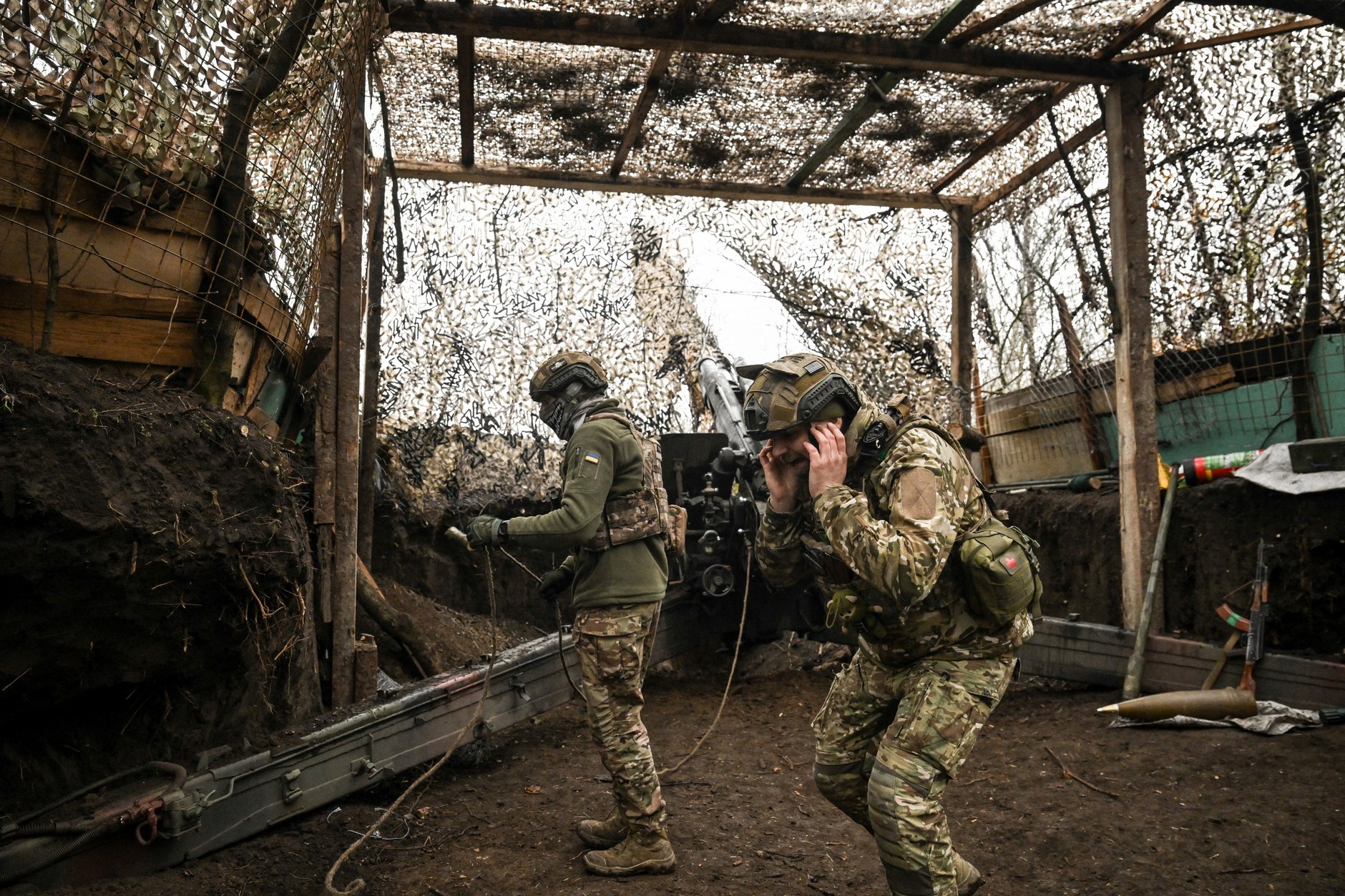
Ukrainian soldiers in the Pokrovsk region, December 12, 2025.Dmytro Smolenko / AFP
The beginning of terror
— “Shchedryk”, which was a hit and was always played as an encore, charmed Europe and America and helped Ukrainians announce their national and state existence – explains Anatoly Paladijczuk, researcher and author of the project on “Shchedryk”.
In 1936, American composer Peter J. Wilhousky wrote English textadapting the song into the version known in the West as “Carol of the Bells” for an NBC radio performance.
Łeontowycz did not live to see this global success. Under the pretext of fighting bandits Soviet secret services killed him in January 1921. in his parents' house in the western part of Vinnytsia. Ukrainians learned about the truth about his death only after the opening of Soviet archives in the 1990s.
— Just like today in the occupied territories of Ukraine, the Russian authorities perceived Ukrainian culture as a threat. This was the beginning of the great terror against Ukrainian freedom fighters, politicians and teachers. Leontovych was one of many who were killed – says Semenko.
Ukraine is fighting again
Almost 105 years after Łeontowycz's death Russia is again trying to destroy Ukrainian nationality. The fighting for Pokrovsk has been going on for over 18 months. Moscow now claims that the city has been occupied by it.
The Ukrainian army says its forces have returned to parts of Pokrovsk after withdrawing in November. Kiev also claims that small groups of Russian soldiers are infiltrating the city to pose for photos with flags for propaganda purposes, but do not fully control the ruins.
“Our active operations in the Pokrovsko-Myrnohrad agglomeration continue. In Pokrovsk alone, over the last few weeks we have managed to regain control over approximately 16 square kilometers in the northern part of the city,” wrote the commander-in-chief of the Ukrainian army, General Oleksandr Syrski, in a post on Telegram.
Syrski promised that Ukraine would continue to fight for Pokrovsk and strengthen its forces in the ruined city against hundreds of thousands of Kremlin soldiers.
American historian Timothy Snyder – a leading expert on Ukraine – also referred to the Christmas carol “Carol of the Bells” to make the point continuity between Russian colonialism 100 years ago and President Vladimir Putin's attack on that country.
“Ukrainian culture is of great importance in our world, but our awareness of this fact is minimal: the assassination of Leontovich and the transformation of 'Shchedryk' are just one of the small examples of this colonial history that continues in the current Russian invasion of Ukraine,” Snyder wrote in a post published on December 14 on the Substack platform.