Rare footage confirms 'legend' of Chinese general who defied orders to crack down on pro-democracy protests in Tiananmen Square

When China's rulers ordered tens of thousands of soldiers to quell pro-democracy demonstrations in Beijing in 1989, General Xu Qinxian was the commander who refused to lead his troops into the capital to help disperse Tiananmen Square protesters by force of arms, notes The New York Times. For decades, its story was shrouded in mystery.
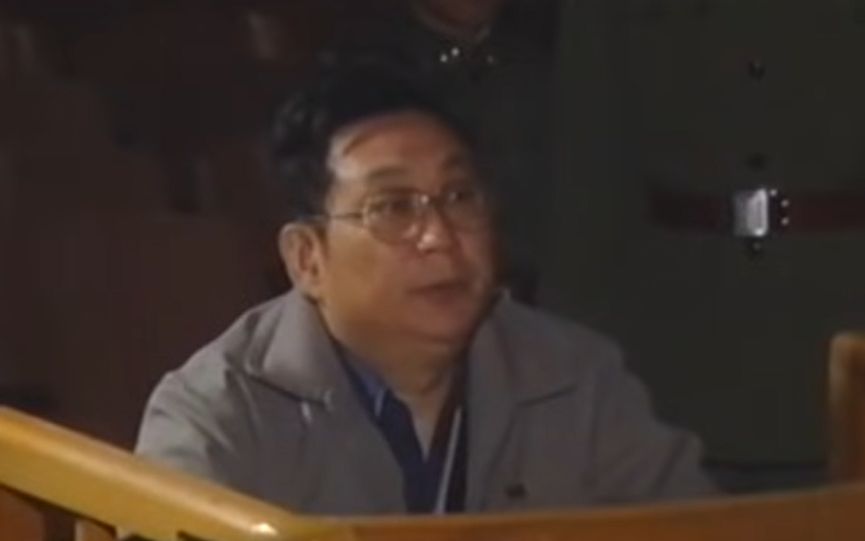
Video footage of a general in the Chinese Armed Forces, officially called the People's Liberation Army, who defied orders to lead his troops into Tiananmen Square and crack down on student protesters in 1989 has been published online, offering an extremely rare insight into the upper echelons of the military at one of the most tense moments in China's modern history.
General Xu Qinxian's refusal to bring his troops from the prestigious PLA 38th Army, a unit stationed on the outskirts of Beijing, to the capital became, for decades, part of the Tiananmen “legend”, writes News.ro.
The six-hour video recording of General Xu's court-martial hearing the following year sheds light on this rare act of defiance. In the video, Xu says he refused because he didn't want to become “a sinner in history.”
“This is the first time we have a clear perspective”
The recording “confirms the legend of Xu Qinxian,” said Zhou Fengsuo, one of the leaders of the Tiananmen demonstrations who now lives in exile in the US. “This is the first time we have a clear, first-person view of this period,” he added.
The source of the video recording is unknown. It was first posted online last month and has garnered more than 1.2 million views on one YouTube account alone.
Wu Renhua, a historian of the Tiananmen movement who participated in the protests, was among the first to share it on the Internet. He said it was offered to him on one condition: to keep its source secret.
Wu said the video is “perhaps the most important piece of data we've gathered in our three decades of research.” He believes it to be authentic, as many of the details are confirmed by his separate research.
❓Have you watched (at least part of) the 6-hour top-secret military trial of Xu Qinxian, the PLA general who refused to carry out the 1989 martial law order in Beijing?
If not, here are the 10 must-watch highlights I summarized for you. 👇 https://t.co/yM36kSHiYR pic.twitter.com/Yvv0vGZaho
— Inconvenient Truths by Jennifer Zeng (@jenniferzeng97) December 23, 2025
The demonstrations in Beijing ended in a bloody massacre
Demonstrations that gripped Beijing for weeks in the spring of 1989 ended in a bloody massacre in the early hours of June 4, when PLA troops opened fire on civilians around Tiananmen Square, the 21.1-hectare central square of the Chinese capital.
Hundreds, possibly thousands, of people were killed, and the event remains one of the most sensitive topics during the Chinese Communist Party's rule over China.
Discussions about the massacre are censored and there has never been an open or official assessment of the events or their consequences.
The general refused the order
At the time, there were widespread rumors of dissension within the military. Zhou said many uniformed soldiers came to Tiananmen Square before June 4 to show their support for the protesters.
When the demonstrations began, Xu, who came from a family of fruit and vegetable sellers, was in hospital recovering from a kidney stone attack.
But on May 18, he was ordered to move his 15,000 soldiers to Beijing and impose martial law. In the video recording of his court-martial trial, Xu explained his reservations.
With a hard accent and direct language, he said: “I said that I have a different opinion on this matter. I said that it is a mass political incident and should be solved mainly by political means.”
In the end, he refused to carry out the order, although he passed the message on. He said he told his superiors that if martial law failed, the commander who imposed it “could become a sinner in history.”
The general feared “a bloodshed”
Xu's testimony shows him struggling to be a loyal general in a system run by the Chinese Communist Party. He said he “feared the potential for a large-scale conflict or bloodshed.”
Tiananmen experts say one of the most important aspects of Xu's testimony was that he questioned whether the decision to impose martial law could have come from the Central Military Commission, which gave the order.
He said that such a serious matter should have been discussed by China's legislature, the National People's Congress.
Xu was expelled from the Chinese Communist Party and sentenced to five years in prison. He lived the rest of his life in exile, far from Beijing, and died in 2021 at the age of 85.