Holiday meals can be the “perfect storm” for digestion. Dr. Lucian Alecu, MedLife surgeon: “Don't stay at home if you have severe abdominal pain”

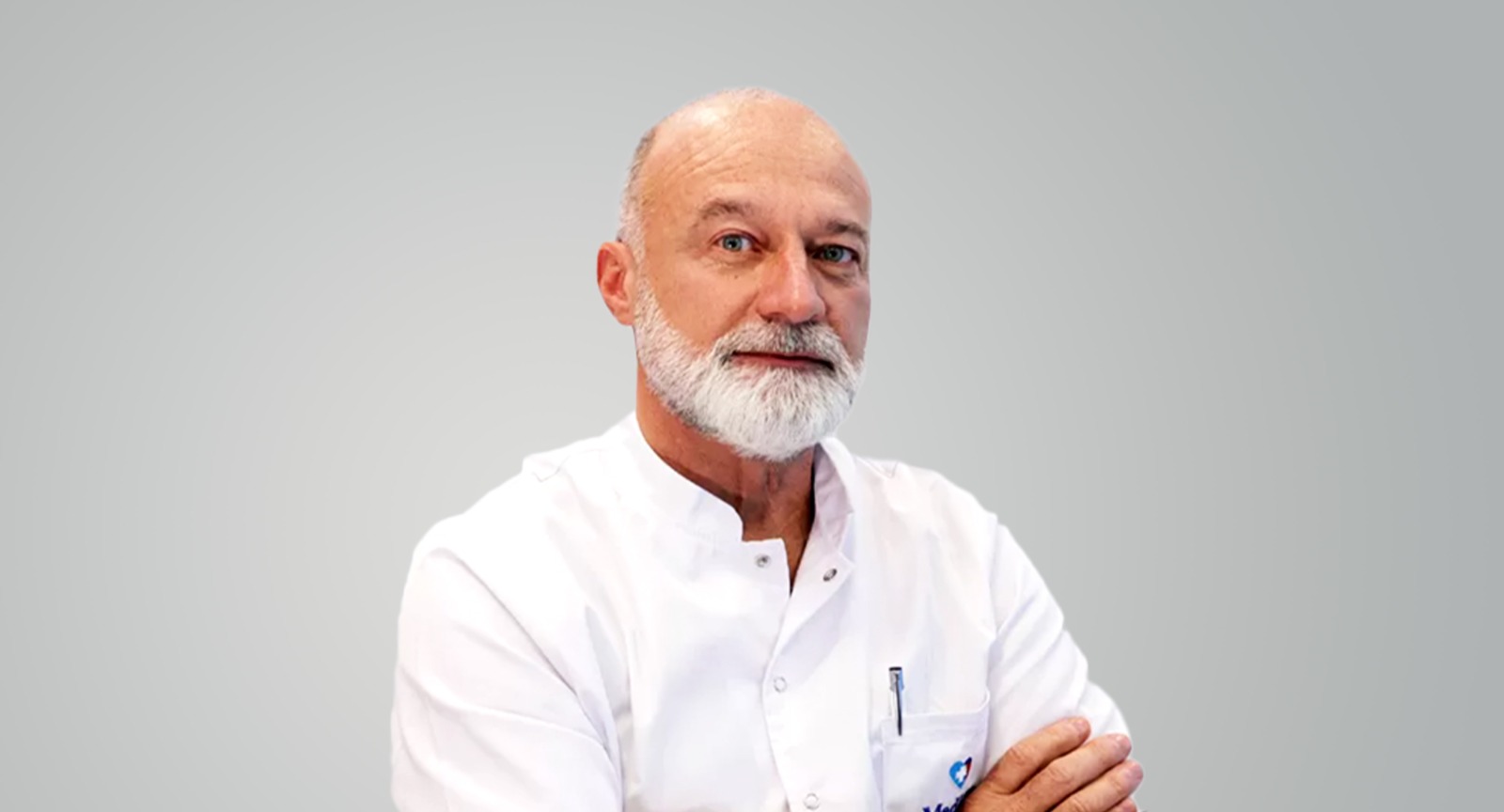
The holidays are busy times for doctors in hospital emergency rooms and for surgeons. Digestive problems are the main cause, experts say. “Meals rich in fat, consumed in excess and without real breaks, often associated with alcohol create all the conditions for the emergence of acute complications. For some patients, these are the first sign that they already had an undiagnosed problem”, he emphasizes Dr. Lucian Alecu head of the surgical specialties section within MedLife Medical Park Hospital. However, even if we suspect a digestive problem, it is important to get to an emergency room that covers the main specialties, because some manifestations should be investigated by several specialists. MedLife Medical Park Hospital has all the necessary emergency lines during the Winter Holidays.
At Christmas and New Year, the digestion is forced to deal with a large amount of fat and processed food in a short time. The body is even more unprepared for traditional dishes after several weeks of fasting. The sudden return to foods high in fat and meat puts additional pressure on the digestive system. “The body does not have time to adapt. The transition should be gradual, otherwise the risk of imbalance increases significantly,” explains Dr. Alecu.
For people who already have gallstones, popularly known as “gallstones”, the extra effort the digestive system must make to process heavy meals can set off a real chain reaction. The gallbladder contracts to remove the bile needed for digestion, and stones can migrate into the bile ducts. Severe abdominal pain may signal an emergency that requires rapid medical intervention, the surgeon points out.
Emergencies that most frequently end up in surgery
During the holidays, most presentations to the emergency room are related to acute cholecystitis, mechanical jaundice and acute pancreatitis, the doctor lists and explains them in turn.
Acute cholecystitis occurs when a stone blocks the outflow of bile from the gallbladder, causing inflammation, infection, and intense pain. In some cases, the bladder becomes excessively dilated, the wall thickens, and the risk of complications increases rapidly.
Mechanical jaundice occurs when a stone migrates from the gallbladder into the main bile duct and blocks the flow of bile to the intestine. The skin and eyes acquire a yellow color, the urine darkens in color, and the general condition of the patient deteriorates.
The most serious of these conditions is acute pancreatitis. “It is a potentially severe disease, sometimes unpredictable. Even with correct treatment, it can develop with major complications,” warns Dr. Alecu. That is why it is essential that, from the first serious abdominal pain, patients present themselves to the emergency room for the fastest possible investigations and emergency interventions.
“I had pain before, but it went away with pills”
Dr. Lucian Alecu has encountered many cases of patients who knew they had gallstones and who had painful episodes in the past, but treated them at home with digestive or antispasmodic drugs. Each time, the pain passed and surgery was postponed. But during the Holidays, when the digestive system is “bombarded” with excess fat and alcohol, acute episodes can occur that require emergency surgery.
None of the painful episodes in the case of gallstones are harmless. Each inflammatory pustule changes the local tissues and makes further surgical intervention more difficult. “Postponing the decision to resort to the only possible treatment for gallstones – cholecystectomy (complete surgical removal of the gallbladder), using drugs and symptomatic supplements, does not solve the problem, but complicates it,” explains Dr. Lucian Alecu.
Why it's wrong to delay surgery for gallstones
After a hearty meal, such as the traditional Romanian Feasts, where alcohol is also consumed, acute cholecystitis, a complication of gallstones, can occur. “Suddenly, abdominal pain appears in the upper floor, with radiation to the right, nausea, vomiting, fever, chills. Most of the time, the patient avoids going to the emergency room from the start and tries to solve the problem at home, as he may have done in the past. If he does not succeed, he arrives at the Emergency Department, where, following a clinical examination that is highly suggestive of such a condition and an abdominal ultrasound, “discovers the existence of an infectious inflammatory process in the cholecystitis. An acute cholecystitis can quickly develop into very serious complications, which are difficult to treat. In these cases, surgical intervention, which is absolutely mandatory, is much more difficult than under normal conditions,” explains the surgeon.
Normally, cholecystectomy, i.e. surgical removal of the gallbladder, is done when there is no active inflammatory process at that level, so the intervention is done laparoscopically, with minimal suffering for the patient and quick recovery. “When the operation is cold, the patient can go home the next day, the abdominal discomfort is minimal, the recovery is very fast. Considering how widespread laparoscopic surgery has become in the case of this condition – and in our country it is the gold standard for gallstones – it would be good for the patient not to delay making the decision to remove the gallbladder occupied by stones, which is non-functional and can lead to very serious complications”, he emphasizes Dr. Alec.
In the emergency, cholecystectomy, even if it is performed minimally invasively, takes longer and is much more difficult. The good news, however, is that patients, even if they are facing a serious complication, such as perforated gangrenous cholecystitis with liver abscess, benefit from emergency laparoscopic surgery at MedLife Medical Park Hospital. “There are very rare situations in which we end up with open surgery”, states Dr. Lucian Alecu.
When indigestion is, in fact, mechanical jaundice
There are also patients who only find out in the emergency room that they have gallstones, when serious complications arise. For them, the holiday meal becomes the moment when an otherwise silent condition suddenly manifests itself in the form of a surgical emergency. Acute cholecystitis is not the only serious complication of the presence of stones in the biliary tract.
In the context of high-fat meals, stones can move, reach the bile duct and block the outflow of the bile duct into the duodenum, which can lead to mechanical jaundice, the doctor warns. “In addition to the rather violent pains in the upper abdominal floor, he notices that his integuments start to turn yellow, that the urine is darker in color. In reality, the bile duct is blocked, the bile no longer evacuates into the duodenum, and the patient develops mechanical jaundice, which is also a medical emergency and which is solved, in most cases, still minimally invasive, through a combination of surgical and endoscopic methods. The stones that have migrated into the bile duct are removed performing the unobstruction of the biliary tract through interventional endoscopy, and later a laparoscopic cholecystectomy is performed – the organ from which these stones originated is removed.”
Symptomatic treatments can worsen the situation
Abdominal pains after heavy meals are often attributed to heavy food, and the first reflex is self-medication.
“Severe, persistent abdominal pain that does not respond to conventional medications and is associated with nausea, vomiting, fever or general altered state, should not be ignored,” emphasizes the surgeon. In these situations, staying at home can delay diagnosis and treatment, increasing the risk of complications.
Acute pancreatitis, the complication with the highest risk
When a gallstone triggers acute pancreatitis, the medical management becomes much more complex. Often, surgery is not done right away. The priority is to stabilize the patient and control the inflammatory process, through drug treatment and careful monitoring.
Only after the inflammation is under control can surgery be performed to remove the gallbladder, usually laparoscopically. If this stage is delayed too long, the risk of recurrence remains high, and each subsequent episode can be more severe than the previous one, reports Dr. Lucian Alecu.
What happens when the patient arrives at the emergency room
Once at the hospital, the patient is evaluated by a multidisciplinary team. Diagnosis is based on clinical examination, blood tests and imaging investigations such as abdominal ultrasound or computed tomography. Depending on the severity of the situation and the associated diseases, either emergency surgical intervention or its timing and drug treatment are decided.
It is important that the evaluation is done in a hospital that has all the necessary first lines, because digestive symptoms can sometimes hide other major emergencies, including cardiovascular ones, concludes Dr. Lucian Alecu.
***
Read other informative articles on medical topics in the Make Romania good section.
This article is supported by MedLife, the largest network of private medical services in Romania, and aims to be a source of information and inspiration for a healthy and balanced life.
Health is the main source of happiness for Romanians. At MedLife, people's happiness makes us happy and motivates us to provide medical solutions at the highest standards.
Regardless of the specialty, at MedLife you can always find good doctors, whose expertise is complemented by the most advanced technologies in the medical field and a modern infrastructure, ensuring personalized care for each patient.
Find out more details about all services at https://www.medlife.ro/
Article sponsored by MedLife