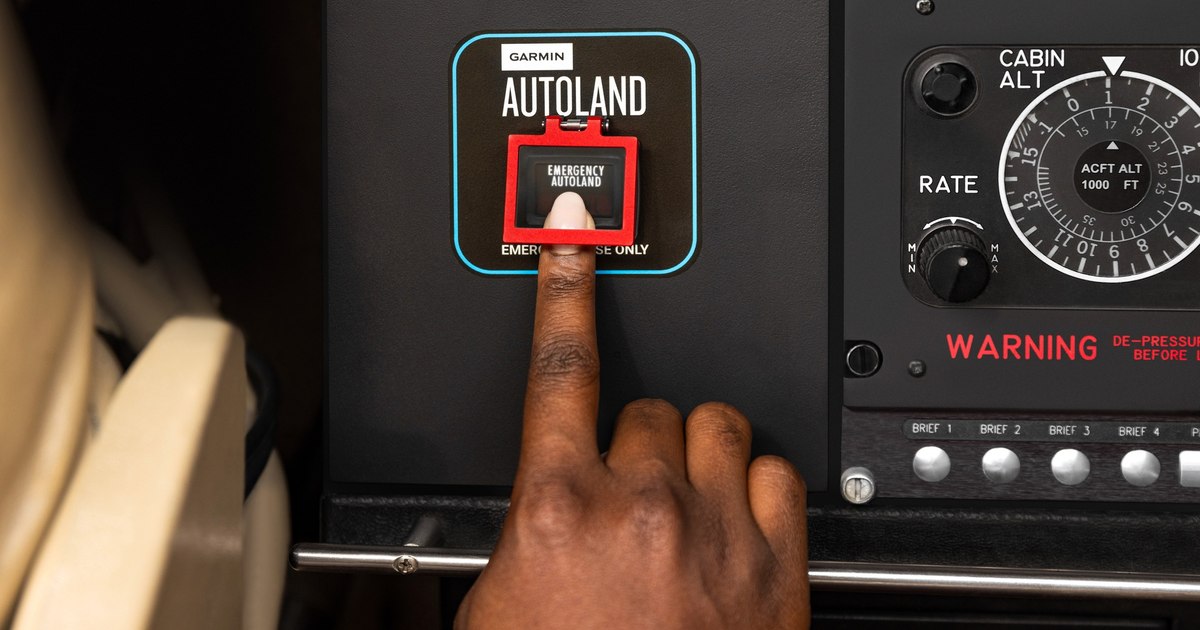
A Beechcraft King Air B200 equipped with the Garmin Autoland system made a fully autonomous landing at Colorado's Rocky Mountain Metropolitan Airport after the pilot lost control of the plane. It is the first emergency use of this technology in the world.
Rarely do we witness a situation where technology completely takes control of an airplane in flight, but that's exactly what happened on Saturday, December 20, 2025, in the state of Colorado. Around 2:00 p.m., during a flight from Aspen to Denver, the pilot of a King Air 200 became incapacitated and the Garmin Emergency Autoland system was activated to save the situation. The aircraft, a general aviation twin engine, automatically issued transponder code 7700 (general emergency – alerts air traffic controllers that an aircraft has a serious problem such as a fire, medical problem, engine failure, low fuel, etc.) and began sending automatic radio messages to air traffic controllers, announcing “pilot incapacitation” and the intention to land on Runway 30 of the “Rocky Mountain Metropolitan Airport”. The control tower at Broomfield (near Denver) received the robot's communications and prepared to receive the aircraft in emergency mode, clearing the airspace and the runway for the special landing. At 2:19 p.m., the aircraft touched down safely on the designated runway, then came to a complete stop and automatically shut down the engines so that emergency crews could attend. No one was injured in this autonomous landing, and all occupants were out of danger. It is a remarkable achievement of modern safety systems. Details of the pilot's condition have not yet been released.
Garmin has officially confirmed that this is the first real-life activation of the Autoland system outside of controlled tests and demonstrations. The incident thus provided a concrete demonstration of how automation can act as the last line of defense when human intervention is no longer possible. Traffic controllers in Denver were impressed that the system handled everything by itself, with one of them later stating that the emergency procedure went “flawlessly”. Both Garmin representatives and the plane's operator welcomed the outcome, but reserved the specific details of the flight for further analysis, which Garmin said it would release in due course.
What is the Garmin Autoland system and how does it work?
Garmin Autoland is an automatic emergency landing system designed specifically for extreme situations where the pilot can no longer fly the aircraft. It is not a simple autopilot that assists the pilot in maneuvers, but an autonomous system that takes complete control instead of the crew. Its purpose is to bring the aircraft to the ground safely without any human intervention, thereby protecting the lives of those on board and those on the ground.
The system can be activated in two main ways:
- Automatically, if the absence of interaction from the pilot is detected for a predetermined period (corroborated with other indicators, such as the lack of control movements). Basically, if the pilot stops responding and the plane flies longer on autopilot without input-manuals, Autoland repeatedly notifies the pilot and can realize that something is wrong by triggering itself;
- Manually, by pressing an “Autoland” emergency button placed in plain sight in the plane's cabin, a button that can be operated by any of the passengers. In many small planes equipped with this technology, passengers are given a briefing before the flight, they are told where this red button is and how to use it in case of force majeure.

Photo credit: Garmin
Once activated, the system takes full control of the aircraft. From that point on, all aspects of the flight are managed: navigation to a suitable airport, radio communications, descent from cruise altitude, approach to the runway, actual landing, ground contact braking and even engine shutdown. In the Colorado scenario, Autoland immediately chose the nearest suitable airport, taking into account factors such as distance, length of runway available, weather conditions and fuel remaining on board. He then initiated approach procedures, announced the aircraft's position and intentions via automated voice messages on frequency (callsign N479BR, medical emergency on board, direction to Broomfield and estimated time to land), configured the landing gear (flaps, landing gear-if applicable, etc.) and brought the aircraft onto the established runway. After contact with the ground, the system braked itself to a complete stop and cut power to the engines, exactly as it is designed to do in such situations.
Also, it is important to note that Garmin Autoland not to be confused with the automatic landing systems used by airliners for low visibility landings. In the case of (large) commercial aircraft, traditional autoland (CAT III) still involves the presence and active supervision of pilots and requires airports equipped with special guidance equipment (ILS, radar, etc.). By contrast, Garmin's solution is intended as an emergency autopilot, requiring none input from the pilot once activated and can operate to any airport that has a long enough runway, not just specially equipped airports. In other words, the system can land the plane wherever it finds a safe and sufficient runway without depending on ground-based instrument infrastructures, a crucial aspect when time is of the essence and the alternative would be… unpleasant.
A leap forward for small flight safety
This Colorado incident marks a watershed moment and provides real-world validation of the philosophy behind Garmin's Autoland solution. The system, which had been extensively tested under controlled conditions and demonstrated to the specialist public in recent years, has now proven its effectiveness in a life and death situation. The good result confirms the enormous potential of automation in aviation, especially for the general aviation sector, where such equipment can make the difference between a tragedy and a happy ending. “It's not about replacing the skill of the pilots, but about providing an additional safety net,” the US specialists emphasized, and cases like this highlight how technology can take over as a last resort when the human factor fails.
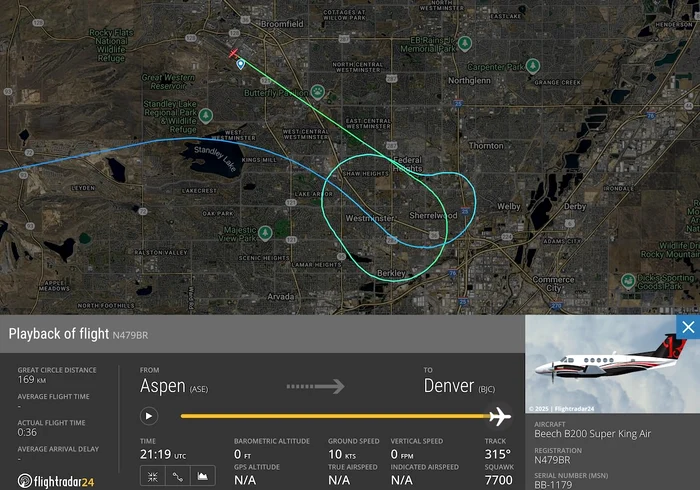
Photo source: FlightRadar24
Development of the solution began over five years ago, and the first aircraft equipped with this functionality were modern general aviation models (such as the Piper M600/SLS and Cirrus Vision Jet) equipped with Garmin G3000/G5000 avionics. The system has won innovation awards and required an extensive global certification effort. Only recently has the technology become available for twin-engine turboprop business jets. In August 2025 Garmin obtained FAA (US Federal Aviation Administration) certification for the integration of Autoland (along with the autothrottle – (“automatic engine pilot”) function on certain Beechcraft King Air models equipped with the Garmin G1000 NXi cockpit. In January 2024 the first installation of the system on an existing King Air B200 had already been carried out, paving the way for the modernization of the in-service fleet with these systems. The fact that in May that less than two years after the first installations on the King Air, Autoland has actually saved lives is a strong case for the wider adoption of this technology.
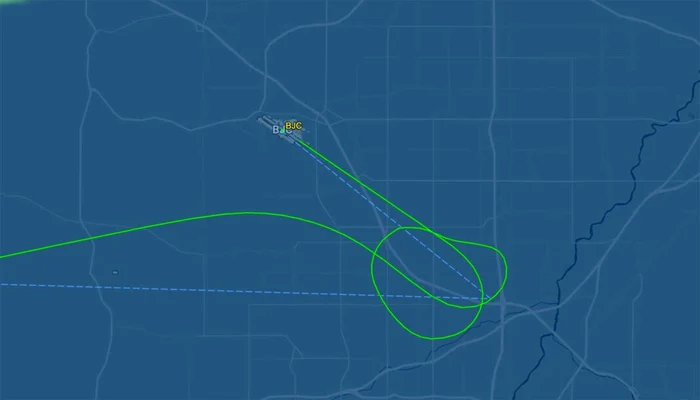
Photo credit: FlightAware
As with anything new, there will likely be questions and reluctance from some pilots or operators. But the event of a few days ago proves that solutions of this type work as expected. Even very well, in real stressful conditions. It is worth emphasizing that the aircraft was recovered without major damage, and those on board arrived safely on the ground, a happy ending that in the absence of this system would have been improbable. We will certainly learn more technical and operational details once aviation authorities review the incident. Until then, the bottom line is that we are witnessing an absolute first in aviation: a plane that lands by itself, autonomously, saving lives. And this success could foreshadow a paradigm shift in aviation safety, where advanced automation technologies become a trusted ally of human crews, not just in commercial air transport, but in general aviation.