At the beginning of 2025, France and the United Arab Emirates signed a framework agreement to build a major project — campus with a 1 GW AI data center. The investment cost is estimated at USD 30-50 billion. In turn, the partnership with Saudi Arabia includes cooperation in the field of advanced technology (deep tech), AI and start-up ecosystems. The Saudis are focused on diversifying the economy and see AI as a key growth factor.
Thanks to these activities, France, which is going through an unprecedented crisis in the 21st century, gains access to capital, talents and international infrastructure, while strengthening its position against competition from the USA and China when it comes to the development of new technologies.
The article continues below the video
What are Saudi Arabia's AI goals by 2030?
What does the agreement between France and the United Arab Emirates cover?
How many startups does Saudi Arabia plan to support in the field of AI?
What trends are observed in AI investments in Europe?
Changing the directions of dependencies
In the face of an increasingly rapidly changing world and technological changes, the countries of the Persian Gulf, which have so far been enriched thanks to oil deposits, are forced to transfer the burden of investment to another area. Artificial intelligence is gradually becoming it. Economic transformation encourages these countries to establish cooperation with countries that have real potential for the development of AI.
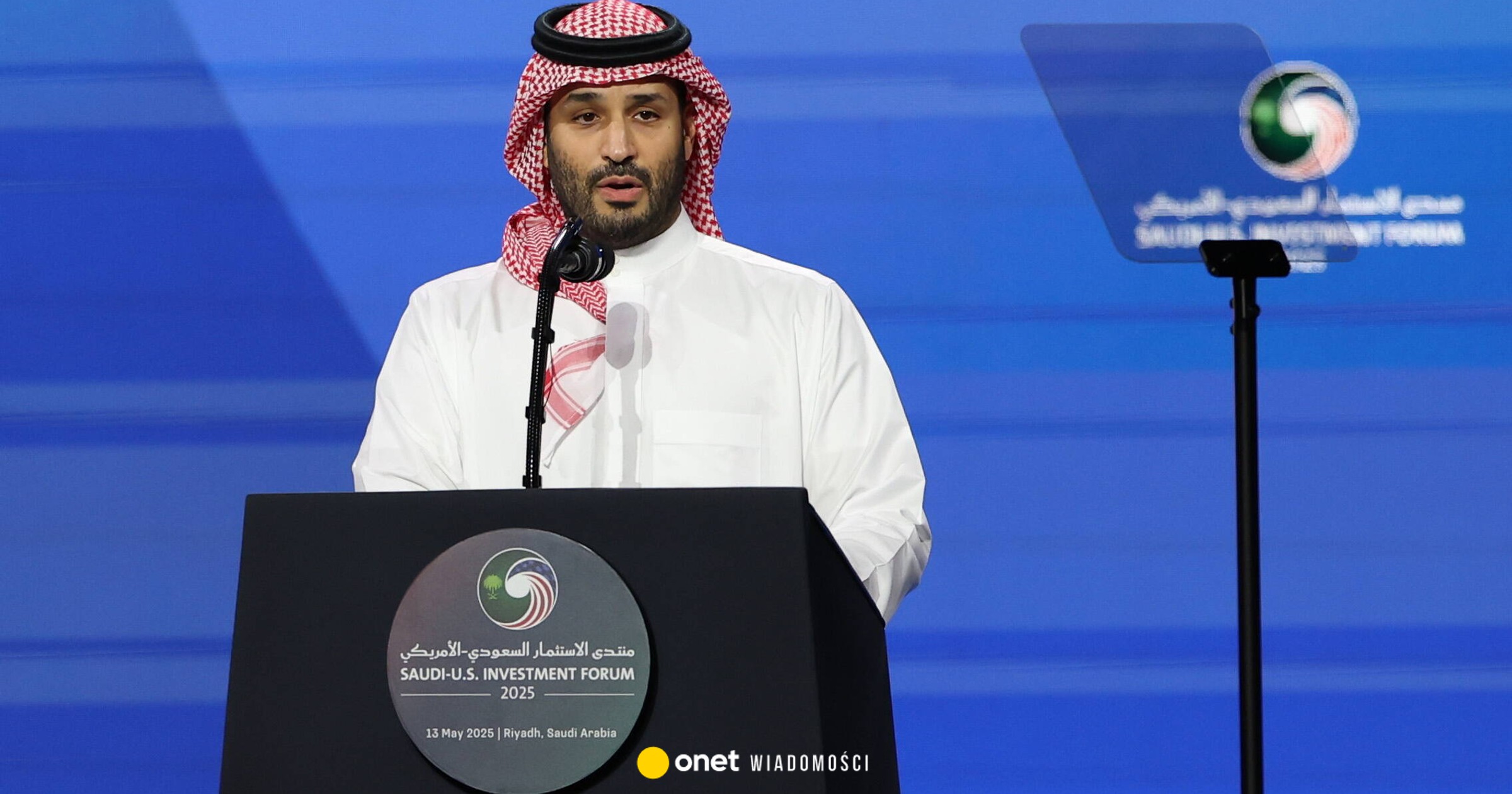
Although France has concluded its latest partnership with the United Arab Emirates, Saudi Arabia, as the region's largest economy and leader in the field of AI, is setting a transformation trend that affects the entire Gulf. Saudi Arabia's centralized policy assumes a long-term investment strategy.
As we read in the report of the French Ministry of Economy, Finance and Industrial, Energy and Digital Sovereignty, the Saudi Data & AI Authority (SDAIA), established in 2019, supervises the implementation of the National Strategy for Data & AI (NSDAI).
Thanks to this strategy, with an initial budget of USD 20 billion, the kingdom is expected to be among the 15 most important countries in the world in the field of AI by 2030. 20 thousand will be trained. specialists, it will also support the creation of over 300 start-ups based on artificial intelligence technologies.
It is worth emphasizing in this context that Saudi Arabia currently ranks 14th in the world in terms of AI potential and is the first Arab country in this ranking. The fund created for this purpose amounts to USD 40 billion. Humain, a company with an authorized capital of USD 100 billion, was also established to support the diversification of the economy and its independence from crude oil.
When it comes to its AI regulatory framework, the Kingdom is moving towards European standards while maintaining space for innovation. This includes: thanks to institutional transparency and modern regulations, Saudi Arabia manages to attract the interest of governments and businesses. This evolution outlines a geopolitical change in the directions of dependence, today oriented towards AI, deep tech and data infrastructure, which are becoming a new pillar of its development strategies.
It can therefore be said that instead of petrodollars, Saudi Arabia and the UAE have started investing in “algorithmic dollars”, and Paris, with its technological ambitions, high level of diplomacy and scientific infrastructure, plays the role of a privileged partner.
Reclaim your influence in the world
There is no doubt that Europe is also going through an unprecedented crisis. Reducing its influence in the international arena is just one of the problems resulting from stagnation in particular policy areas.
Emmanuel Macron is therefore looking for new solutions, which include soft power. The strategic partnership agreement in the field of artificial intelligence between France and the UAE signed a few months ago in Paris assumes the creation of a campus to be developed by a “consortium of French-Emirate leaders”, in particular by the MGX investment fund linked to the United Arab Emirates. President Macron's ambitions may indicate that this will be the largest AI campus in Europe.
According to a statement from the Elysée Palace, the cooperation also includes “investments in the AI sector in France and the Emirates, the purchase of advanced chips, data centers, talent development, as well as the creation of virtual data embassies enabling the construction of sovereign AI infrastructure and cloud services in both countries, which will constitute the basis for building a competitive power against the United States and China.”
In the face of weakening influence in the world, e.g. in Africa, France is not only looking for a field for new cooperation, but also sees AI as a tool to help regain international influence. Artificial intelligence is therefore a strategic sector thanks to which three main goals can be achieved: reduce dependence on the US, become independent from China in terms of infrastructure and, most importantly, strengthen the EU's digital autonomy.
France, with its academic potential (although decreasing due to lack of funds), which includes the largest French public research agency CNRS and the Paris-Saclay science and technology park, constitutes a unique research ecosystem, attractive to the Persian Gulf region. AI hereby becomes part of the French strategic doctrine (as nuclear, aviation, TGV once was) and – by strengthening technological diplomacy – a key tool of soft power.

Weekly Review
A chance for Poland
France is therefore turning to another geographical area so as not to become a digital colony of the US, which has a monopoly on the technology business. The European model, which increasingly coincides with the model towards which the Gulf states are moving, stands in opposition to American commercialization and the Chinese authoritarian model.
The race for competences, capital and technological talents may also be an opportunity for Poles to strengthen Poland's influence on the global development process.
Mateusz Krymski / PAP
To prevent the outflow of talent, e.g. to the USA, infrastructure investments in artificial intelligence and the Polish national strategy need to be rethoughtwhich could be modeled on the French one (taking into account the scale, clearly defined goals, attracting capital, etc.), emphasizing the importance of the “grand technological narrative” that Emmanuel Macron was able to build.
Observing these trends is particularly important. The rise of France as a European AI hub shows that technology competition in Europe is accelerating. Countries that do not invest in artificial intelligence and digital infrastructure may quickly lose their position in the innovation market.
Poland, which has the potential to become a leader in Central and Eastern Europe, should closely follow Paris's movements and at the same time develop its own strategies to support start-ups and research – through co-financing higher education and foreign investments. After all, it has a large number of experts in the field of new technologies, whose skills are often not fully appreciated on the domestic labor market. This leads to the flight of talents to the West (primarily to the United States) and weakens Poland's chances of taking over the position of a regional innovation center.
Building an attractive AI ecosystem right now could keep experts in the country – their potential would serve to strengthen the economy and Poland's position in Europe.