
The day with four censorship motions, unprecedented in the Romanian politics. Last calculations before the vote by which the opposition wants to dismiss the Bolojan government


The Chamber of Deputies and the Senate meet on Sunday at 1:00 pm to debate and vote on the four censure motions deposited by the opposition against the Bolojan Government. The meeting will extend for several hours, due to the procedures that will have to be respected successively.
The four censorship motions were submitted after Prime Minister Ilie Bolojan assumed on Monday in Parliament on five draft laws part of the package of fiscal measures. According to the parliamentary procedure, the opposition attacked four of the five packages by censure motion:
The only draft law that was not attacked by the opposition is the one regarding the pensions of the magistrates. It was challenged on Thursday at the Constitutional Court by the High Court of Cassation and Justice.
Opposition still needs 100 votes
In order to take down the government, the opposition needs to collect 233 votes “for” the censorship motion, out of a total of 465 senators and deputies.
The number of opposition parliamentarians is 133, divided as follows, according to the data on the sites of the Chamber of Deputies and the Senate:
- Gold: 89 parliamentarians;
- Can: 19 parliamentarians;
- SOS Romania: 25 parliamentarians;
The parties that make up the ruling coalition have 311 parliamentarians, divided as follows:
- PSD: 131 parliamentarians;
- PNL: 72 parliamentarians;
- USR: 59 parliamentarians;
- UDMR: 32 parliamentarians;
- Group of national minorities in the Chamber of Deputies: 17 parliamentarians.
There are also 19 deputies and senators not affiliated with any parliamentary group. In their case, it is difficult to say where they will direct their vote, but most likely some of them will choose to support the censorship motion.
Disputes on the date of opposition
The parties in the ruling coalition wanted the debate and vote on the four censorship motions to take place as early as possible. After gold, they can and SOS Romania submitted on Wednesday evening, at the last moment, the censorship motions, the management of the Parliament decided to be read immediately, the next day, in the plenary, and the vote will take place on Sunday at 1:00 pm, the earliest possible calendar.
On the other hand, Gold would have wanted the debate and vote on the motions to take place only next week, because on Sunday the party's parliamentarians were to participate in the “National holiday in Țebea”, where there is the tomb of Avram Iancu. Although they negotiated a possible calendar, the power and opposition did not understand each other, and finally the power parties imposed the desired calendar.
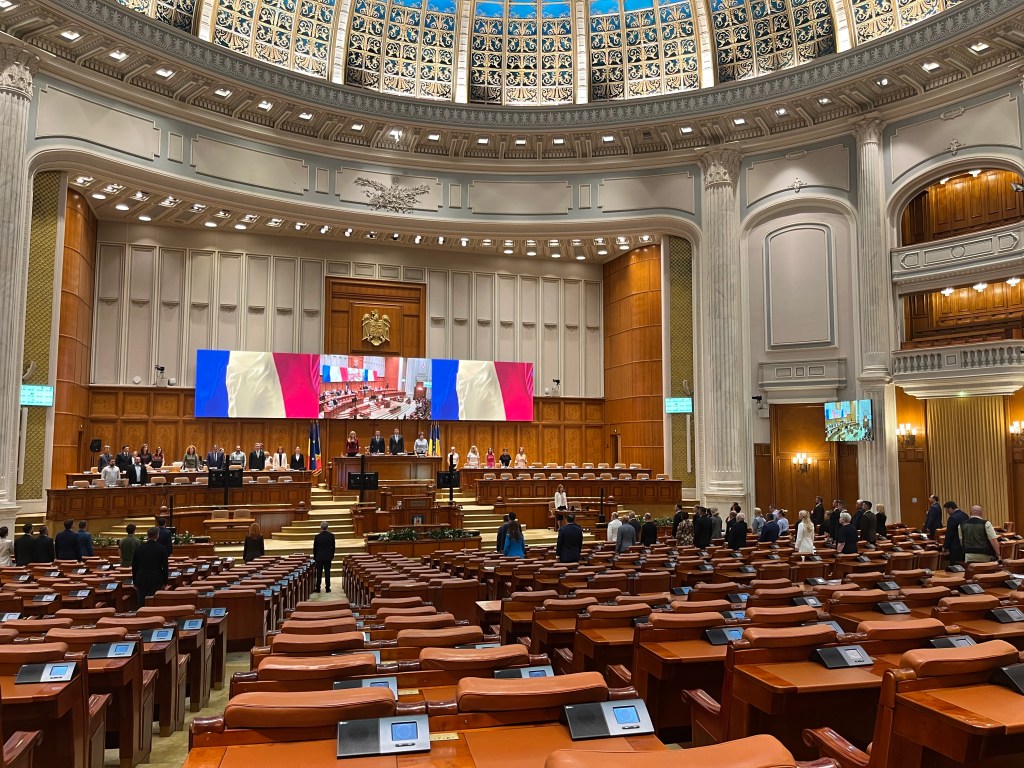 Video Parliament plenary, almost empty of reading the censorship motions deposited by the opposition / gold, can also accuse the government of “legislative terrorism”
A PSD parliamentarian signed one of the four censorship motions “by mistake”
Deputy Dorin Popa, chosen on the lists can, but passed to the PSD, is the only parliamentarian of the power that signed one of the four censure motions deposited by the opposition, about the health measures. Contacted by HotNews, the deputy said he signed by mistake.
Dorin Popa is a member of the PSD group in the Chamber of Deputies on June 10, after leaving with a scandal from PO, because he quarreled with the party president, Anamaria Gavrilă.
“It was an error. I only signed a table, not knowing that it was for the censorship motion. If I signed, I signed all four, not just one. I signed in a hurry, I did not see what it was, I thought it was a legislative initiative,” explained Dorin Popa why it appears as a signatory on one of the censorship motions.
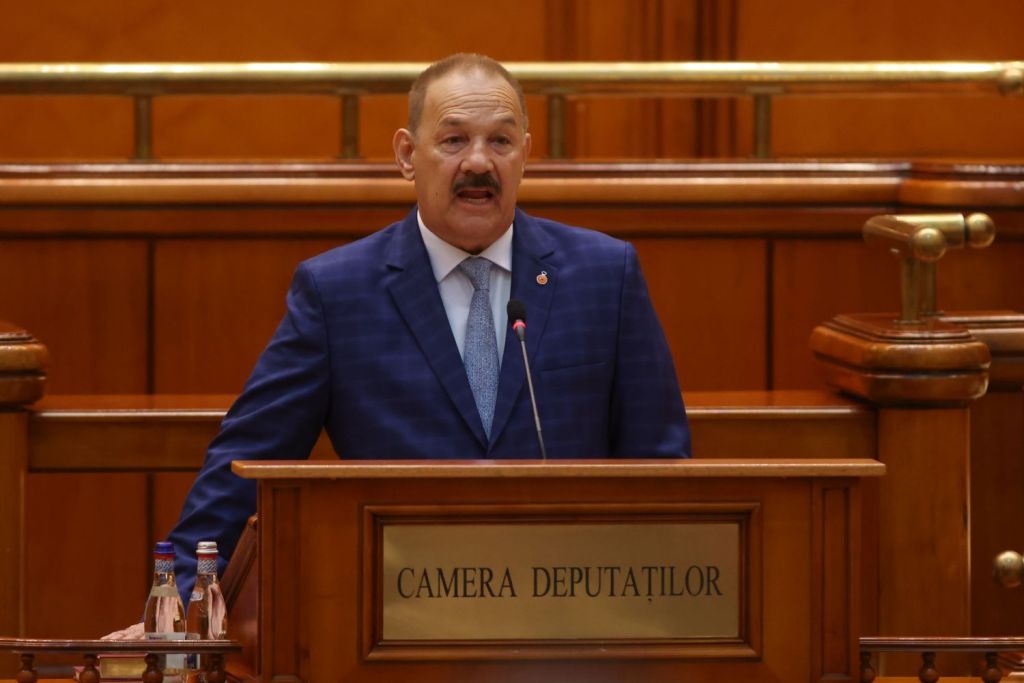 A single PSD parliamentarian signed one of the censure motions against the Government, but says it was “an error” / “You know how to”
The debate and vote of censure motions will extend over several hours
It has never happened in the history of Parliament in Romania that there are four votes on the same day on four censorship motions.
The vote for a single censure motion usually lasts tens of minutes, because the following steps must be respected:
- After the debates on the text of the motion and the speeches held by the parliamentarians and representatives of the Government the vote begins: each parliamentarian (out of the total of 465) is shouted to vote;
- If a parliamentarian is present but does not want to vote, it is announced from the Parliament's stands: “present, do not vote”;
- The parliamentarians who want to vote receive two balls: one white and one black;
- To vote, the parliamentarians must introduce the two balls in the ballot boxes in front of them: “The white ball inserted into the white ballot box and the black ball inserted into the black balloon means vote for, and the white ball inserted into the black ballot box and the black ball introduced into the white ballot means vote against. Both balls introduced in the black ball.”
- After the list of the 465 parliamentarians is shouted, the votes are included and the result of the censorship motion is announced.
In the case of the four censorship motions deposited by gold, can also SOS Romania, the above procedure will be repeated four times. Each censorship motion will respect the above steps in four different seeds. The sessions will close and reopen successively, for each motion, as it happened on Monday evening, when taking responsibility, when there were five different meetings.
The leadership of the Parliament has taken into account, in order to reduce in advance, to unite the four two -by -two motions, political sources for Hotnews explained. In this case, the first two censorship motions would have been debated and voted at the same time. But in the end, this variant was given up, because all the procedures could not have been respected.
What are the next steps
“The government is dismissed whether a censorship motion, submitted within 3 days from the presentation of the program, the general policy statement or the draft law, was voted (…).
If the motions are rejected, the bills are considered to be adopted. However, the law can be challenged at the RCC, before promulgation. The president also has the right to request the re -examination of the law.
“If the President of Romania requests the re -examination of the law adopted according to paragraph 3, its debate will be done in the common meeting of the two chambers,” the Constitution states.
After all these steps are consumed, the law is promulgated and enters into force.


