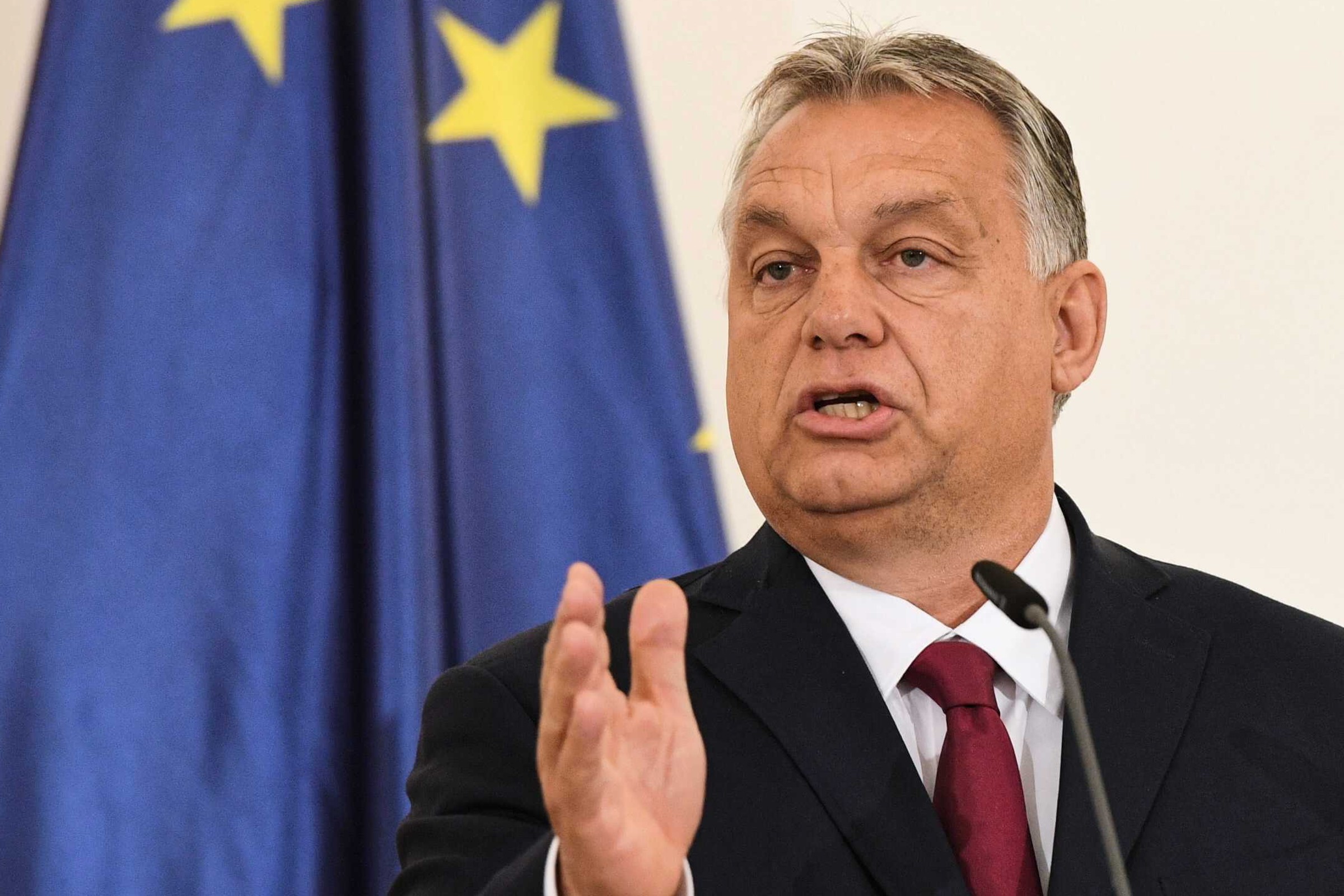
— They eat breakfast calmly at home, drink coffee and think about their moral behavior (…). Ultimately, however, they will pay for it – said Viktor Orban on Saturday at a press conference, commenting on the decision of EU leaders to loan Ukraine in the amount of EUR 90 billion (approx. PLN 380 billion), which is to be financed from war reparations obtained from Russia.
The Hungarian Prime Minister also said that EU leaders were talking about the morality of “helping a small country that has been attacked, even though it is not that small and it is not known who attacked whom.”
— Last Thursday, a “war council” was held in Brussels, not a political summit of the European Council, said Viktor Orban, quoted by HVG. The Hungarian Prime Minister also expressed satisfaction that EU countries did not decide to use frozen Russian assets.
The article continues below the video
What were Viktor Orban's words regarding Ukraine?
What did the Ukrainian Minister of Foreign Affairs respond to Orban's statements?
What decisions did the European Union make regarding the loan to Ukraine?
What does Orban think about the morality of helping Ukraine?
The Ministry of Foreign Affairs in Kiev responds to Viktor Orban's words
The Hungarian prime minister's words were met with a sharp response from Ukrainian Foreign Minister Andriy Sybiha, who said that in the case of Russia's invasion of Ukraine, determining who attacked whom is “as unclear as in the case of the Hungarian leadership in 1939.”
The Ukrainian politician most likely wanted Hungary to take over Transcarpathian Ruthenia, which was then under the control of Carpatho-Ukraine, after the collapse of Czechoslovakia. After fighting with the Carpathian Sich troops, the Kingdom of Hungary abolished its statehood and gained the border with Poland along the Eastern Carpathians.
59% of people lived in the disputed area. Hungarian population. The decision to change the border in the region was made possible by the first Vienna Arbitration in 1938, during which Germany was represented by the Third Reich's Foreign Minister Joachim von Ribbentrop, Italy by Foreign Minister Galeazzo Ciano, Czechoslovakia by Foreign Minister Frantisek Chvalkovsky, and Carpathian Ukraine by Prime Minister Augustyn Voloshin.