Romanians have lost their confidence in school: only 12% consider the quality educational system. NGO: “Free education costs 10,000 lei per year”

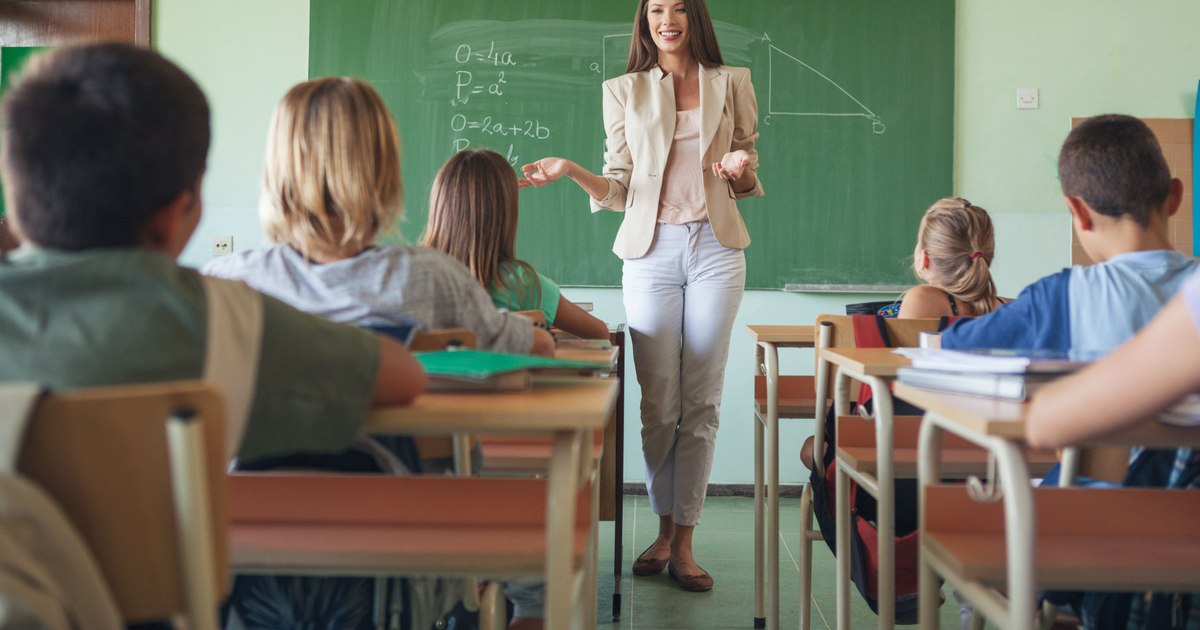
Romanian education crosses a crisis of credibility. According to the Ipsos Education Monitor 2025 report, only 12% of Romanians believe that the educational system offers quality, the second lowest percentage of the 30 countries analyzed, after Peru. The lack of confidence in the quality of the school is doubled by the increasing perception that the “free” education has become a burden for families, according to the data of the Save the Children organization.
Photo source: Shutterstock
Specifically, George Roman, director Advocacy in Save the children show that the “free” of education is an illusion: parents end up spending almost 10,000 lei a year for the education of a child. This financial reality also partially explains the results of the Ipsos survey, which shows a record level of dissatisfaction with the Romanian school.
Free education, only on paper
Although the Constitution guarantees free access to education, the reality in the field contradicts this principle. The Association Save the children show that Romanian parents are increasing for textbooks, teaching materials, after-school programs and private meditations. Only the meditations add up, on average, 6,234 lei per child, an amount that over half of the families consider it inevitable.
“The state education is theoretically free, but the reality flagrantly contradicts this constitutional principle”, explains George Roman, for the truth. The inequities are increasingly obvious: children in families with possibilities benefit from additional support, while the vulnerable ones remain the prisoners of an underfunded system.
Romania continues to allocate below the European average for education: only 3.4% of GDP, compared to the EU average of 4.7%. George Roman warns that, following recent fiscal measures, these amounts could decrease even more, endangering the modernization of schools, training teachers and equal access to education.
Stagination and disappointment: 8 out of 10 Romanians believe that the school must be reformed
The Ipsos survey confirms the general perception of distrust. In Romania, over half of the respondents believe that the educational system is weak, and only 12% describe it quality. Among the main problems identified are the outdated program (51%), insufficient teachers (38%) and high school dropout (34%).
Globally, only one third of the participants still believe that young people benefit from an education adapted to the times. In Romania, 71% of parents believe that social pressure and bullying are the main problems that students face.
Beyond data and percentages, specialists talk about a deeper problem: the lack of confidence between all those involved in education.
What do Romanians say about school
The discussions on the online forums reflect the same distrust and revolt towards the education system. Many users, starting from the results of the Ipsos study, talk about Reddit about the degradation of the didactic profession, about the lack of motivation and about a system that encourages formalism, not competence.
One of the comments summarizes the reality plastic: “It was normal too, look, he gets a lot of functional and sovereign illiterates. Very few competent people choose a career in pre -university education, most who go are the sub -mediocles who want a warm job where they do not work much, not a passion. What should be given to us, as it is, it is the speaker. The parrot factory is the Romanian education.
Another participant completes with an observation about the condition of the teachers: “In the pre-university I have not heard of gains extraordinarily well. But if it were the higher salary, the system suffocates you with papers, inspections and unnecessary masters. That is why the teachers say they do not have holidays all summer: not because they work, but because they stay through bureaucracy.”
Another voice believes that: “At college you can't even ask if you want to go through, I get money depending on how many students have. You realize what's going out there.” “I finished Polytechnic”, add someone. “I had girls with merit scholarships just because they were good and they had presence. I don't even know how to make a division.”
Other participants claim that: “It is no wonder. It is based on the principle of quantity, not quality, and is governed by harmful mentalities. The only palpable product of this system is a huge mass of functional illiterates.
“Romanians do not love teachers or education, but they are disappointed by school. Romanians are barely learning, but school is bad. Do you know so hypocrites? Or is it just the effect of poverty?”, Say someone else.
Aurora Oprea: “Education is like happiness: it comes from their own actions”
At a time when the criticisms of the Romanian educational system intensify, the Aurora Oprea vocational counselor draws attention to an essential aspect: the Romanian education is permanently controversial, but the state of constant dissatisfaction does not help. “I do not know how it succeeds, but the Romanian education always has the quality of being controversial, it has probably attracted its dislike from Alexandru Ioan Cuza,” she declares for the truth.
Aurora Oprea believes that Romanians have developed a habit of criticizing and discredited any reform attempt. In her opinion, education resembles happiness: it is not a ready done, but the result of her own actions. “The eternal dissatisfaction and the jerk does not help, especially in critical moments. The state of continuous negativity only deepens the gap between the effort to do something and the desired results for society and our children.”
The counselor points out that behind education decisions are people who try, even if some measures are successful, and others fail. “No one is perfect. We all make mistakes, and those who lead the system leads a huge responsibility on their shoulders. If we focus only on the aspects that do not suit us, we will always see only what we propose.”
She recalls that education has direct implications in the economic prosperity of each community and that, in the current world, the struggle for resources is no longer about raw materials, but about well -trained people. “An educated workforce is crucial in the contemporary world. Education has become one of the largest global businesses, and the private sector is getting more and more from the responsibility of continuous learning.” explains Aurora Oprea.
In addition to the economic impact, education also has an essential cultural dimension. It remains the main way by which values and traditions are transmitted and adapted to modern realities. “The education system is a family, and the teacher is the parent from the chair. No parent has only made perfect decisions in life, but it is important to continue to try”, says the vocational counselor.
Aurora Oprea also draws attention to the limits of sociological studies on education, which tend to reflect only the opinion of stable and urbanized environments. She believes that these researches should also include the voices of those who perform in the public system, but also of children in the rural area for whom the school is the only real chance at a better life.
For the vocational counselor, the key to a healthy education is self -confidence: in itself, teachers and institutions. “Confidence defines mutual respect and interdependence between all actors involved in education. It is born of sincere daily behaviors and supports constructive relationships between students, teachers, parents and community. Children must believe that participation in education is valuable, and parents must invest confidence in teachers.” says the specialist.
It considers that the company, through authorities, civil organizations and the private sector, has the duty to support education, based on confidence in the quality of existing processes and results. “There is better place, but evolution does not occur overnight. Only chance happens overnight. Real change requires adaptation, patience and respect for new rules.” conclude Aurora Oprea.
A system with no equity and no students' voice
Finally, the representative Save the children also describes a crisis of relevance of the Romanian school. The taught matter remains anachronistic, the emphasis falls on memory, and the teaching methods are rigid. At the same time, students do not have a real say in the decisions that concern them. “The school is authoritatively led, from top to bottom, without authentic consulting mechanisms. This exclusion feeds the feeling that the school does not belong to them”adds George Roman.
Rural-urban discrepancies deepen. Romania has over 440,000 children between 7 and 17 years old outside the educational system, and the results of PISA 2022 places the country on 45th of 81 states, with one of the biggest performance differences between rich and poor students.
Despite the dark picture, the Save the Children's Organization continues to act to reduce school dropout and inequalities. His programs: summer kindergartens, school after school and the second chance supported almost 50,000 children in 2024.
Also, through the campaign “Let's be friends – without bullying”, over 1,200 educators and counselors were trained to work with 26,000 children and parents, in order to prevent violence and exclusion in schools.
Save the children reiterate the call to the authorities to increase investments in education up to at least 5% of GDP and for the national implementation of “school after school” programs.
“Education is not an expense, but a strategic investment. Its lack destroys the future of children and economy”, concludes George Roman.