Birobidzhan border detachment
Photo: From open sources
December 20, 1961
The Bureau of the Regional Committee of the CPSU and the Executive Committee of the Regional Council of Workers' Deputies awarded the Challenge Red Banner of the Regional Committee of the CPSU and the Regional Executive Committee for the best organization of experimental work and active participation in agricultural production to the staff of the Waldheim boarding schoolwho grew 62 centners of corn on the cob per hectare on an area of 18 hectares and provided the collective farm “Zavety Ilyich” with seeds of corn of the “Golden” variety. The good work of growing corn by students of the Bidzhan secondary school, Lazarevskaya eight-year school and secondary school No. 1 of Birobidzhan was noted.
December 20, 1967
A meeting of the regional party and economic activists was held. At it, the socialist obligations of the workers of the region were discussed and accepted to honorably celebrate the 100th anniversary of the birth of V.I. Lenin, and to fulfill the tasks of the five-year plan and the 1968 state plan ahead of schedule.
December 20, 1933
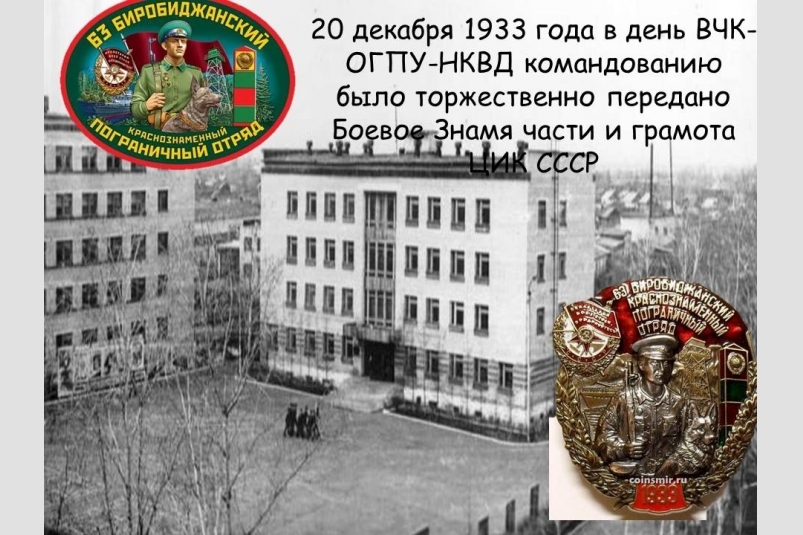
Day in the history of the Jewish Autonomous Region. Photo: Photo: Regional Library
On the day of the Cheka-OGPU-NKVD, the command was solemnly handed over the Battle Banner of the unit and the certificate of the Central Executive Committee of the USSR No. 321. This date was set as the Day of the unit.
The Birobidzhan border detachment was formed from fighters of the 57th Khabarovsk cavalry detachment. By August 1, 1933, 10 outposts and two commandant’s offices had been created. The detachment received the name: 63rd Birobidzhan Cavalry Border Detachment of the OGPU. The detachment's administration was stationed in the village. Mikhailo-Semyonovskoye (now Leninskoye). It included border commandant's offices located in the villages: Radde, Pompeevka, Soyuznoye, Ekaterino-Nikolskoye, Blagoslovenny, Ventselevo, Dezhnevo, Mikhailo-Semyonovskoye, Golovino, Petrovskoye.
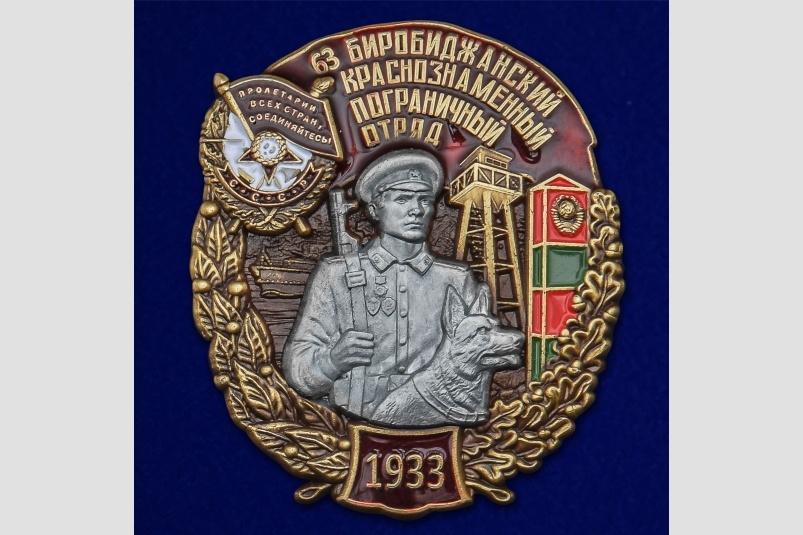
Day in the history of the Jewish Autonomous Region. Photo: Voentorg website
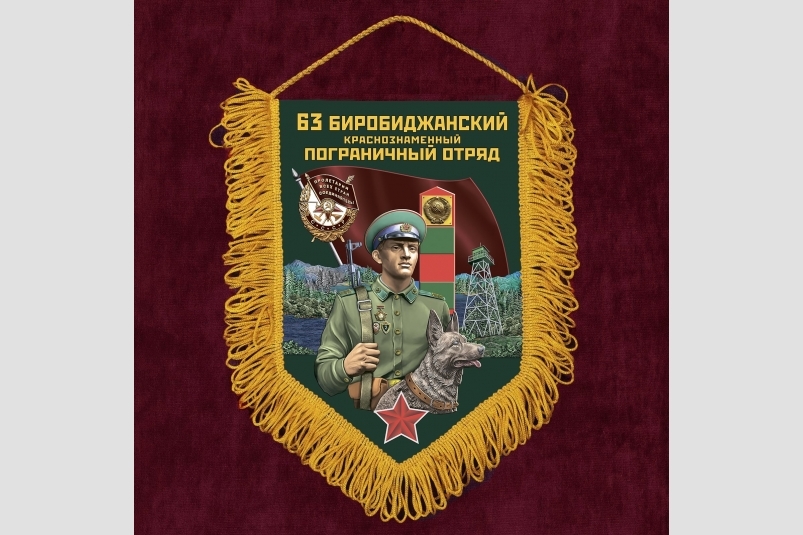
Day in the history of the Jewish Autonomous Region. Photo: Voentorg website
More than 500 kilometers of the state border in the Middle Amur were transferred under the control and protection of border guards of the new military formation. Previously, the state border in this area was, of course, not exposed. Since the 1920s, there were more than twenty border outposts here, which were controlled from Khabarovsk. And since a decision was already being made to transform the Biro-Bidzhan national region into the Jewish Autonomous Region, the border within its boundaries was transferred to an independent border detachment.
The service and combat activities of the detachment are inextricably linked with the heroic history of the Soviet people, their Armed Forces, and state security agencies. The period of the Great Patriotic War occupies a special place in the service and combat activities and history of the Red Banner Birobidzhan Border Detachment.
After the end of World War II, the border detachment was awarded the Order of the Red Banner for its exemplary performance of command tasks during the war. In memory of the military exploits of the heroes of the border, their names are immortalized in the names of border outposts and ships.
In the 1990s, the Birobidzhan border detachment had to overcome the tense situation on the border. Of course, there were simply no spies, no terrorists, no saboteurs, as there once was, but there were violations of a different order. We are talking about numerous violations of the border regime by fishermen of a neighboring state.
Almost until the end of the 1990s, the technical, material and personnel support of all border detachment outposts remained at a low level. It was only in the early 2000s that the situation at the border began to change dramatically. All outposts were staffed with the required number of privates, sergeants and officers. Large financial resources were received for the improvement of residential and utility rooms of the outposts, a specialized detachment “Khingan-2002” was created in the district, tens of kilometers of the highway connecting several mountain outposts on the Lesser Khingan were overhauled.
Many border guards of the detachment performed international duty in Afghanistan and were tested on the borders of Tajikistan and Afghanistan, in the Chechen Republic. More than a hundred officers, warrant officers, and contract servicemen, including female servicemen who passed through these “hot spots,” continue to serve in the border detachment. Border patrol remains one of the most difficult military professions.