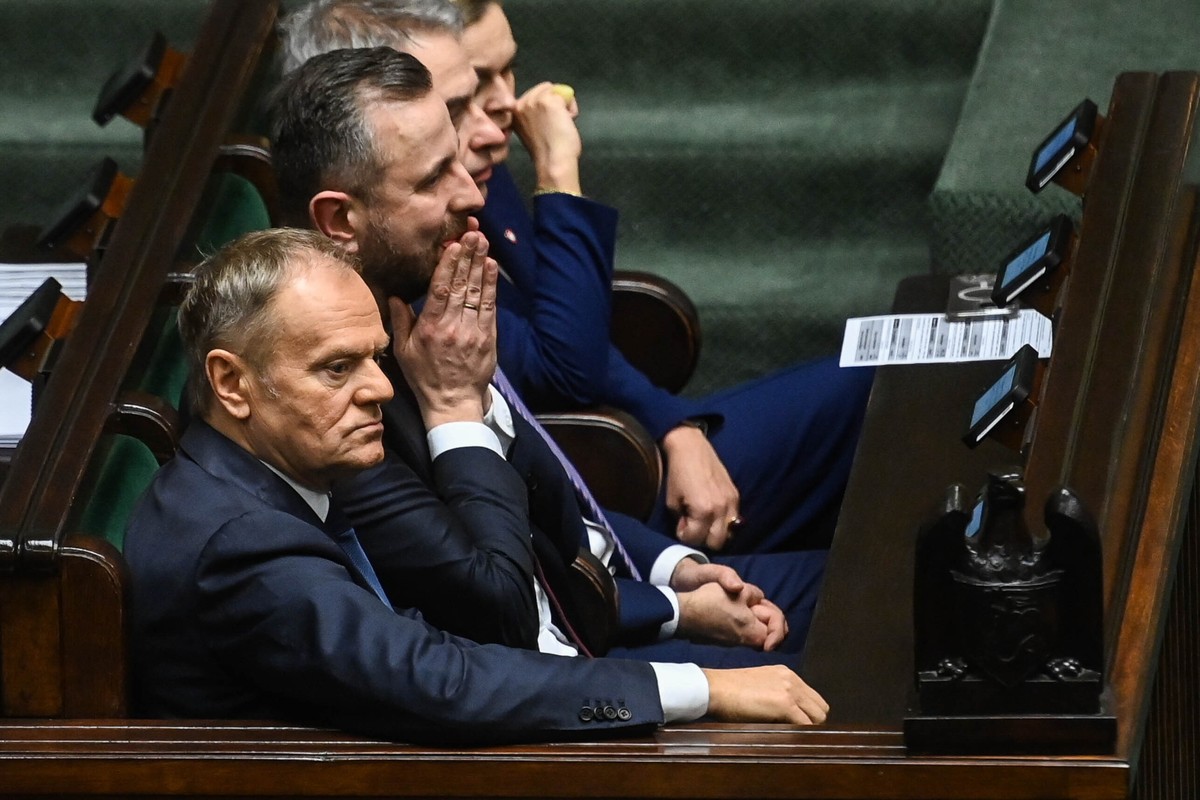
The bill on the crypto-assets market has once again passed through the Sejm. This is the so-called version 2.0, adopted by the government after the Sejm failed to overturn the presidential veto on the so-called Act 1.0.
The problem is that her points of contention have not been changed. The bill did not differ in the slightest from the bill vetoed by the president.
See also: Karol Nawrocki's veto was rejected, there is no bill. “This is terrible news” [OPINIA]
241 MPs voted for the adoption of the act, while 183 people voted against it. One abstained.
Crypto-assets Act. Why did Karol Nawrocki veto?
President Karol Nawrocki vetoed the bill on December 1 because, as he pointed out, the solutions regarding domain blocking are unclear and open to abuse. According to the president rregulations would give the government the ability to disable the websites of entities operating in the crypto-asset industry with one click.
He also emphasized that most European Union countries use simple warning lists that protect consumers' interests without requiring blocking entire websites or cutting off users from their accounts.
The second key reason for the president's decision is the expansion and lack of transparency of the adopted regulations. He admitted that regulation was necessary. However, it must be an act that organizes this market in a normal way, and not overregulation that harms the Polish economy. He pointed out that in countries such as the Czech Republic, Slovakia or Hungary, the relevant provisions fit on several or a dozen pages.while the Polish act includes over a hundred of them. On the other hand, in many countries these provisions are scattered across many different acts, which is also problematic.
The third argument According to the president, the reason for the veto is the amount of supervisory feeswhich have been set at a level that prevents the development of smaller enterprises and start-ups and favors large foreign corporations and banks.
Crypto-assets Act. What did she predict?
The Act of November 7 was intended to serve, among others, implementation of EU regulations, i.e. the MiCA regulation (The Markets in Crypto-Assets Regulation). According to its provisionsthe crypto-asset market was to be subject to the supervision of the Polish Financial Supervision Authorityequipped with appropriate control and supervisory instruments. It was also planned to clarify some of the obligations of issuers of tokens related to assets and tokens serving as e-money, as well as entities providing services related to cryptoassets.
At the beginning of November, Jurand Drop, deputy minister of finance, said in an interview with Business Insider Polska that the task is not to assess whether cryptoassets are good or bad, but to adapt Polish law to the EU MiCA regulation.so that companies can register in Poland and provide crypto-asset services to our citizens based on clear rules. Thanks to the veto, this will not happen.
As for the allegations that the regulations are too extensive, Deputy Minister Jurand Drop explained that they describe the competences of the supervisory authority in order to limit discretion.
[Za chwilę więcej szczegółów]