A 42-year-old billionaire who wants to take astronauts to Mars has become the new head of NASA


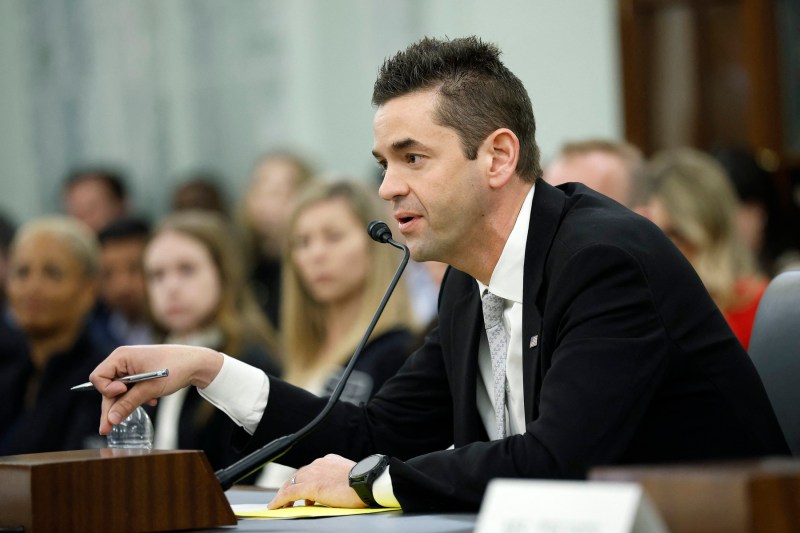
Jared Isaacman, NASA administrator from December 17, 2025, PHOTO: Kevin Dietsch / Getty images / Profimedia
The United States Senate has confirmed the appointment of billionaire Jared Isaacman as NASA administrator in President Donald Trump's administration, making a supporter of missions to Mars and a former associate of SpaceX CEO Elon Musk the space agency's 15th leader.
The nomination of Isaacman – whom Trump proposed, withdrew and then re-nominated this year as the nominee for NASA administrator – was approved by the US Senate with 67 votes to 30.
The confirmation came two weeks after he told senators in his second hearing that NASA needs to pick up the pace to overtake China in the race to return to the moon by the end of this decade.
Isaacman, whose fortune is estimated by Forbes at $1.2 billion, will lead an agency with 14,000 employees as it invests billions of dollars in the most ambitious space exploration effort in decades: returning humans to the Moon to establish a long-term presence on its surface before eventually sending astronauts to Mars.
The 42-year-old billionaire will try to use his experience in the private sector to achieve these goals. Isaacman commanded the Inspiration4 mission, the first all-civilian spaceflight using SpaceX's Crew Dragon Resilience capsule. It was launched from the Kennedy Space Center on September 16, 2021. He later led the Polaris Dawn mission, during which he last year became the first private citizen to perform an extravehicular activity (a spacewalk).
The new head of NASA will have to work with fewer employees
The White House, as part of its Elon Musk-led “government efficiency” initiative, has cut NASA's staff by 20 percent and sought to cut the agency's 2026 budget by about 25 percent from its usual $25 billion level, jeopardizing dozens of space science programs that scientists and some officials consider a priority.
Isaacman comes with a vision of refocusing on sending missions to Mars in addition to the Artemis lunar program, as well as greater reliance on private companies like SpaceX to save public money and spur private sector competition.
Of the 67 votes in favor of Isaacman, 16 came from Democrats, who joined the 51 Republicans who voted for his confirmation. All 30 votes against his confirmation were cast by Democrats.
Maria Cantwell, the ranking member of the Senate Commerce Committee, which oversees NASA, criticized the Trump administration's efforts to cut what she called the agency's science unit. However, she supported Isaacman's confirmation on Wednesday.
“During his nomination process, Mr. Isaacman emphasized the importance of creating a pipeline of future scientists, engineers, researchers (and) astronauts to support the development of science and technology and align with NASA's goals. I wholeheartedly agree,” Cantwell said.
The relationship with Musk, a cause for concern for some congressmen
Some Democratic senators said during Isaacman's Dec. 3 hearing that they were concerned about his closeness to Musk, whose company holds about $15 billion in NASA contracts and could benefit from certain policies Isaacman supports.
Musk advocated for Isaacman's nomination when Trump was elected to a new term as president in November 2024. Musk sought to realign the US space program toward a stronger focus on Mars during his time as a close adviser to Trump.
Senate Republicans and some Democrats, including Cantwell, also stressed the urgency of the race to the moon between NASA and China as Beijing aims to send astronauts to the lunar surface by 2030.
NASA faces an uncertain target of 2028, using the Space Launch System rocket and SpaceX's giant Starship rocket, which is still in development, as the moon landing mode.
Sean Duffy, the U.S. official who has so far served as acting NASA while serving as Transportation Secretary in the Trump administration, congratulated Isaacman on X, wishing him “success as he begins his tenure and in leading NASA as we return to the Moon in 2028 and defeat China.”