Europe may lose 97% of Alps glaciers by the end of the century: “The landscape will be completely different”


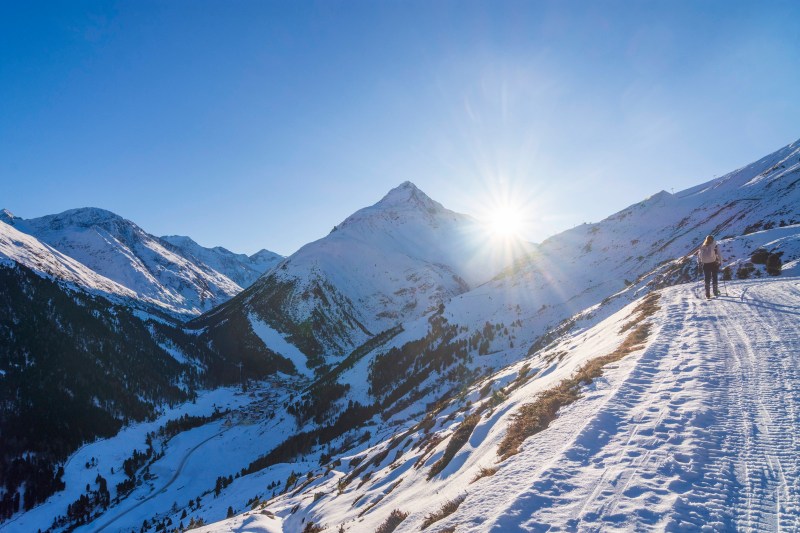
The Alps in Austria / Photo: Volker Preusser / imago stock&people / Profimedia
About 97% of the glaciers in the Alps will disappear in the next 75 years, if the Earth's average global temperature were 2.7 degrees Celsius higher than it was before the Industrial Revolution, shows a study published on Monday by the University ETH Zurich in Switzerland, cited by political.
Current plans to combat global warming will only save 3% of Europe's alpine glaciers from disappearing this century. Most of the glaciers will melt completely in the next two decades.
“The Alps as we know them today will change completely by the end of the century. The landscape will be completely different. Many ski resorts will no longer have access to glaciers, and those that will remain are so high and so steep that they will no longer be accessible,” the study's lead author, Lander Van Tricht, told Politico.
The study is the first to calculate the number of glaciers remaining by the year 2100 under different global warming scenarios. Previous studies have focused on their size, or ice mass, factors that drive sea level rise and water scarcity — because glaciers contain 70 percent of the world's fresh water.
Harmful climate policies could save hundreds of them
The researchers hope their results – including a database showing the estimated survival rate for each of the world's 211,000 glaciers – will help assess climate impacts on local economies and ecosystems.
97% melting of the Alps glaciers could happen if global warming reaches 2.7 degrees Celsius above pre-industrial levels. That means only 110 of Central Europe's roughly 3,200 glaciers could last into the next century.
If we succeed in limiting global warming to a maximum of 2 degrees Celsius, in accordance with the Paris Agreement, the Alps would lose between 87% and 92% of their glaciers.
The region's other mountain range, the Iberian Peninsula's Pyrenees, is on track to lose its remaining 15 glaciers by the mid-2030s.
In all scenarios, however, most of Central Europe's glaciers will melt in the next two decades. The scientists write that for this region, the “extinction peak” — the year when most glaciers are expected to disappear — is “estimated to occur shortly after 2025.”