Why is it important to exercise every day? The easy exercises that do wonders for the brain and keep you energetic after 60

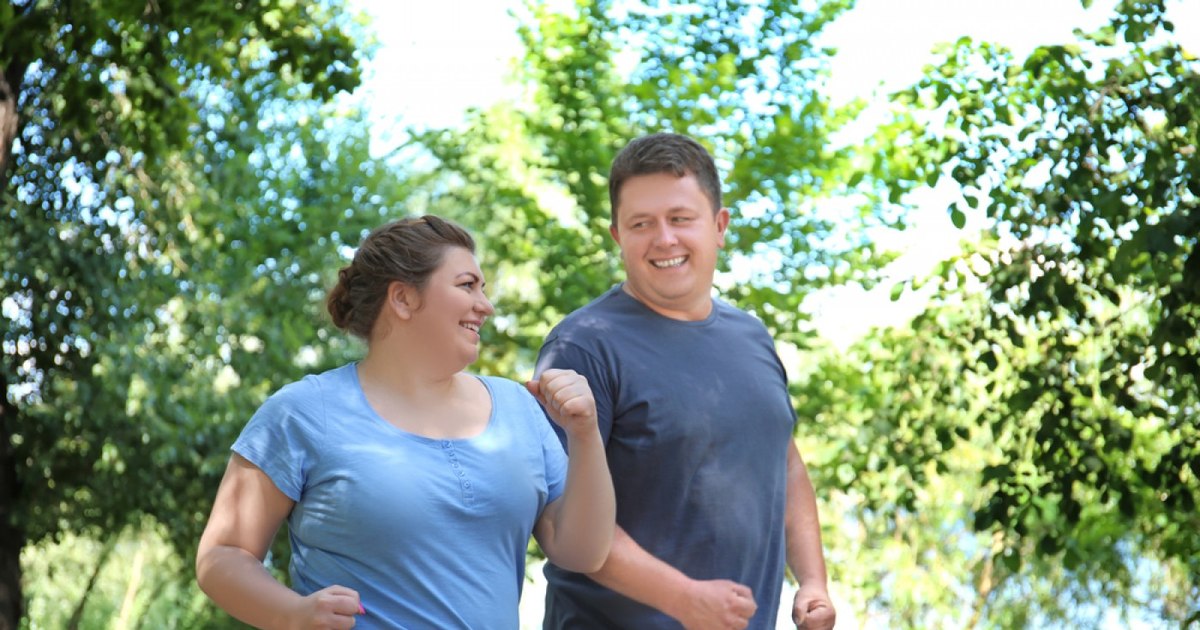
Even light exercise, done regularly, can have surprising effects on your brain. Small steps, short walks or a few minutes of stretching not only energize the body, but can reduce the risk of dementia later in life by up to 45%. The secret is not in intensity, but in choosing activities that suit your personality and that give you pleasure every day.
Photo credit: Shutterstock
More specifically, a recent study published in JAMA, cited by Forbes, shows that adults who maintain physical activity into middle age and beyond can cut their risk of dementia, including Alzheimer's disease, by nearly half. Basically, how we move and take care of our bodies during this time can make a huge difference to brain health, even beyond the influence of genetics.
Researchers followed more than 4,000 adults across three life stages: youth (26-44 years), middle age (45-64 years) and old age (65-88 years), for up to 37 years, to analyze the link between physical activity levels and the risk of developing dementia or Alzheimer's disease over time. The most active people in middle age and old age had a 41-45% lower risk of dementia compared to the least active, while physical activity in youth had no significant association.
Even at 50, 60 or 70 years old, you can protect your brain by moving, report the authors of the study. Regular, even light physical activity (short walks, a few minutes of stretching or small steps throughout the day) can reduce the risk of dementia by up to 45%. The key is not in intensity, but in choosing activities that suit your personality and that give you pleasure every day. These small steps, taken consistently, add up and create a real long-term impact on cognitive health and overall energy. Movement thus becomes not just a physical exercise, but a routine that supports your well-being and vitality.
“Lifetime exercise is good for you in many ways, including lowering the risk of dementia in old age,” says Dr. James M. Noble, Professor of Neurology at Columbia University Medical Center.
Why exercise matters most in middle and late age
The study used a “physical activity index” that tracked how long people were sedentary, how long they slept, and how long they engaged in light, moderate or vigorous activity. The most active participants aged 45-64 and 65-88 had significantly lower risks of developing dementia, even after adjusting for factors such as sex, education, BMI, smoking, hypertension, diabetes and cholesterol.
Exercise intensity and the presence of the APOE ε4 gene, associated with Alzheimer's disease, also influenced brain health outcomes. Moderate to vigorous activity in middle age offered the greatest protection against cognitive decline, and any form of exercise in old age, even light, reduced the risk of dementia. People without the APOE ε4 gene benefited most from the effects of exercise in midlife, and in old age all participants, regardless of genetic status, had significant reductions in risk, suggesting that exercise may partially compensate for inherited vulnerability.
So physical activity supports healthy brain aging by improving blood flow, reducing inflammation, strengthening neural connections and stimulating neuroplasticity
What does this mean for you?
Researchers report that you don't need hours of vigorous exercise to protect your brain, and that starting or increasing exercise in middle age or later can reduce the risk of dementia through simple activities such as brisk walking, cycling, swimming, dancing, gardening, light exercise or yoga, and even short, regular movements of a few minutes a day.
“My advice is to do more than you already do: walk more, eat better and keep your brain active,” says Dr. Noble.
How to maintain long-term benefits
Also, specialists emphasize that brain health depends not only on physical exercise, but also on blood pressure and cholesterol control, diabetes management, smoking cessation, maintaining hearing and oral hygiene, healthy MIND or Mediterranean diet, quality sleep, mental stimulation through learning or strategy games, and maintaining social and emotional connections.
According to the Lancet Commission, up to 45% of dementia cases could be prevented if we manage our lifestyle throughout life, and the data from the Framingham study, one of the longest and most consistent epidemiological studies in the US, concretely shows that maintaining physical activity in middle age and later significantly reduces the risk of dementia, regardless of genetic predisposition, writes Forbes.
“There's no downside to moving more,” says Dr. Noble. “Even small increases in physical activity can improve your brain and your quality of life. Start small, stay consistent, and choose activities you enjoy. Your brain will thank you.”
We remind you that another study, recently published in the journal Frontiers in Psychology, shows that people are more motivated to exercise when they choose a type of training that suits their personality. The conclusion of the research was that the motivation to do sports decreases not because of a lack of discipline, but because, most of the time, the types of exercises we choose to do do not suit us.
More specifically, extroverts tend to prefer intense, fast-paced workouts with a lot of energy around them. For them, team sports or dynamic classes are more satisfying than running on the treadmill. More emotionally sensitive people, for example, feel better when they take part in training with a personal trainer, in private, without social pressure and with frequent breaks. The authors of the study note that introverted people prefer low-intensity activities carried out in quiet spaces, where they do not feel noticed.
Personality, the most ignored predictor of motivation
“Personality determines what intensity and form of movement we are drawn to. If we understand this, we can take the first step towards helping sedentary people engage in physical activity.” explained Flaminia Ronca, co-author of the study and associate professor at University College London.
She said that organized people maintain their exercise habit more easily, because for them movement is a clear investment in health.
Currently, only about 22% of adults and 19% of teenagers reach the threshold recommended by the World Health Organization, i.e. 150 minutes of exercise per week, draw the attention of specialists.
“Emotionally sensitive people keep getting told to do intense exercise, but they won't do it. And we know that even low-intensity exercise has benefits. If you know a person has this profile, recommendations can be adjusted and the chances of taking up exercise increase.” added Angelina Sutin, professor at Florida State University.
What researchers say about social pressure and performance
“There are personality types that don't react well to competitive situations. For them, the pressure to perform is something very difficult,” said Paul Burgess, professor of neuroscience at UCL and co-author of the study.
So, when we choose what type of physical activity to do based on “who we are” and not based on “what we think we should do,” movement becomes easier, more stable, and more sustainable in the long term.
“For over ten years I've been organizing runs to which tens of thousands of people come every year. And if I had to draw one conclusion from all these meetings, it's this: people differ not in how far they can run, but in the way they move. And that way has so much to do with personality that it surprises me how well it matches what psychologists say.” Radu Restivan, the founder of the 321sport community, recently explained to “Adevărul”.
“I find it amazing that, regardless of personality, running manages to create a space where everyone feels included. Very different people end up connecting not despite their differences, but because of them. That's the beauty of a mature community: it expands everyone's comfort zone without canceling it out.” completes Radu Restivan.
Why sports become easier when you stop fighting yourself
That is precisely why he believes that the question “how do I make myself like sports?” it does not have a universal answer. “It should start with something much simpler: “what kind of person am I and where would I feel good moving?“. Cwhen you choose the right movement for your way of being (whether it's a solitary workout or a lively and warm group) motivation naturally increases. You no longer fight with yourself, you work together with yourself“.
“Running showed me that we don't have to look alike to fit in. We just need a common goal: to be better. And when everyone finds their place, regardless of personality, sport becomes not only effective, but deeply human.” he also said.
How psychotherapists explain the connection between personality and the motivation to do sports
For her part, psychotherapist Florenta Petrică declared for “Adevărul” that: “Sport is not just physical exercise, it is a practice that deeply interacts with each person's personality, motivation and mental state. The way we relate to exercise depends on our individual traits: extroverts enjoy social and dynamic activities, introverts prefer quiet pace and autonomy, and conscientious people appreciate routine and measurable progress. Choosing a type of exercise that suits your way of being not only increases the pleasure you feel, but also the foundations of real intrinsic motivation, which supports continuity and long-term involvement”.
In his opinion, intrinsic motivation can be built gradually, step by step. So the first step is choosing activities that bring immediate pleasure and feel accessible even for a few minutes a day. The next step is to set realistic and measurable goals, focused on personal progress and not on comparison with others. The continuation of the practice is supported by mindful attention in the “here and now”: noticing the breath, posture and muscle sensations during the exercise. “This engagement increases satisfaction and motivation, turning exercise from a chore into an active and enjoyable experience of connecting with your body and the present moment.”
At the same time, sport has strong effects on mental and physical health. Regular exercise, especially cardio, stimulates the release of dopamine, serotonin and noradrenaline, lowers cortisol and increases mental clarity. “These neurochemical changes help reduce stress, relieve anxiety and depressive symptoms, providing a real feeling of relaxation, energy and vitality. Bringing attention to movement amplifies these effects: focusing on breathing, rhythm and bodily sensations transforms exercise into a moment of presence, increasing intrinsic satisfaction and pleasure.” “When sport is adapted to the personality, internal motivation, emotional state and is lived with conscious attention, it becomes a complete tool of well-being”, she emphasized
“Intrinsic motivation, active involvement and visible progress generate positive emotions, deep involvement, harmonious relationships, meaning in experience and a sense of achievement, all components of a balanced and satisfying life. Basically, sport is no longer just a means to achieve physical results, but an experience of presence, energy and regeneration, which brings immediate and lasting satisfaction”.