The final stage of the agreement with Mercosur. The head of the European Commission wants to sign the document on Saturday

2025-12-15 11:45
publication
2025-12-15 11:45
The European Parliament will vote on Tuesday on strengthening the emergency brakes in the trade agreement with Mercosur. This will determine the final approval of the agreement or its rejection by the member states. The head of the European Commission, Ursula von der Leyen, wants to sign the agreement in Brazil on Saturday.
Protection clause
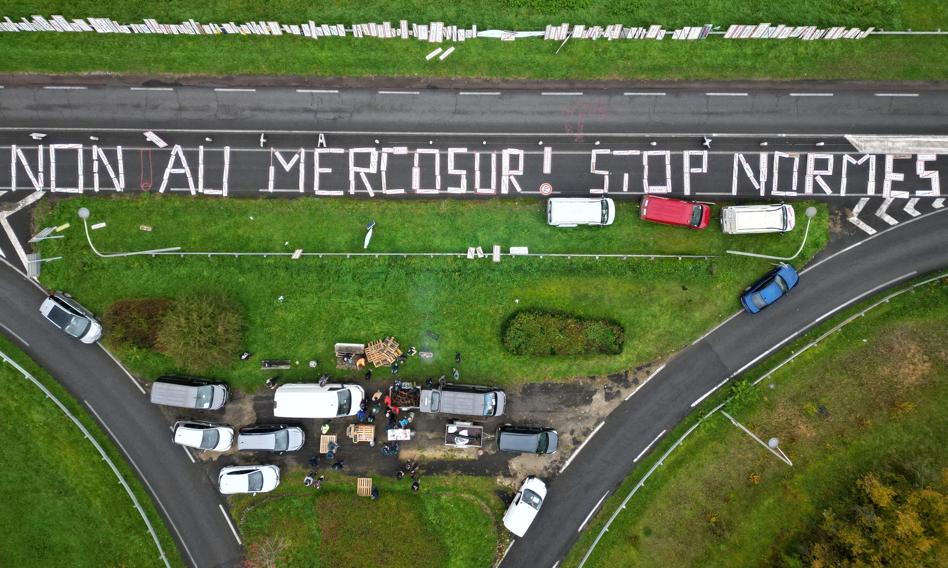
MEPs on Tuesday they will vote on the regulation establishing the so-called safeguard clause in the EU-Mercosur agreement for agricultural products. This agreement will introduce customs preferences for exporters of products such as beef, poultry, dairy products, sugar and ethanol from four South American countries: Argentina, Brazil, Uruguay and Paraguay. The protection clause is intended to allow the EU to react when the inflow of these goods from Mercosur leads to disruption on EU markets, affecting domestic farmers.
Polish MEPs want further strengthening of protective mechanisms.
– We hope that on Tuesday in Strasbourg we will decide to supplement the corrective, monitoring and blocking mechanisms, possibly in the event of a threat to the market and price security of individual agricultural products – told PAP and IAR the head of the Polish delegation to the European People's Party (EPP), KO MEP Andrzej Halicki.
The amendments are intended to allow for a quick response
He recalled that additional mechanisms strengthening the protective clause had previously been voted by the European Parliament's International Trade Committee. The amendments adopted by it on December 8 are intended to allow for a faster reaction – in the event of a sudden increase in imports, the EC will have to react within 14 days, not 21 days. Such a response will need to occur when prices for sensitive products in the EU fall by 5%, not 10% as originally proposed, and the difference in prices will be measured on a quarterly basis. If such a disruption occurs, it may be possible to close one market or the entire EU to imports from Mercosur.
As a source in the European Parliament told journalists, an additional change is also being pushed through, imposing the obligation on exporters in Mercosur countries to apply EU standards.
Whether and what additional protective mechanisms will be introduced will ultimately become clear on Tuesday when the entire House votes on the regulation. 88 amendments will be voted on.
The final consent of the states will depend on this
In turn, the final consent of the Member States to sign the agreement or reject it will depend on the result of the vote in the European Parliament and the adoption of the protection clause. A source in the EU Council told PAP on Monday that the vote among the capitals will take place before Saturday, so that EC President von der Leyen can sign the agreement on behalf of the entire Community at the Mercosur summit in Brazil that takes place that day in Brazil. This vote is to take place, although according to media reports, France is pushing for its postponement to next year.
Approval of the agreement will require the consent of 15 member states representing 65%. EU population (qualified majority). The agreement will not be adopted if the so-called a blocking minority consisting of four member states.
Poland is still against the agreement, as confirmed by the Minister of Agriculture, Stefan Krajewski, on Thursday in Brussels. France's consent is still uncertain. Foreign Ministry spokesman Pascal Confavreux told Politico on Thursday that Paris is still not satisfied with the backstop. The skeptical countries also include Italy, Austria and Ireland.
Two sources also confirmed that Denmark, which holds the presidency of the EU Council, is ready to quickly proceed with the regulation establishing the protection clause – the negotiations between the EP and the EU Council necessary to complete work on it may take place as early as Wednesday, the day after the vote in the European Parliament.
From Brussels Magdalena Cedro (PAP)
mce/ap/ktl/